TheJakartaPost
Please Update your browser
Your browser is out of date, and may not be compatible with our website. A list of the most popular web browsers can be found below.
Just click on the icons to get to the download page.


Popular Reads
Top Results
No results found. Please check your search term and try again
Can't find what you're looking for?
View all search results
Popular Reads
Top Results
No results found. Please check your search term and try again
Can't find what you're looking for?
View all search resultsMoney politics common at village level
For many voters, elections are often perceived as nothing but an opportunity to generate something from the contesting candidates
Change text size
Gift Premium Articles
to Anyone
Share the best of The Jakarta Post with friends, family, or colleagues. As a subscriber, you can gift 3 to 5 articles each month that anyone can read—no subscription needed!

F
or many voters, elections are often perceived as nothing but an opportunity to generate something from the contesting candidates. This is at least true for the people of Banyumas, Central Java, where 250 of its 331 villages have to elect new leaders between May and September 2013.
'Every night our village is very busy. Each camp favors its respective candidate. Sometimes clashes between supporters of different candidates are just unavoidable,' Salim, 35, of Banteran village, Sumbang district, Banyumas, said.
Salim said the election of the village head in his village had always been engrossing but, at the same time, was tense because of competition for wuwur, a local term for money offered by candidates with the expectation of voters rewarding them with their votes.
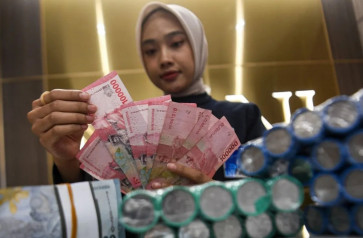
Wuwur, according to Salim, was a determining factor in the victory of a particular candidate in a village election. The amounts range from Rp 20,000 (US$2.02) to Rp 150,000 per voter.
Dama, 43, of Dukuhwaluh village, Kembaran district, said the same thing about the elections in his village. 'Candidates who offer the highest wuwur will almost certainly win the election,' he said.
He added that villagers considered those offering wuwur as candidates who cared for the people, giving out money as compensation for the fact that voters lose a day of income to practice their right to vote.
'It is not right [to hand out wuwur], but it is very difficult to combat the practice. If you refuse to offer wuwur then you have little chance of winning,' Dama said.
This is what often forces village head candidates in Banyumas and surrounding regencies, such as Cilacap, to spend hundreds of millions of rupiah in their bid to win the election.
'Here, legislative candidates are nothing compared to village head candidates,' said Saebani of Ketanggung subdistrict in Maos, Cilacap, adding that a person running for village head could easily spend up to Rp 1 billion for funding his candidacy.
He said in his region, wuwur was considered part of the election process. As such, village elections are seen by locals as a way to harvest wuwur from different candidates.
'Every candidate gives wuwur to anybody, regardless that the individual concerned has already received wuwur from other candidates. The candidate who offers the highest sum of money is the one that people will vote for,' he said.
Separately, local cultural expert Ansor Basuki expressed his concern about money politics in village head elections. However, he said, he could not blame the villagers.
The practice, according to Ansor, would not stop until senior officials set a better example and the perpetrators were punished with firm sanctions.