The Jakarta Post
Please Update your browser
Your browser is out of date, and may not be compatible with our website. A list of the most popular web browsers can be found below.
Just click on the icons to get to the download page.


Popular Reads
Top Results
No results found. Please check your search term and try again
Can't find what you're looking for?
View all search results
Popular Reads
Top Results
No results found. Please check your search term and try again
Can't find what you're looking for?
View all search resultsDutch royal family backed colonial rule from the beginning, study finds
A study involving around 60 researchers finds that the House of Orange-Nassau supported colonial violence, forced labor and slavery, even when its direct political power was limited.
Change text size
Gift Premium Articles
to Anyone
Share the best of The Jakarta Post with friends, family, or colleagues. As a subscriber, you can gift 3 to 5 articles each month that anyone can read—no subscription needed!
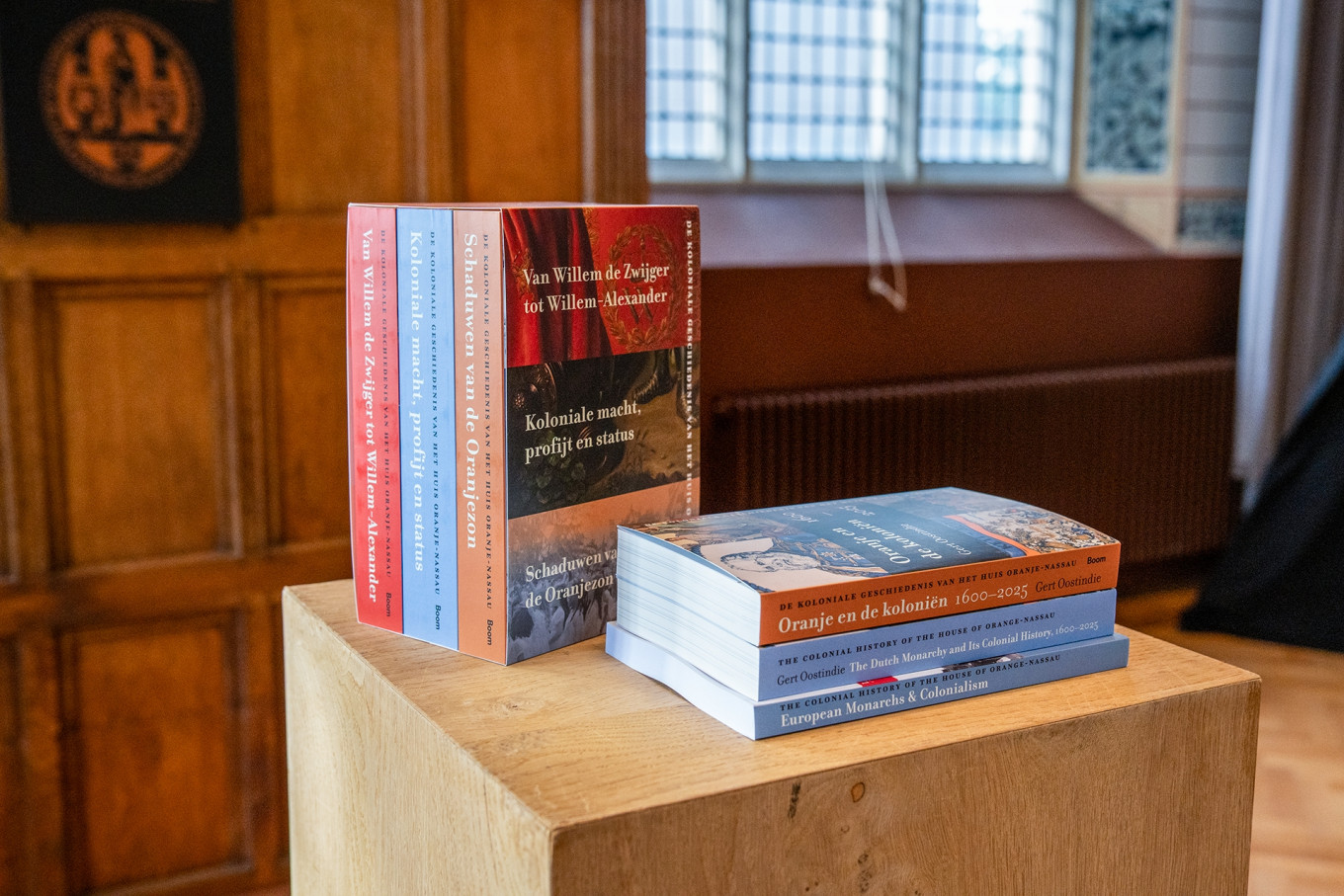 Colonial reckoning: Five books from a research project examining the House of Orange-Nassau’s role in colonialism, alongside a summary for general readers, 'Oranje en de Koloniën', '1600-2025: De koloniale geschiedenis van het Huis Oranje-Nassau' (Orange and the Colonies, 1600-2025: The Colonial History of the House of Orange-Nassau), are displayed at Leiden University in the Netherlands in this undated photo. (Courtesy of Leiden University/-)
T
he Dutch royal family supported colonialism for centuries, including the violence, forced labor and slavery that sustained the empire, although its direct influence over colonial policy was limited for much of that period, a new historical study has found.
Released on Oct. 2, the study was conducted at Leiden University in the Netherlands and led by historian Gert Oostindie, with around 60 researchers involved.
King Willem-Alexander commissioned the research in 2022, but the royal family did not participate in the research process or influence its findings, according to Leiden University’s website.

The research produced five books, including The Dutch Monarchy and Its Colonial History, 1600-2025. An Indonesian version is scheduled for publication next year by Yayasan Obor.
The study concluded that the House of Orange-Nassau’s involvement in colonialism “was wholehearted and without any real reservations”.
“The House of Orange-Nassau has been involved in Dutch colonialism, and has been supporting Dutch colonialism from its very beginnings,” Oostindie said. “The spirit of the age is no excuse.”
He said the family’s limited political power during certain periods did not mean it opposed colonial exploitation. The monarchy supported forced labor and slavery while receiving substantial income from colonialism.


More from The Weekender

Dari mana?
The question that asks where we are from sounds simple, but between distant homes, shifting identities and the worlds we inhabit on the page, our origins can be harder to pin down.

In between the kingdoms of the well and sick
In a clarifying Third Place between illness and recovery, life becomes both stranger and clearer than it's ever been.

Machines Without a Beating Heart?
As electric cars reshape the driving experience, enthusiasts wrestle with what makes a car special: the roar of its engine, the quirks of an aging machine, or the memories we leave behind the wheel.