TheJakartaPost
Please Update your browser
Your browser is out of date, and may not be compatible with our website. A list of the most popular web browsers can be found below.
Just click on the icons to get to the download page.


Popular Reads
Top Results
No results found. Please check your search term and try again
Can't find what you're looking for?
View all search results
Popular Reads
Top Results
No results found. Please check your search term and try again
Can't find what you're looking for?
View all search resultsDual pricing unlikely to help cut subsidy
After prolonged debate, the government is almost certain to implement a dual pricing system for subsidized Premium gasoline, however, the new policy faced skepticism as it is unlikely to contribute significantly to the government's bid to curb the ballooning fuel subsidies
Change text size
Gift Premium Articles
to Anyone
Share the best of The Jakarta Post with friends, family, or colleagues. As a subscriber, you can gift 3 to 5 articles each month that anyone can read—no subscription needed!

A
fter prolonged debate, the government is almost certain to implement a dual pricing system for subsidized Premium gasoline, however, the new policy faced skepticism as it is unlikely to contribute significantly to the government's bid to curb the ballooning fuel subsidies.
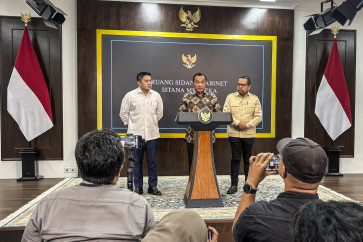
The impending implementation of the dual price of subsidized fuel ' 88-octane Premium gasoline ' was confirmed after top economic ministers sought feedback of the policy at a meeting with the governors of several provinces at the Home Ministry in Jakarta on Tuesday.
In attendance at the meeting were Yogyakarta Governor Sultan Hamengkubuwono X and Jakarta Deputy Governor Basuki Tjahaja Purnama, as well as other regional leaders.
'The response from the governors was very positive; they agreed that we must work together to contain the fuel subsidies,' Coordinating Economic Minister Hatta Rajasa told a press conference after the meeting.
Industry Minister MS Hidayat explained that under the new policy there would be two market prices of subsidized Premium; the existing price of Rp 4,500 (46 US cents) per liter, available for motorbikes and public transportation vehicles only; and Rp 6,500 per liter for privately owned cars. Hidayat said that some governors suggested that the subsidies for privately owned cars should be completely scrapped, meaning Premium gasoline would be sold at its actual market price of Rp 9,000 per liter. If approved by President Susilo Bambang Yudhoyono, the policy could be implemented in early May.
The policy is necessary because, according to Energy and Mineral Resources Minister Jero Wacik, around 77 percent of the subsidies ' earmarked in the 2013 state budget at Rp 194 trillion ($20 billion) ' are enjoyed by the country's upper middle class.
To support the dual price system, the government would build additional gas stations in some provinces, said the minister.
'The governors are concerned that their areas might not have enough gas stations [to support the policy's implementation].'
Jero predicted that the implementation of the dual price Premium gasoline would save the government at least Rp 21 trillion by the end of the year.
However, the amount saved by the policy was insubstantial and it appeared that the government was only 'playing safe', fearing that any drastic adjustment of fuel price would trigger political instability ahead of the 2014 elections, according to Atma Jaya Catholic University economist A. Prasetyantoko.
'Rp 21 trillion will not be sufficient to boost the fiscal capacity to stimulate the economy,' he said. 'The amount is insignificant in the context of fiscal expansion, especially when we are talking about allotting the money to infrastructure projects.'
Nevertheless, any adjustment in the price of subsidized fuel, albeit small, is likely to have a positive impact on the economy, as it will help narrow the current account deficit, which had been burdened by the huge deficit in the oil and gas balance in recent months, according to Bank Danamon chief economist
Anton H. Gunawan.
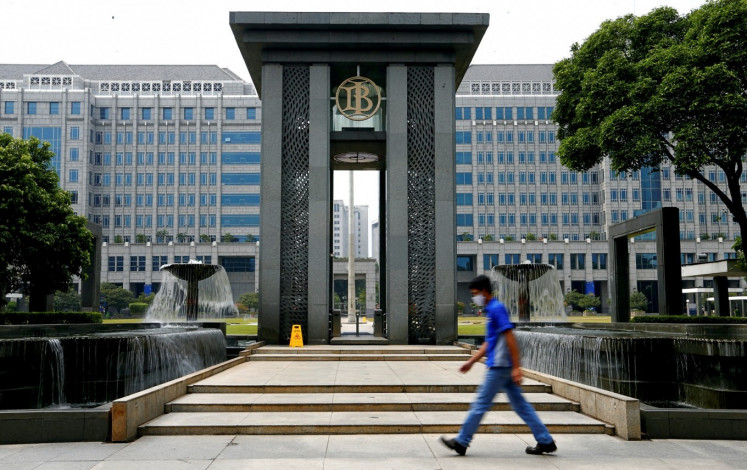
'Consequently, this is a positive signal for the rupiah,' Anton said in a phone interview. 'The foreign exchange reserves will see less downward pressure too, as BI [Bank Indonesia] intervened heavily with state energy company PT Pertamina, which has to import huge amount of oil for its operations.'
Anton estimated that the policy might cause inflation to rise to 6.1 percent by the end of the year ' higher than BI's target of 5.5 percent ' but he argued that such inflationary pressure would only be temporary and not persist in the long-run.