TheJakartaPost
Please Update your browser
Your browser is out of date, and may not be compatible with our website. A list of the most popular web browsers can be found below.
Just click on the icons to get to the download page.


Popular Reads
Top Results
No results found. Please check your search term and try again
Can't find what you're looking for?
View all search results
Popular Reads
Top Results
No results found. Please check your search term and try again
Can't find what you're looking for?
View all search resultsInflation may exceed 6% if fuel prices raised
Bank Indonesia (BI) estimates that the country's inflation rate could exceed 6 percent if the government goes ahead with its plan to increase the price of subsidized fuels next month
Change text size
Gift Premium Articles
to Anyone
Share the best of The Jakarta Post with friends, family, or colleagues. As a subscriber, you can gift 3 to 5 articles each month that anyone can read—no subscription needed!

B
ank Indonesia (BI) estimates that the country's inflation rate could exceed 6 percent if the government goes ahead with its plan to increase the price of subsidized fuels next month.
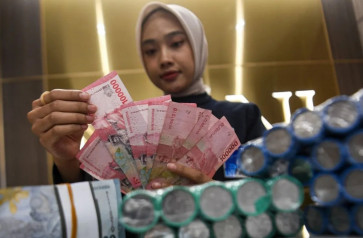
The central bank's deputy governor Perry Warjiyo said in Jakarta on Friday that annual inflation would reach 6.29 percent, above the initial target of 5.5 percent, this year if the government raised the fuel price to Rp 6,500 (67 US cents) from Rp 4,500 per liter for privately owned cars.
However, he said that the higher inflation rate would still be manageable. 'The rise in the subsidized prices for both Premium gasoline and diesel will result in an increase in inflation of 0.79 percent, which is still manageable,' he added.
Perry said that if the government opted to drop its plan to implement a dual pricing policy and raised the prices of subsidized fuels for both private and public vehicles as well as motorbikes, the price hike would cause stronger inflationary pressure. But the rise would depend on the government's policy on public transportation fares.
He said that if the public transportation tariff was increased proportionately in line with the fuel price increase, the impact of the fuel price hike would be greater, because it could also prompt an increase in the prices of basic commodities.
As reported earlier, the government plans to introduce a dual pricing system for Premium. Under the new policy, there will be two market prices for the fuel. The existing price of Rp 4,500 per liter will be available only for motorcycles and public transportation while privately owned cars will have to pay the higher price of Rp 6,500
per liter.
The government estimates that the implementation of the dual pricing will save at least Rp 21 trillion in the state budget (APBN) by year-end. It argues that it is necessary to apply the system because around 77 percent of the subsidized fuel ' earmarked in the 2013 state budget at Rp 194 trillion ' is consumed by the country's middle and upper classes.
In the past, rises in fuel prices have caused the inflation rate to exceed 10 percent. In 2005, the inflation rate stood at 17.1 percent, while in 2008, it reached 11 percent.
Regarding the estimated inflation rate for this month, BI predicts that the consumer price index (CPI) will fall 0.04 percent to 0.59 percent from the previous 0.63 percent in March. The year-to-date rate will stand at 2.39 percent, while on a year-on-year basis, the figure will reach 5.64 percent.
According to Perry, the projected decline in the CPI in April will be caused by the fall in prices of a number of staple food products, such as garlic, that surged last month due to a lack of supply.
He said that it would be better for the government to hike fuel prices between April and June when inflation was traditionally low due to the harvest season.
Entering July, the rate will rise again because of seasonal factors, such as the beginning of the new school year and the fasting month of Ramadhan. 'Consumption will be higher during that time and this will drive inflation higher as well. However, it is up to the government to determine the schedule for the price hike,' Perry said.
Based on past experiences, he said, the impact of the fuel price policy would last for about three months. In the fourth month of the policy implementation, inflation would return to its normal rate.