TheJakartaPost
Please Update your browser
Your browser is out of date, and may not be compatible with our website. A list of the most popular web browsers can be found below.
Just click on the icons to get to the download page.


Popular Reads
Top Results
No results found. Please check your search term and try again
Can't find what you're looking for?
View all search results
Popular Reads
Top Results
No results found. Please check your search term and try again
Can't find what you're looking for?
View all search resultsEditorial: Bad for bank consolidation
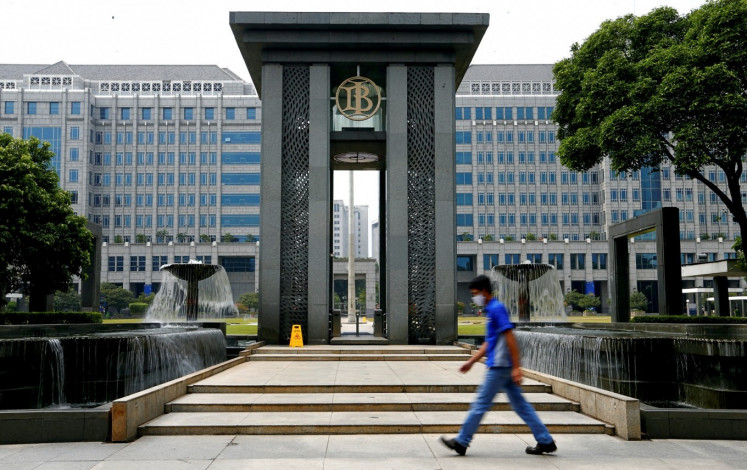
Bank Indonesia pushed ahead with its demand for reciprocity in banking license with Singapore by rejecting the Bank DBS plan to acquire almost 67
Change text size
Gift Premium Articles
to Anyone
Share the best of The Jakarta Post with friends, family, or colleagues. As a subscriber, you can gift 3 to 5 articles each month that anyone can read—no subscription needed!

B
ank Indonesia pushed ahead with its demand for reciprocity in banking license with Singapore by rejecting the Bank DBS plan to acquire almost 67.50 percent of Bank Danamon through a US$7.2 billion deal proposed in April 2012.
The central bank allows Bank DBS to acquire only 40 percent of Bank Danamon and ties the fate of DBS majority ownership to the commitment of the Monetary Authority of Singapore (MAS) to easing the licensing terms for Indonesia's largest banks, all state owned, to open branches in Singapore.
As Southeast Asia's largest economy with a huge growth potential for the banking market, Indonesia indeed has a strategic value for DBS. If this Southeast Asian largest financial service group is serious about its ambition to become a leading player in the Asian financial service market, it must have a strong footing in Indonesia, beside China and India.
We, therefore, find it difficult to understand, given the stakes for Singapore interests involved in this deal, as to why MAS had not responded to Bank Indonesia's demand for reciprocity in licensing and more transparency in cross-border banking supervision.
Even if MAS licensed Bank Mandiri, Bank BNI and Bank Rakyat Indonesia to open more branches and ATMs in Singapore, these banks would not likely be able to make any significant inroads in the Singapore market, which is already quite mature, and where almost all the largest international banks have long been entrenched.
Putting it bluntly, Singapore and Bank DBS need Indonesia more than the other way around.
But the politicized manner in which Bank Indonesia processed the Bank DBS acquisition plan, though greatly helpful to open Singapore to Indonesian state banks, gave a bad signal for bank consolidation in Indonesia. It also shows how vulnerable Bank Indonesia is to political pressures.
First of all, the DBS acquisition plan will not change the structure of Bank Danamon ownership because both this Indonesian sixth largest bank and Bank DBS are controlled by the Singapore state investment company Temasek.
Moreover, nothing in current banking laws runs against the DBS acquisition plan. Bank Indonesia did issue new ownership rules in June 2012, two months after the announcement of the DBS move, which cap individual investors' ownership of banks at 40 percent.
But even these latest rules still allow majority holding by foreign investors as long as they maintain high levels of corporate governance and financial health. The only great concern is that these rules give too broad discretionary power to the central bank to decide, on a case-by-case basis, bank ownership caps, larger than the general limits.
Indonesia's banking industry with about 120 players is simply too crowded, especially because the 10 largest banks alone control more than 85 percent of the market, leaving the other 110 fiercely competing for the remaining 15 percent.
Bank Indonesia has tried for decades to speed up bank consolidation through mergers but the egos of most small bank owners seem too big to enter mergers. Hence, the best chance for speeding up the bank consolidation is through acquisition. But certainly not many banks would be willing to acquire 40 percent of a bank if they have to cope with Bank Indonesia's discretionary power to allow them to eventually gain majority ownership.