TheJakartaPost
Please Update your browser
Your browser is out of date, and may not be compatible with our website. A list of the most popular web browsers can be found below.
Just click on the icons to get to the download page.


Popular Reads
Top Results
No results found. Please check your search term and try again
Can't find what you're looking for?
View all search results
Popular Reads
Top Results
No results found. Please check your search term and try again
Can't find what you're looking for?
View all search resultsRI may feel more pinch on slower growth
Accelerating inflation that will curb the purchasing power of some 230 million Indonesians will finally take its toll, with growth of no more than 6 percent in the second quarter this year
Change text size
Gift Premium Articles
to Anyone
Share the best of The Jakarta Post with friends, family, or colleagues. As a subscriber, you can gift 3 to 5 articles each month that anyone can read—no subscription needed!

A
ccelerating inflation that will curb the purchasing power of some 230 million Indonesians will finally take its toll, with growth of no more than 6 percent in the second quarter this year.
It will be the first time that growth will be less than 6 percent since 2010, when it started to pick up from a global recession.
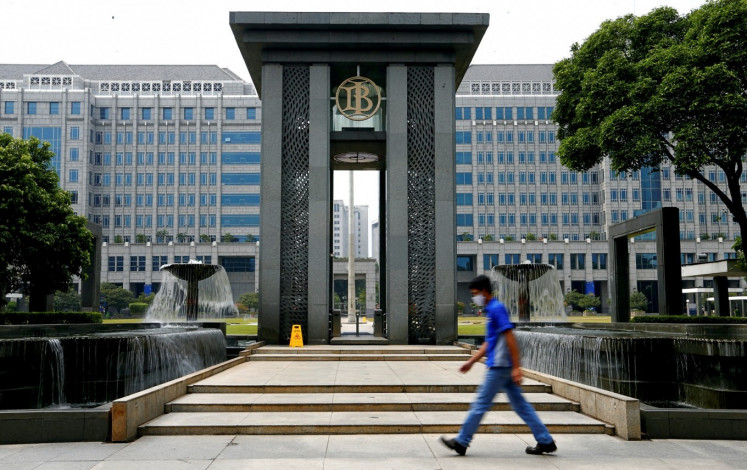
'Looking at recent economic developments, we forecast our economic growth in the second quarter in 2013 to hover at between 5.9 and 6.1 percent,' Bank Indonesia (BI) Governor Agus Martowardojo told reporters on Friday at his office.
The growth would sit at 5.9 percent if the government succeeded in raising subsidized fuel prices as soaring inflation might curb people's purchasing power needed to propel the consumption-driven economy, according to BI Deputy Governor Perry Warjiyo.
The state has revised its inflation assumption from 4.9 percent stipulated in the 2013 state budget to 7.2 percent in the revised state budget.
The economy might expand to 6.1 percent if subsidized fuel prices remained the same but it would deteriorate in the long run because ballooning fuel subsidies would cause imbalances, Perry said.
'But we still believe that our economy can expand by 6.3 percent year-on-year. Remember, there will be more spending for approaching elections in the third and fourth quarters this year,' he said, adding that there would be additional household spending stemming from the Idul Fitri and year-end festivities.
Looking at the possible slowdown in the economy, the central bank would have to utilize its monetary tool, not only to manage economic stability, but also to support growth, he added.
Amid the global slowdown, Indonesia has retained six-plus percent economic growth for ten consecutive quarters since 2010, making it a new darling for foreign investors, who have raced toward emerging markets amid the prevailing uncertainties in the West.
However, Indonesia has recently seen its charm among investors fade, economists say, with its growth decelerating for four consecutive quarters and expanding by only 6.02 percent in the first quarter of this year, the slowest in two years.
In the meantime, other economies in the region are picking up, for example the Philippines, which recently announced 7.8 percent economic growth in the first quarter, overtaking China as the region's fastest growing economy.
'There are plenty of other markets in Asia that we prefer from a macroeconomic perspective,' Credit Suisse economist Robert Prior-Wandesforde said on Friday, when asked of Indonesia's present attractiveness among foreign investors, adding that possible higher interest rates resulting from planned fuel price increases and investment slowdown gave the archipelago a bleak future.
There were also concerns emanating from Indonesia's widening current account deficit, which would continue to put depreciation pressure on the rupiah going forward, Prior-Wandesforde added.
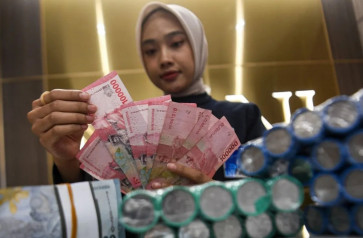
The rupiah faced intense pressure in May due to surging US dollar demand for earnings repatriation and foreign debt payments, weakening 0.7 percent throughout the month to close at 9,795 per dollar on Friday, according to Bloomberg.
The government had announced that it would hedge the value of the rupiah against foreign currencies this year to prevent any unwelcome surge of foreign debt payments due to currency fluctuations.
However, the hedging mechanism would not be set against the dollar, but only for currencies such as the Japanese yen or the euro, Finance Ministry debt management office head Robert Pakpahan said on Thursday evening.