TheJakartaPost
Please Update your browser
Your browser is out of date, and may not be compatible with our website. A list of the most popular web browsers can be found below.
Just click on the icons to get to the download page.


Popular Reads
Top Results
No results found. Please check your search term and try again
Can't find what you're looking for?
View all search results
Popular Reads
Top Results
No results found. Please check your search term and try again
Can't find what you're looking for?
View all search resultsEditorial: A looming uncertainty
We could easily blame the steep fall in the rupiah exchange rate to below 10,000 to the US dollar and the 3
Change text size
Gift Premium Articles
to Anyone
Share the best of The Jakarta Post with friends, family, or colleagues. As a subscriber, you can gift 3 to 5 articles each month that anyone can read—no subscription needed!

W
e could easily blame the steep fall in the rupiah exchange rate to below 10,000 to the US dollar and the 3.5 percent decline in local share prices on Tuesday on the US Federal Reserve's plan to tighten its monetary policy, assuring the public that our economy remains robust with one of the highest growth rates in the world.
But the government and politicians at the House of Representatives will only fool themselves into such complacency if the roots of uncertainty over the economic outlook are not dealt with.
We have repeatedly asserted on this column since early this year that the rupiah will remain under strong pressure if the government does not bite the bullet and control the runaway fuel subsidy that has caused deficits in the balance of payments and state budget.
In fact, the rupiah was among the worst performing currencies last year, despite respectable economic growth of over 6 percent and continued big inflows of foreign direct and portfolio capital.
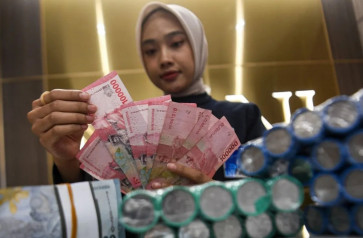
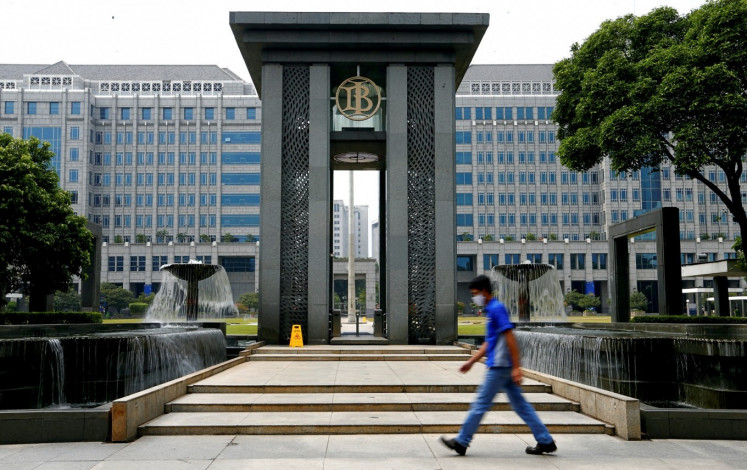
Again, the rupiah has remained weak since early this year despite the heavy market intervention by Bank Indonesia (BI). The central bank spent more than US$4 billion in the first three months and again another $2 billion last month alone to beef up the rupiah. Yet the local unit crashed below the level of 10,000 to the dollar before rising again to over 9,800 at the closing of the market as jittery foreign investors unloaded rupiah assets.
All this bearish sentiment has been rooted in uncertainty about the government policy as regards to the ballooning fuel subsidy. Hence, the longer the government and the House postpone a decision on firm measures to control the fuel subsidy, the bigger the uncertainty about the economic outlook will be, causing lingering concerns among foreign investors.
Just look how the market has downgraded Indonesia's credit rating. The government managed to reap only Rp 3.1 trillion (US$316 million) in a bond offering on June 3, the lowest ever and far below its indicative target of Rp 8 trillion, as investors sought higher yields due to lingering uncertainty over fuel subsidies. In an earlier bond auction on May 21, the government can get Rp 9.35 trillion, three times higher compared to the latest auction.
Worse still on Tuesday, the government sukuk (Islamic bonds) auction ended in total failure.
We do not think the downward pressures on the rupiah have anything much to do with speculative attacks on the local unit because the string of regulations on foreign exchange transactions the central bank issued over the past year have made it almost impossible now to buy big sums of dollars without underlying transactions.
The only positive factor that can stop the rupiah depreciation is credible policies to curb spending on the fuel subsidy, control fuel imports and prevent the balance of payments from a bigger deficit.
Certainly, an increase in subsidized fuel prices would cause stronger inflationary pressures, but this trend would only be temporary, provided the government maintains a smooth distribution of basic necessities, and the central bank tightens its monetary stance by raising its benchmark interest rate.