TheJakartaPost
Please Update your browser
Your browser is out of date, and may not be compatible with our website. A list of the most popular web browsers can be found below.
Just click on the icons to get to the download page.


Popular Reads
Top Results
No results found. Please check your search term and try again
Can't find what you're looking for?
View all search results
Popular Reads
Top Results
No results found. Please check your search term and try again
Can't find what you're looking for?
View all search resultsFrom 'martabak' sellers to foreign investors, taxmen on hunt
Through word of mouth, Indonesiaâs finance minister heard about a popular martabak (pancake) seller in Jakarta who sold billions of rupiah worth of the snack a year without paying taxes
Change text size
Gift Premium Articles
to Anyone
Share the best of The Jakarta Post with friends, family, or colleagues. As a subscriber, you can gift 3 to 5 articles each month that anyone can read—no subscription needed!

T
hrough word of mouth, Indonesia's finance minister heard about a popular martabak (pancake) seller in Jakarta who sold billions of rupiah worth of the snack a year without paying taxes.
'One day a [tax branch] reported, 'Pak, the martabak outlet now has a taxpayer number',' and is paying taxes, Finance Minister Bambang Brodjonegoro said, breathing a sigh of relief as the story confirmed his optimism about reaching ambitious new tax revenue targets.
Taxmen will be hunting more aggressively this year as tax revenues are expected to reach a historic high of Rp 1,250 trillion (US$99.2 billion), up Rp 350 trillion or 40 percent from last year, the highest growth ever, according to a revised 2015 state budget that is awaiting approval by the House of Representatives in February.
Until now, 4,000 foreign direct investors have yet to pay their taxes and only Rp 4.7 trillion of the total Rp 900 trillion in taxes owed last year was collected from individuals ' indicating a high potential to collect taxes from individuals, small enterprises and foreign investors.
'This is not just an extra effort, but a real extra, extra effort,' Bambang told journalists. 'Tax revenue is both the key and a risk to the state budget ['¦] Supporting tax collection is the most important thing needed to fulfill the President's vision and mission.'
'[So] if you're a good citizen, pay your taxes,' he concluded.
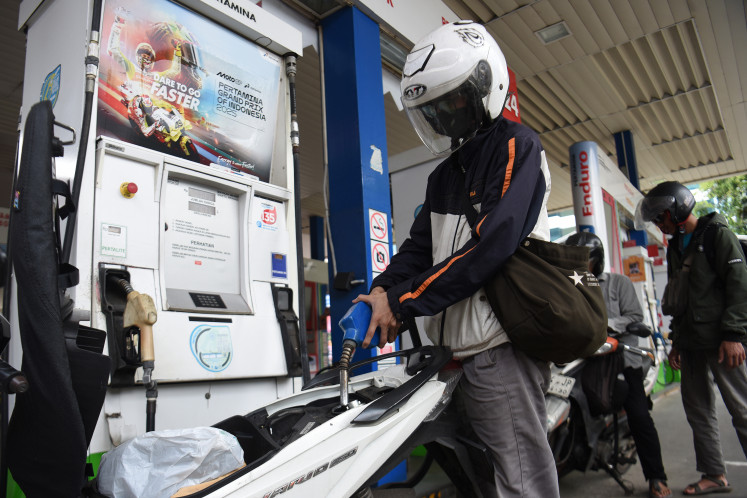
President Joko 'Jokowi' Widodo has embarked on a reform agenda, significantly cutting subsidies by Rp 81 trillion to Rp 195 trillion so the country could spend more on infrastructure projects and social protection.
'A strong focus on revenues by the new government will be critical to create the fiscal space for implementing its development programs,' the World Bank wrote in its most recent quarterly economic report entitled 'Delivering Change'.
Revenue policy reforms to broaden the tax base, simplify tax structures, rationalize tax types and selectively revise certain rates to be in line with international levels, could help to raise revenues, the bank said.
'Additional efforts to increase voluntary compliance will also help to address this challenge,' it added.
Raising individual taxpayers' compliance could be a challenge in light of the public perception of a notoriously corrupt tax office, while foreign investors are using transfer pricing and shareholder loan mechanisms as means to avoid taxes.
But the government will be going all out, according to Finance Ministry officials.
Budget allocations for the Finance Ministry will be increased by Rp 5.5 trillion to reform the tax office: reward and penalty systems will be enforced and information technologies will be modernized, among other measures.
Simplifying tax payment methods using online banking, bank transfers, ATMs or even credit cards will be attempted in order to net more taxpayers, while travel bans and jailing delinquent taxpayers in debtors' prisons will be implemented to boost compliance and tackle avoidance.
The next time the President symbolically files his tax returns he may do it online together with his ministers, instead of physically going to the tax office to pay, as has been the tradition.
'We are really, really serious about this,' Deputy Finance Minister Mardiasmo emphasized.
These efforts and targets will only raise Indonesia's tax-to-gross domestic product (GDP) ratio to around 13 percent this year, whereas Jokowi's campaign pledge aims for 16 percent during his tenure, after his success in raising tax levels as Surakarta mayor and Jakarta governor.
Indonesia currently collects just over 11 percent of GDP in tax and 15 percent of GDP in total revenues, which are amongst the lowest rates in the region and in the G20, and the figures have been declining since 2011, according to the World Bank. 'Under a 'no major reform' scenario, revenue collection is projected to fall further as a share of GDP to 13.7 percent by 2019,' the bank said.