TheJakartaPost
Please Update your browser
Your browser is out of date, and may not be compatible with our website. A list of the most popular web browsers can be found below.
Just click on the icons to get to the download page.


Popular Reads
Top Results
No results found. Please check your search term and try again
Can't find what you're looking for?
View all search results
Popular Reads
Top Results
No results found. Please check your search term and try again
Can't find what you're looking for?
View all search resultsNew perspectives on power: NUS launches master in South Asian geopolitics
With the world’s attention turning increasingly toward South Asia, the National University of Singapore (NUS) has launched a new master’s programme that studies a region at the centre of global conversation.
Change text size
Gift Premium Articles
to Anyone
Share the best of The Jakarta Post with friends, family, or colleagues. As a subscriber, you can gift 3 to 5 articles each month that anyone can read—no subscription needed!
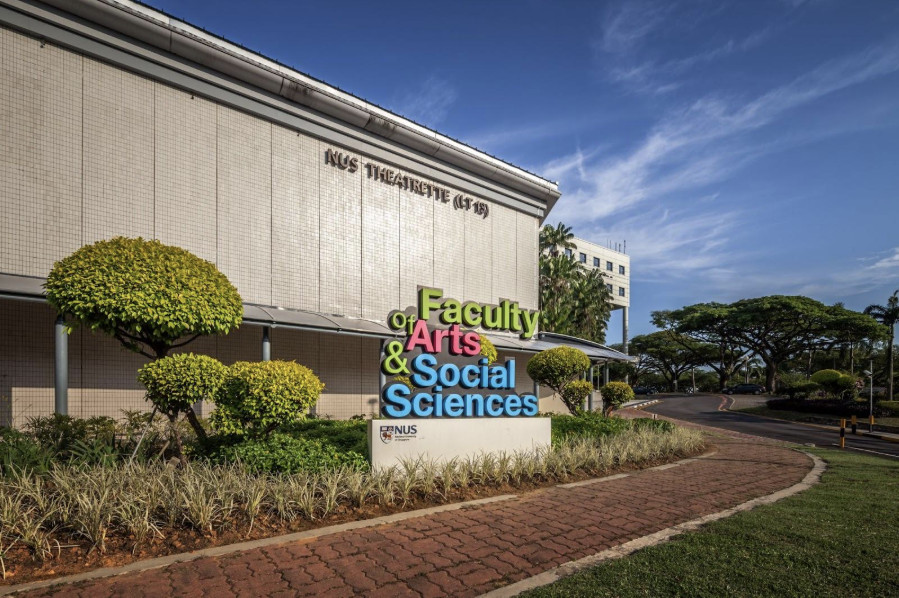 Home to regional insights: The South Asian Studies Programme is housed at the Faculty of Arts and Social Sciences at the National University of Singapore (NUS).
T
he Master of Social Sciences in Geopolitics of South Asia, offered by the South Asian Studies Programme at the NUS Faculty of Arts and Social Sciences, is the first of its kind in Southeast Asia. It offers an interdisciplinary approach to understanding the geopolitical, historical and economic shifts unfolding across South Asia and their impact on the wider world.
“We see India emerging as an important power in global affairs, which brings South Asia back into focus,” said Associate Professor Rajesh Rai, Head of the South Asian Studies Programme.
“But it’s not just about India, it’s also about how South Asia interacts with other major powers like China, the United States and Russia, as well as regions such as Southeast Asia and the Middle East. This programme is our response to that. We want to equip students with the analytical skills to assess these global and regional shifts.”
First-of-its-kind programme
Set against a backdrop of shifting global power, the programme is designed to help students navigate complex questions: What role does South Asia play in shaping today’s international order? How do regional dynamics intersect with broader issues like economic development, security and diplomacy?
“There is a lack of platforms in Southeast Asia that place South Asia at the centre, especially at the master’s level,” said Dr. Rajshree Jetly, a lecturer and programme coordinator

“To our knowledge, there isn’t another dedicated master’s by coursework focused specifically on the geopolitics of South Asia.”
To address this, the Geopolitics of South Asia master’s programme offers an interdisciplinary curriculum that draws from political, historical and economic perspectives, helping students engage critically with the forces shaping the region.
Structured for depth and relevance

The programme is structured around two core modules, Introduction to the Geopolitics of South Asia and The Making of South Asia, which provide a strong foundation in the region’s history, politics and strategic landscape.
Beyond this, students can choose from a wide range of electives covering areas such as Trans-Himalayan politics, technopolitics, political ideologies and political cinema. Modules also explore global issues like economic development, climate change and migration, as viewed through a South Asian lens.
Additional electives are offered by partner departments such as the Department of Communications and New Media, and cover topics like cultural diplomacy and consulting as a communication skill. Language courses in Hindi and Tamil offered by the Centre for Language Studies are also available for non-native speakers.
“What we’ve tried to do through our core and elective courses is to give students a comprehensive, interdisciplinary understanding of South Asia and the role it can play on the global stage,” said Dr. Jetly.
Bridging academia and policy
Beyond academic study, the master’s programme actively encourages students to engage with real-world perspectives through its close relationship with the Institute of South Asian Studies (ISAS), an autonomous research institute and think tank under NUS.
“We’ve had a long-standing working relationship with ISAS,” said Dr. Jetly. “Their faculty are familiar to us, and some have even taught within the South Asian Studies Programme.”
The collaboration enriches students’ learning experience by connecting them to ISAS’ extensive ecosystem of seminars, publications, podcasts and policy dialogues. As a think tank, ISAS brings a complementary focus on political and economic issues, with a mandate to disseminate knowledge to broader audiences including government, civil society and industry.
“Students can tap into this network, gain access to expert insights and be part of ongoing real-world conversations,” Dr. Jetly explained.
“It’s a way of blending classroom knowledge with practical perspectives.”
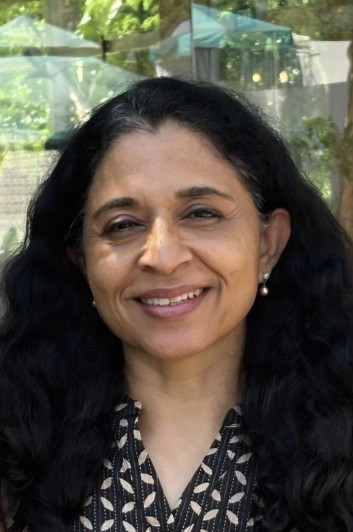
A region not to be ignored
As South Asia’s role in global affairs continues to evolve, the need for informed, critical and regionally grounded analysis is only set to grow.
Whether students go on to work in diplomacy, media, international business, or research, the programme equips them to make sense of South Asia’s growing significance on the world stage and to contribute meaningfully to that conversation.
To apply and/or learn more about the Master of Social Sciences in Geopolitics of South Asia Programme, visit the programme’s dedicated page on the NUS website.