The Jakarta Post
Please Update your browser
Your browser is out of date, and may not be compatible with our website. A list of the most popular web browsers can be found below.
Just click on the icons to get to the download page.


Popular Reads
Top Results
No results found. Please check your search term and try again
Can't find what you're looking for?
View all search results
Popular Reads
Top Results
No results found. Please check your search term and try again
Can't find what you're looking for?
View all search resultsTwenty-five years on
It would probably be good to ask ourselves whether we have practiced what Gus Dur taught the nation, namely the obligation to fight discrimination and to respect human dignity.
Change text size
Gift Premium Articles
to Anyone
Share the best of The Jakarta Post with friends, family, or colleagues. As a subscriber, you can gift 3 to 5 articles each month that anyone can read—no subscription needed!
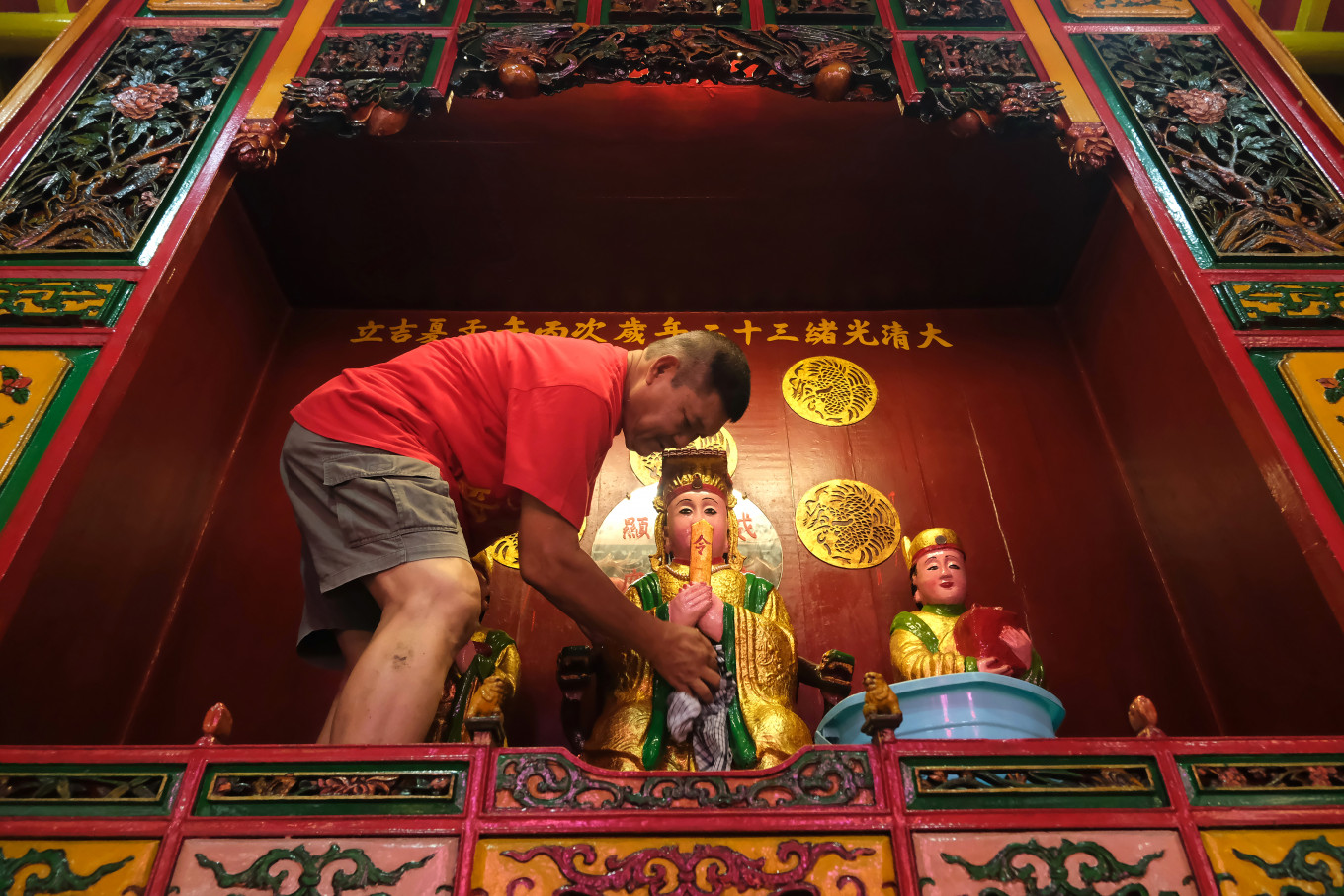 A temple caretaker wipes statues of the Sea Goddess and companion figures that are hundreds of years old on Feb. 11, 2026, at the prayer altar of Bodhisatva Karaniya Metta Vihara on Jl. Sultan Muhammad in Pontianak, West Kalimantan. The temple, also known as the Three Deities Temple and believed to have been established before 1822, is among Pontianak’s cultural heritage sites and is being prepared ahead of the 2026 Lunar New Year. (Antara/Jessica Wuysang)
T
wenty-five years ago, our Chinese-Indonesian compatriots received a lasting gift from the fourth president, Abdurrahman “Gus Dur” Wahid, when he declared the Lunar New Year a national holiday. During president Soeharto's rule, they were prohibited from celebrating this special day.
Gus Dur, the former chairman of the country's largest Muslim organization, openly condemned the reported sexual assaults on Chinese women, and violence against the wider Chinese community, during the nationwide riots of May 1998. After becoming president in October 1999, he quickly revoked all discriminatory and repressive regulations, such as the prohibition on using Chinese names and characters in public and the ban on celebrating the Lunar New Year.
As part of this year’s celebration, it would probably be good to ask ourselves whether we have practiced what Gus Dur taught the nation, namely the obligation to fight discrimination and to respect human dignity. This question applies to all citizens of the nation.
From a positive perspective, we can see how the discriminatory and restrictive acts by Soeharto's regime against our compatriots became a blessing in disguise. If they look back, they might view the bitterness with grace because they were forced to survive and to prosper. They worked much harder and smarter than others. They did not just complain about the situation and blame the government for their misery, as many of us often did.
Discrimination, however, is a complex problem in this country with more than 300 ethnic groups and more than 700 spoken languages. The largest groups are the Javanese, Sundanese, Batak, Madurese and Minang, all spread throughout 17,000 islands.
Officially, the Lunar New Year is celebrated as a national holiday in honor of Confucianism. The government of Indonesia recognizes six official religions, Islam, Protestantism, Catholicism, Hinduism, Buddhism and Confucianism. Not all Chinese people embrace Confucianism; therefore, the holiday is often regarded as a cultural festival.

According to independent estimates, the ethnic Chinese population numbers some 10 million to 11 million, while Indonesia's total population is more than 284 million. Most of them were born in Indonesia and see themselves as full citizens of the country, for which they are willing to make sacrifices, but they also expect equal treatment like every other citizen.