The Jakarta Post
Please Update your browser
Your browser is out of date, and may not be compatible with our website. A list of the most popular web browsers can be found below.
Just click on the icons to get to the download page.


Popular Reads
Top Results
No results found. Please check your search term and try again
Can't find what you're looking for?
View all search results
Popular Reads
Top Results
No results found. Please check your search term and try again
Can't find what you're looking for?
View all search resultsIndonesia’s climate crisis
Not only will cyclones become more frequent, but they could also become more dangerous.
Change text size
Gift Premium Articles
to Anyone
Share the best of The Jakarta Post with friends, family, or colleagues. As a subscriber, you can gift 3 to 5 articles each month that anyone can read—no subscription needed!
 Set as preferred source
T
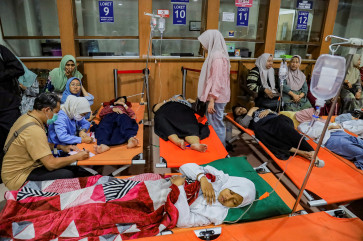
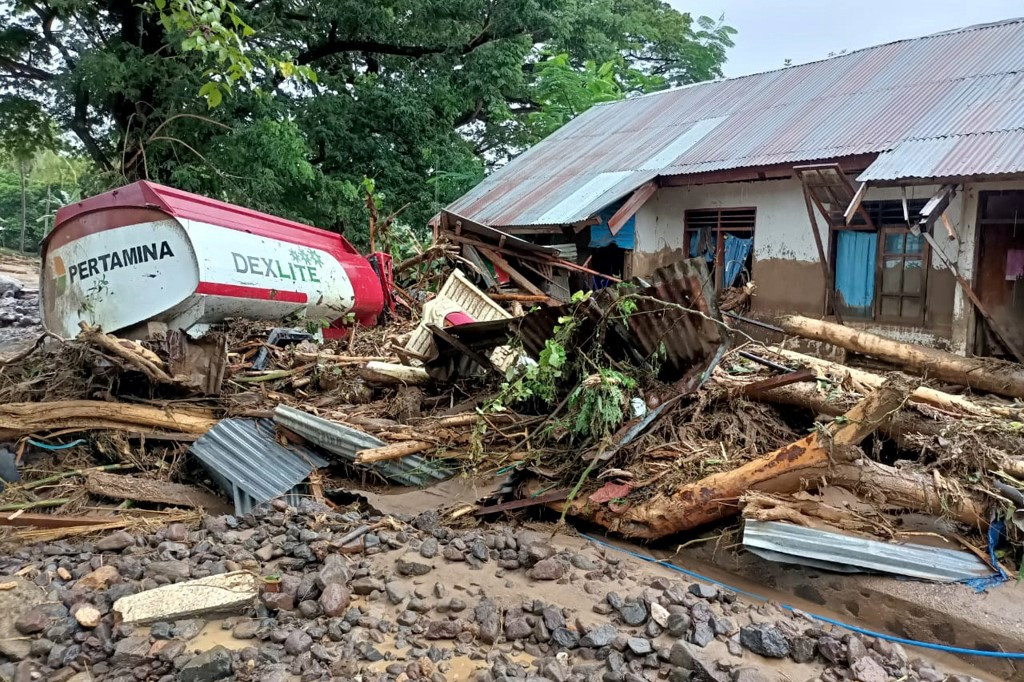
he tropical cyclone Seroja that swept through East Nusa Tenggara, West Nusa Tenggara and neighboring country East Timor on Sunday, triggering massive flooding and landslides that killed at least 113 people, is more proof that the climate crisis is here.
The horrifying magnitude of the disaster, as reflected in viral videos on social media, may have shocked many, but we should not claim we did not see it coming. In January, the National Disaster Mitigation Agency (BNPB) announced that Indonesia experienced a rising number of hydrometeorological disasters from 2015 to 2020, six of the hottest years on record according to the World Meteorological Organization (WMO).
In 2015, the country saw 1,664 hydrometeorological disasters. The figure then increased to more than double in 2019, with 3,810 disasters. It did drop to 3,023 last year, but that does not mean the threat of nature’s wrath is no longer there. The BNPB has made its message clear: We are going to see more extreme weather ahead.
The rationale behind that grim warning is a scientific fact that we have so often casually ignored: that the planet is getting hotter because of our greed and deeds. In a clear message to the people after the Seroja cyclone ravaged NTT, Meteorology, Climatology and Geophysics Agency (BMKG) head Dwikorita Karnawati said we should now brace for more cyclones, saying that the periods between them are getting shorter, from about once every four years to once or even twice a year since 2017.
The change, she explained, was because the average sea surface temperature has increased to 30 degrees Celsius from 26 degrees as a result of climate change.
“It is something we need to realize together; that global warming must be mitigated. Otherwise, these tropical cyclones will become a regular occurrence,” she warned.
Not only will cyclones become more frequent, she added, but they could also become more dangerous. Seroja is the strongest tropical cyclone Indonesia has seen since 2008, according to the BMKG. Unlike the 2017 Cempaka tropical cyclone, the center of which was still in the sea, the eye of the Seroja cyclone “reached land even as it first appeared”, which was an unusual occurrence.