Can't find what you're looking for?
View all search resultsCan't find what you're looking for?

View all search resultsThe new PPSK law allows Bank Indonesia to purchase government bonds in primary market for anything considered crisis by the government.
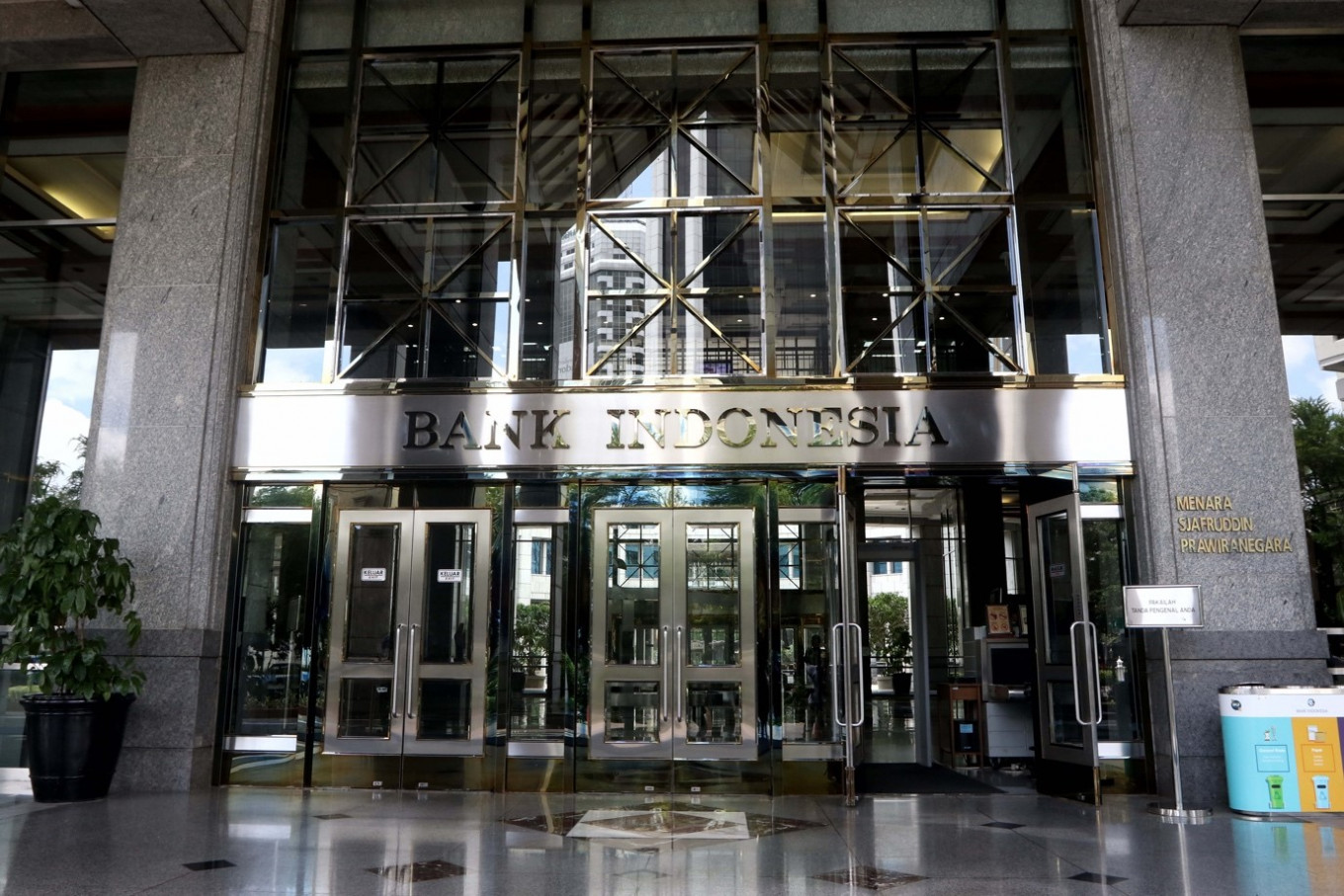
newly ratified omnibus law on the financial sector will formalize Bank Indonesia’s (BI) role in helping to finance the fiscal deficit in times of crisis, which economists believe could undermine the central bank’s independence and the government’s efforts to maintain fiscal discipline.
The Development and Strengthening of the Financial Sector (PPSK) Law, was passed by the House of Representative during a plenary meeting on Thursday after being finalized in just a month following the government’s formal response to a draft made by the legislative body.
Article 36A of the new law extends BI’s role in purchasing government bonds in the primary market, also known as debt monetization or burden-sharing scheme.
That way, the central bank is enabled to finance the state budget deficit, a scheme that was initially designed as a temporary measure to prevent economic meltdown during the COVID-19 pandemic and which was supposedly set to end in 2022 to give room for the government to maintain its fiscal discipline.
In the new law, BI’s role is also expanded further, including a duty to repurchase government bonds owned by the Deposit Insurance Corporation (LPS) to finance handling of troubled banks, as well as government debt paper owned by corporations to provide financing for them.
The article also stipulates that the central bank’s “bailout” will be made possible only if the president declares a crisis.
Read also: Finance omnibus bill: Govt, House reinstate ban on party 'cadres' running for BI posts
Commenting on the extended roles for BI, executive director of Center of Economic and Law Studies (Celios) Bhima Yudhistira told The Jakarta Post that the regulation poses a risk to fiscal discipline, as it would enable the government to utilize the “burden sharing” scheme over and over again in future economic crises.
Expanding the bond purchases from corporations also means the central bank would have to carry more of a burden and risk in the future, he said, adding that the so-called “crisis” could be interpreted freely by the government, which might lead to moral hazard in the future.
“Meanwhile, BI’s independence will also decline because it will have to carry out what has been written in the PPSK Law,” Bhima said on Thursday.
He presumed the government is anticipating increased risk from possibly prolonged and heightened interest rates that will make borrowing costlier. In that case, burden sharing may offer the government rather lower yields, if not nothing at all like it did during the pandemic.
Abdul Manap, researcher at the Institute for Development of Economic and Finance (Indef), said on Dec. 7 that the burden-sharing scheme could risk the economy itself, as any bailout made by the central bank would mean an increased supply of money that might trigger inflation.
He explained further that high inflation would be bad for economic growth, while also possibly complicating BI’s role in stabilizing inflation, which includes raising benchmark interest rates.
The International Monetary Fund has previously recommended central banks limit direct bond purchases, warning that such a practice, if prolonged, might result in a weakened balance sheet that could affect the banks’ ability to fulfil their mandatory role and erode confidence in them because of pressure to achieve government goals.
Nonetheless, Finance Minister Sri Mulyani Indrawati insisted that abusing the provision in the PPSK Law would not be possible, as it could be used only during a public emergency as determined by the president, which must meet the criteria of a threat to the financial system.
“We will make a provision to give an assurance under which conditions it could be done, especially those considered a crisis,” Sri Mulyani told reporters on Dec. 8.
Read also: Explainer: Financial system bill heralds changes from crypto to BI
Aside from government bond purchases, the law also provides wide changes to BI and other financial watchdogs. It reinstates the ban on members of political parties holding positions in BI, reversing a 2004 revision that removed the ban.
The new law also extends the central bank’s role in supporting the country’s economic growth, which was previously limited to just stabilizing the rupiah.
In addition, the law provides firmer and more stringent rules on banking, insurance, pension funds and financial technology (fintech) firms, which include digital banks, insurance-tech and peer-to-peer (P2P) lending, among many others.
Under the new law, the Financial Services Authority’s (OJK) role is also strengthened by including supervision of financial institutions, cryptocurrencies, a carbon bourse and bullion banks.
Meanwhile, the LPS also gets new mandates to guarantee insurance policyholders in cases where an insurer gets closed down or liquidated.
Sri Mulyani said separately on Thursday that those changes would provide the country with a better footing to face upcoming challenges that may pose a threat to the financial sector, as the law allows the government to revise some decades-old provisions, as well as paving the way for new rules to address recent developments in financial services.
Share your experiences, suggestions, and any issues you've encountered on The Jakarta Post. We're here to listen.
Thank you for sharing your thoughts. We appreciate your feedback.
Quickly share this news with your network—keep everyone informed with just a single click!
Share the best of The Jakarta Post with friends, family, or colleagues. As a subscriber, you can gift 3 to 5 articles each month that anyone can read—no subscription needed!
Get the best experience—faster access, exclusive features, and a seamless way to stay updated.