The Jakarta Post
Please Update your browser
Your browser is out of date, and may not be compatible with our website. A list of the most popular web browsers can be found below.
Just click on the icons to get to the download page.


Popular Reads
Top Results
No results found. Please check your search term and try again
Can't find what you're looking for?
View all search results
Popular Reads
Top Results
No results found. Please check your search term and try again
Can't find what you're looking for?
View all search resultsRemission ban to stay, despite ruling: Ministry
The Law and Human Rights Ministry says it will continue its ban on sentence reductions for corruption convicts, despite a recent court ruling
Change text size
Gift Premium Articles
to Anyone
Share the best of The Jakarta Post with friends, family, or colleagues. As a subscriber, you can gift 3 to 5 articles each month that anyone can read—no subscription needed!

T
he Law and Human Rights Ministry says it will continue its ban on sentence reductions for corruption convicts, despite a recent court ruling.
Deputy Minister Denny Indra-yana said that the ministry would appeal the Jakarta Administrative Court’s decision ordering the paroles of seven corruptions convicts incarcerated at Cipinang Penitentiary in East Jakarta and Salemba Penitentiary in Central Jakarta.
“The ruling only revoked the [ministry’s] annulment of those seven convicts’ paroles,” he said. “Our policy on the limitation of remissions is still in place.”
The inmates, whose paroles were delayed after a ministerial decree banning remissions for corruption crimes was issued in November, would be freed while the appeal was pending, Deddy said.
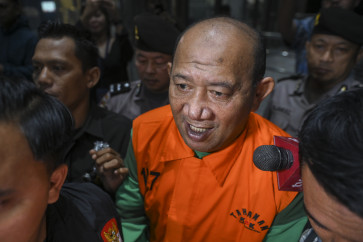
The paroles of the convicts — Ahmad Hafiz Zawawi, Bobby Suhardiman, Hengky Baramuli, Esti Andi Tjahyanto, Agus Wijayanto Legowo, Mulyono Subroto and Ibrahim — were put on hold after incoming Law and Human Rights Minister Amir Syamsuddin issued the decree.
Three of the convicts — former Golkar Party lawmakers Ahmad, Bobby and Hengky — were sentenced to prison for accepting bribes in connection with the vote-buying scandal surrounding the appointment of Miranda S. Goeltom to a senior Bank Indonesia deputy governor position.
The former lawmakers’ lawyer, Yusril Ihza Mahendra, filed a lawsuit over Amir’s decision with the Jakarta State Administrative Court in December.
While Denny said that he agreed that a parole was the right of every prisoner, he added that it did
not mean that paroles should be easily granted.
Amir previously said that the ministry would study the court’s decision before proceeding.
Yusril told the court that every prisoner had the right to a parole if they met the requirements stipulated by the 1995 Corrections Law.
In their petition, the convicts asked that the ministerial decree be struck down by the court as it was retroactive and covered inmates whose paroles were issued in the month before it was promulgated.
The ministry ignored the law in favor of following public opinion when it issued the decree, the plaintiffs said in their petition, although it was not made clear who the ministry was attempting to assuage with its policy.
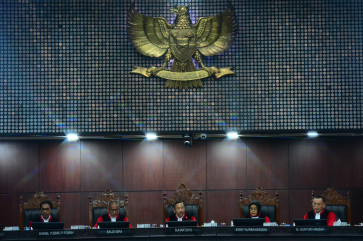
Before issuing its decision, the panel of judges led by Bambang Heriyanto heard testimony proffered by expert witnesses on both sides.
Romli Atmasasmita — a law professor from Padjadjaran University in Bandung, West Java, and former head of the ministry’s general law administration division — testified for the plaintiffs, saying that it
was wrong to discriminate against graft convicts.
Meanwhile, the ministry’s expert, Zaenal Arifin Muchtar, the head of Gadjah Mada University’s corruption studies department in Yogyakarta, said that corruption was enemy of society and a threat to human dignity.
The court decided in favor for the plaintiffs, saying there was no urgency in the ministry’s decrees.
Lawmaker Benny K. Harman, the chairman of House of Representatives’ Commission III overseeing legal issues, said legal challenges were part of the normal democratic process.
“It is not about who is pro-corruptor and who is against them. We are talking about law here; if the independent courts decide to release corruptors, then we must respect that,” Benny said.