TheJakartaPost
Please Update your browser
Your browser is out of date, and may not be compatible with our website. A list of the most popular web browsers can be found below.
Just click on the icons to get to the download page.


Popular Reads
Top Results
No results found. Please check your search term and try again
Can't find what you're looking for?
View all search results
Popular Reads
Top Results
No results found. Please check your search term and try again
Can't find what you're looking for?
View all search resultsRI market overrun with hundreds of substandard goods
With more than 1,000 products on the market still not fulfilling Indonesian National Standards (SNI), better monitoring is needed to ensure consumer protection and to remedy the situation, officials from the Trade Ministry say
Change text size
Gift Premium Articles
to Anyone
Share the best of The Jakarta Post with friends, family, or colleagues. As a subscriber, you can gift 3 to 5 articles each month that anyone can read—no subscription needed!

W
ith more than 1,000 products on the market still not fulfilling Indonesian National Standards (SNI), better monitoring is needed to ensure consumer protection and to remedy the situation, officials from the Trade Ministry say.
Speaking at a media briefing on Friday, the ministry's director general for standards and consumer protection, Widodo, revealed that the government recorded a total of 1,222 SNI-noncompliant products from 2011 to 2013, almost 50 percent of which were identified in 2013 alone.
Ministry data showed that there were 601 products that failed to meet national standards in 2013, while 519 were recorded in 2012 and 102 in 2011.
In 2014, the ministry found 95 products that had not met the applicable quality standards, including coming with a warranty, instructions in Indonesian and adequate labels.
'Of the 95 products that were deemed problematic, as many as 72 were imports, while the rest were locally produced,' Widodo said at the ministry office in Central Jakarta.
He said that 17 domestic products and 21 imports successfully passed the quality test, while another 82 products still needed to undergo quality control for the remainder of 2014.
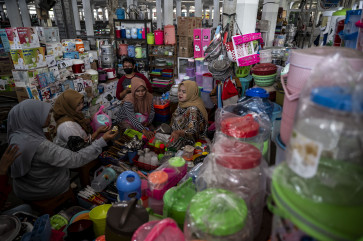
According to Widodo, the Trade Ministry searches for noncompliant products in several places across the country, such as shopping centers, minimarkets and traditional markets. Goods deemed as substandard have included motorized vehicles, fans, cell phones and other household items.
The ministry official said that importers and manufacturers of products that lack proper quality certification had already been reprimanded and even penalized by having their goods confiscated and taken off the market, or by having dossiers about them submitted to the prosecutor's office.
'Information about any further action taken against such unregulated products, including withdrawing goods from circulation and revoking licenses, will be published on the Trade Ministry website,' he said.
The government would also continue to monitor products that disregard the SNIs and penalize companies that do not meet the requirements or do not offer maximum protection to consumers, Widodo added.
He also said that imposing SNIs on products improved competitiveness.
The director general explained that SNI-labeled products offered more added value by considering consumer protection in terms of health, safety and environmental sustainability. He therefore suggested that domestic producers be encouraged to implement the national standards.
However, Widodo said he would insist on taking an industry's capacity into consideration when devising SNIs, especially when it comes to small and medium enterprises (SMEs); obligatory national standards, when vetted and recognized by the World Trade Organization, applies equally to domestic and imported goods.
'Give SMEs the chance to draft the standards. Don't let them fall behind [imported products] when [SNIs] are in force,' he said.
Chandrini Mestika Dewi, the ministry's director for product-quality development, said that the government had already introduced programs that assist SMEs in meeting national standards, citing the example of the Industry Ministry's paint subsidies for SMEs in the toy making industry.
'Implement programs that help SMEs; for instance, source subsidized raw materials so that they're able to meet the standard requirements for production,' she said.