TheJakartaPost
Please Update your browser
Your browser is out of date, and may not be compatible with our website. A list of the most popular web browsers can be found below.
Just click on the icons to get to the download page.


Popular Reads
Top Results
No results found. Please check your search term and try again
Can't find what you're looking for?
View all search results
Popular Reads
Top Results
No results found. Please check your search term and try again
Can't find what you're looking for?
View all search resultsIndonesia 'cannot afford to have a nationalistic policy', says official
Indonesia simply cannot afford to make major policy changes that would negatively impact foreign direct investment flows in the country, opines Fauzi Ichsan, a key economic adviser to newly elected president Joko 'Jokowi' Widodo
Change text size
Gift Premium Articles
to Anyone
Share the best of The Jakarta Post with friends, family, or colleagues. As a subscriber, you can gift 3 to 5 articles each month that anyone can read—no subscription needed!

I
ndonesia simply cannot afford to make major policy changes that would negatively impact foreign direct investment flows in the country, opines Fauzi Ichsan, a key economic adviser to newly elected president Joko 'Jokowi' Widodo.
Fauzi, who was in Kuala Lumpur for a luncheon talk to share his views about the promised changes Jokowi is to bring to Indonesia, said this in an interview with StarBiz.
He was responding to a question about the perennial concerns Malaysian investors in the banking and plantations sectors in Indonesia face, namely politicians that continue to seek to pass nationalistic laws that seek to not only limit foreign ownership in investments but to also force existing investors to divest their stakes in strategic sectors such as banking.
But Fauzi, who is also managing director and senior economist at Standard Chartered Bank Indonesia, explained that there were always nationalistic forces in any country that raised concerns about foreign ownership in strategic sectors.
However, when seen in a macro economic context, there are signs that countries like Indonesia cannot afford to do anything that would jeopardise foreign investment into the country.
'Indonesia is running a current account deficit. In 2011, it had a US$2 billion surplus due to record high commodity prices, with commodities making up the bulk of exports. However with the subsequent collapse of commodity prices, the current account shifted from a surplus in 2011 to a deficit of US$24 billion in 2012 and to US$28 billion in 2013. The deficit is going to be around US$25 billion this year.'
He added: 'When you run a current account deficit, you need foreign investment. And next year, things could be more challenging, when the US will begin hiking short-term interest rates, following the move taken to end its quantitative easing programme.
'This will make it difficult for countries with current account deficits like Indonesia as funding costs in the US becomes more expensive.
'So a country like Indonesia cannot afford to have a nationalistic or protectionist policies.'
He said that while Jokowi would have to contend with nationalist pressures to limit foreign investment or control in the banking sector, the president's pledge to his voters is to accelerate growth in the country to 7 per cent a year.
And to realise such rapid growth, there needed to be rapid investment and consumption growth, Fauzi said.
'To realise that you need rapid credit growth of about 30 per cent every year. This in turn means that for every five years, the Tier 1 capital of Indonesia banks will have to be doubled. Jokowi's stance is simply this: If local capital is not adequate to recapitalise the banking system, then Indonesia must be open to foreign capital in order to support the economic growth he has promised. This is why, in the long run, I don't believe that the nationalist pressures and sentiments would actually result in any forced divestment of foreign holdings in Indonesian banks.'
He also pointed out the weaknesses in the Indonesian parliament's previous plans to pass laws that would seek to have all branches of foreign banks to be locally incorporated and to have a forced divestment of foreign ownership in Indonesian to a cap of 40 per cent.
On the first rule of local institutionalistion of foreign banks, Fauzi said: 'This could be legally questionable, as it would be against the principles of 'grand fathering' under the WTO (World Trade Organisation).'
On the forced divestment attempt, he said: 'To some people, this constitutes an attempt of nationalisation of the banking sector. Furthermore, local investors would not be able to absorb the divestment stakes. And that is why I would not worry too much about these issues, especially under the new leadership.'
On the plantation sector, Fauzi raised an interesting point: that many of the large Indonesian parties invested in plantations in Indonesia can themselves be seen to be foreign investors as their holding companies are listed in other countries such as Singapore.
'So these parties are investing as foreign direct investors. Hence, they too could be affected in any rule changes with regard to foreign ownership of plantations in Indonesia.'
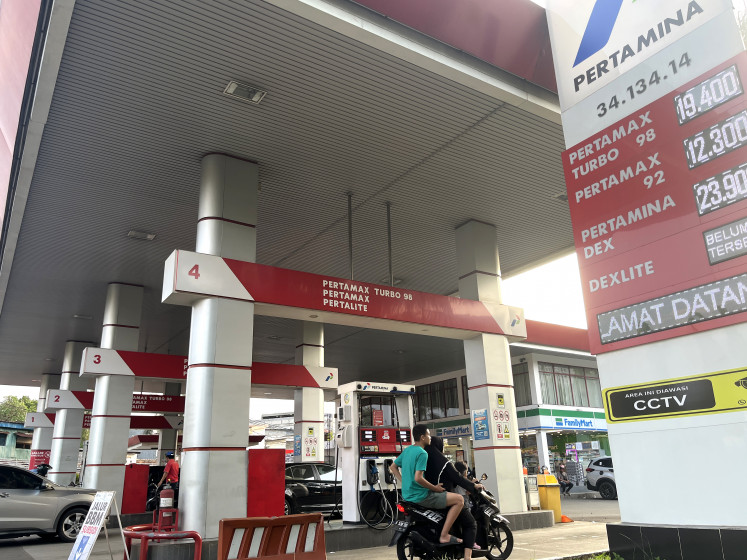
Fauzi also expressed confidence that Jokowi would be successful in implementing his plans to cut red tape, raise fuel prices and introduce a national health card. (***)