TheJakartaPost
Please Update your browser
Your browser is out of date, and may not be compatible with our website. A list of the most popular web browsers can be found below.
Just click on the icons to get to the download page.


Popular Reads
Top Results
No results found. Please check your search term and try again
Can't find what you're looking for?
View all search results
Popular Reads
Top Results
No results found. Please check your search term and try again
Can't find what you're looking for?
View all search resultsObama's realisation on IS
Foreign interventions, regime change and implanting democracy from the outside have all been failed strategies that have only served to destabilise the global scenario
Change text size
Gift Premium Articles
to Anyone
Share the best of The Jakarta Post with friends, family, or colleagues. As a subscriber, you can gift 3 to 5 articles each month that anyone can read—no subscription needed!

F
oreign interventions, regime change and implanting democracy from the outside have all been failed strategies that have only served to destabilise the global scenario.
Yet it is rare ' especially for superpowers ' to admit to the failure of such follies. In this context, Barack Obama's recent comments regarding the rise of the self-styled Islamic State are a welcome realisation.
The US president said the IS phenomenon 'grew out of our invasion' of Iraq in 2003, while adding that the so-called caliphate was an 'outgrowth' of Al Qaeda in Iraq.
Indeed the US ' and others ' have often shown a propensity to play the role of global policeman.
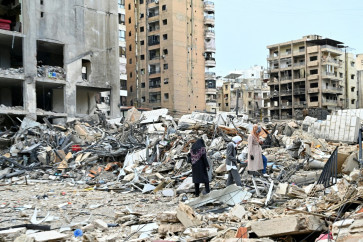
However, the results of interventionism have rarely led to any positive outcome. Whether it was Soviet forces marching into Afghanistan in 1979, the US invasion of Iraq, or the Nato-led air war in 2011 targeting Muammar Qadhafi's regime in Libya, such interventions have left the targeted countries in worse shape than before.
Indeed, problems in most of the world's trouble spots existed before the interventions, and foreign interference has only exacerbated these to the point of virtually destroying once-functional states.
But Obama's realisation must go beyond words and be reflected in policy. Replacing 'unfriendly' regimes (as some in the West are still trying to do in Syria) through guile and aggression is and always will be a bad idea.
Moreover, it has often been witnessed that those professing democratic values have either helped dictators quash popular aspirations, or looked the other way for strategic reasons.
All major players in the international arena must realise that democratisation is an organic process and that people must be left to chart their own destiny.
Coming back to IS, Obama has talked of the '60-nation coalition' to counter the extremist movement.
But if such efforts are to succeed in the long term, they must be coordinated with the governments in Baghdad and Damascus, while regional states (particularly Iran and Saudi Arabia) should play a central role in battling the extremists. (***)