The Jakarta Post
Please Update your browser
Your browser is out of date, and may not be compatible with our website. A list of the most popular web browsers can be found below.
Just click on the icons to get to the download page.


Popular Reads
Top Results
No results found. Please check your search term and try again
Can't find what you're looking for?
View all search results
Popular Reads
Top Results
No results found. Please check your search term and try again
Can't find what you're looking for?
View all search resultsResidents complain of hospital fee mark-ups
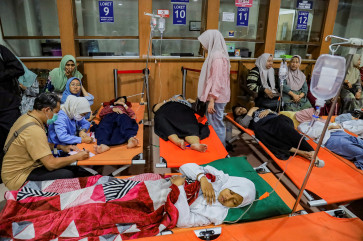
Sulastri, a recipient of Gakin (health insurance for poor people), recently paid millions of rupiah for a kidney operation at a government-owned hospital
Change text size
Gift Premium Articles
to Anyone
Share the best of The Jakarta Post with friends, family, or colleagues. As a subscriber, you can gift 3 to 5 articles each month that anyone can read—no subscription needed!
 Set as preferred source

S
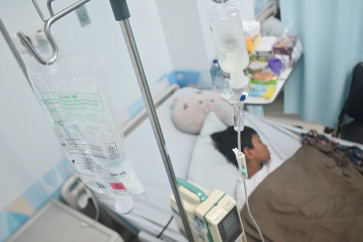
ulastri, a recipient of Gakin (health insurance for poor people), recently paid millions of rupiah for a kidney operation at a government-owned hospital.
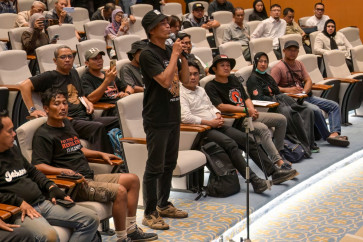
“The hospital told me to pay for every injection I received and also for a blood test,” she said at a meeting between residents and city health agency officials organized by NGO Jakarta Residents Forum (Fakta) last week.
“I thought that since I had a Gakin card, I was entitled to free treatment,” Sulastri said.
The hospital also told Sulastri, who was still unable to walk after the operation, to go return home three days after the operation.
“I had my operation on Jan. 4 and the hospital asked me to go home on Jan. 7,” she said.
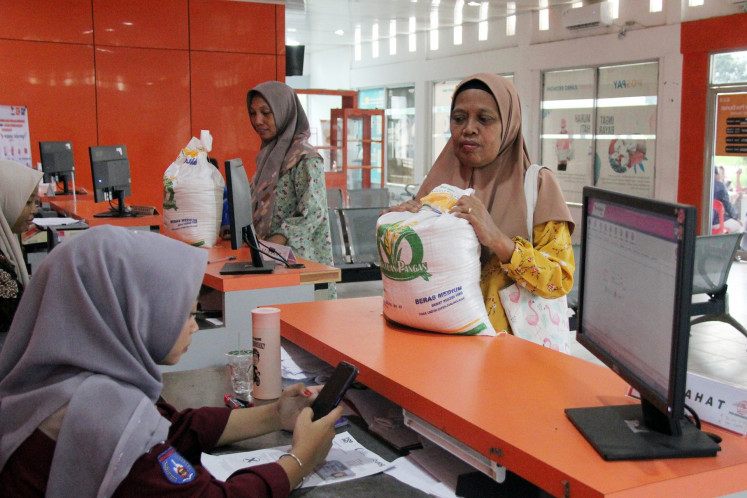
Gakin is the city-sponsored free healthcare service for poor citizens.
Those who are eligible for the scheme receive a card that is supposed to exempt them from healthcare fees at certain hospitals and public health clinics.
Yudita, the agency’s head of fund planning, said she was shocked to hear Sulastri’s story.
She said she checked Sulastri’s bills and found another discrepancy.
“According to the receipts, the cost of [Sulastri’s] treatment was fully covered by Gakin and she stayed in the hospital until Jan. 11,” she said.
“The hospital marked up the cost of her health treatment,” she added.
Fakta chairman Azas Tigor Nainggolan said Sulastri’s case was only one example of embezzlement of Gakin funds by administration-appointed hospitals in the city.
“We found more than 50 cases of embezzlement last year. We hope this meeting will raise the agency’s awareness of this issue,” he said.
Tigor added there were many cases where patients who were ignorant of Gakin procedure were told by middlemen that they could only use the scheme if they paid them.
“In many cases, the middlemen were hospital employees,” he said.
“Yet even after these patients paid the fees, they were still treated badly, as in Sulastri’s case,” he said.
Health agency spokeswoman Ariani Murti welcomed Fakta’s initiative, saying, “Gakin is one of the city’s top priority programs. We welcome any effort to scrutinize the program’s fund management.”
She said there were no reasons for hospitals to refuse poor patients treatment. “The administration pays hospitals standard fees for treating patients under Gakin.
“No patient should ever experience bad treatment just because they are poor,” she said.
This year, the city administration allocated Rp 413 billion (US$43.4 million) for Gakin, a decrease from Rp 550 billion last year.
Ariani said the scheme paid for medical costs of more than 1 million for various illness. (mrs)