TheJakartaPost

Please Update your browser

Your browser is out of date, and may not be compatible with our website. A list of the most popular web browsers can be found below.
Just click on the icons to get to the download page.


Jakarta Post

The future of WTO and the need for reform

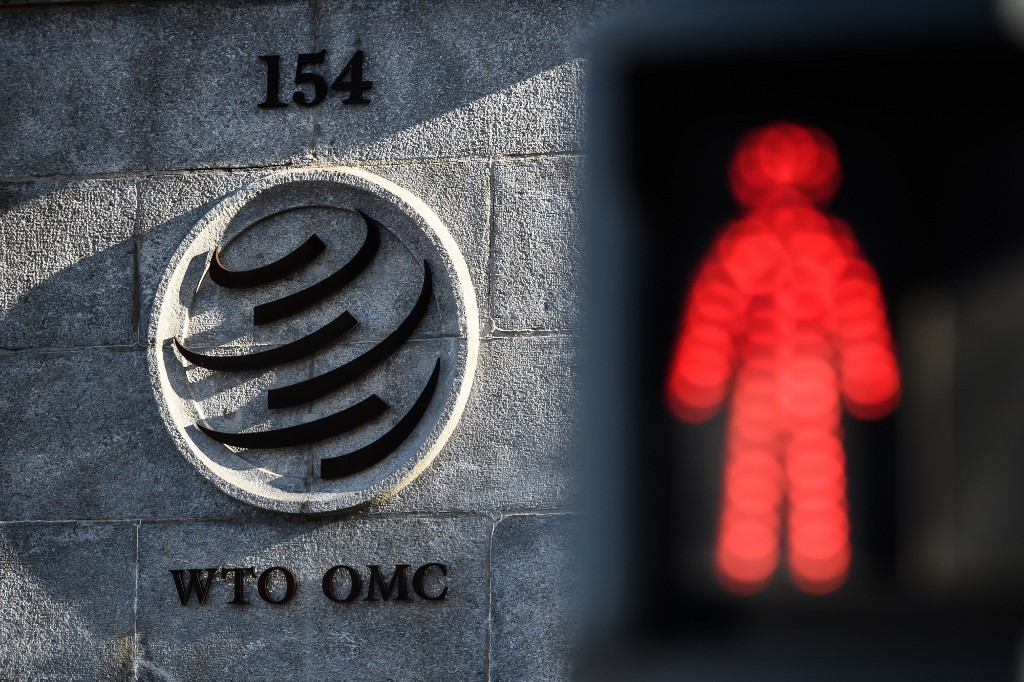
The United States-China trade war and the paralysis of the WTO’s dispute settlement function only serve to underline that the world should not take the global multilateral trading system for granted.

Dandy Rafitrandi and Rocky Intan (The Jakarta Post)
Jakarta
Fri, December 18, 2020 Published on Dec. 17, 2020 Published on 2020-12-17T23:04:50+07:00

Change text size

Gift Premium Articles
to Anyone

Share the best of The Jakarta Post with friends, family, or colleagues. As a subscriber, you can gift 3 to 5 articles each month that anyone can read—no subscription needed!

I

n mid-November, 15 leaders from Asia Pacific signed the Regional Comprehensive Economic Partnership (RCEP) with much fanfare. November 2020 also marked the end of the celebration for the 25th anniversary of the World Trade Organization (WTO).

In the flurry of regional trade agreements and the memory of the failure of the Doha Round, one might question the relevance of the WTO. But the United States-China trade war and the paralysis of the WTO’s dispute settlement function only serve to underline that the world should not take the global multilateral trading system for granted.

The WTO's role has been considered effective in accelerating economic growth and increasing global prosperity. The trade value has quadrupled, tariff barriers have dropped significantly by 50 percent, and the WTO's dispute resolution mechanism has facilitated about 600 trade disputes.

However, persistent hurdles remain. One of them is that the Doha Development Agenda (DDA) has not been agreed upon since 2001. The inability of WTO member countries to reach a consensus on the liberalization of the agricultural and industrial sectors and policies in some sectors and to deal with subsidies and non-tariff barriers has resulted in a deadlock and sub-optimal potential benefits from DDA, particularly for developing countries.

After 25 years, the rules implemented by the organization have been stuck in the 20th century, in a world that has progressed when it comes to regional value chains, digital services trade and e-commerce.

Such a development has triggered proposals to reform the WTO. There are three key areas of reform for consideration to make the WTO more effective.

First is related to negotiations and principles focusing on horizontal issues, such as decision-making and special standard and differential treatment (S&DT). The rule-making condition in the WTO has made it increasingly hard to achieve consensus with a single undertaking and consensus approach.
Therefore, the idea is to increase the WTO’s flexibility, for example by keeping the plurilateral system option open. This means that not all members should be in the negotiations but it will always be open and encouraged for other members to get involved.

Second concerns developing country status and the principle of S&DT. On the S&DT issue, developed countries members of WTO have been questioning the definition of developing countries since some of countries still receive S&DT facilities, although they should not be counted as developing countries anymore, such as Singapore, South Kore, and Taiwan.

One proposal calls for a clear-cut definition of developing members, instead of the current self-described practice. On this issue, developed countries such as the United States have proposed more concise indicators to define a country’s level of development taking into account the country’s membership in the Organization for Economic Cooperation and Development (OECD), Group of 20, and World Bank Income group, as well as its global trade contribution.

Next is the lack of compliance and capacity of members in monitoring and notification. These two are the two essential features in the WTO’s role since they are the primary tools of member states to track each other’s trade policy. Some proposals have been discussed to improve the implementation of monitoring activities, including by imposing sanctions on those members who do not carry out their obligations.

There are two main positions that can be drawn from various proposals related to transparency and the monitoring of trade policies. The positions of various developed countries tend to push for the implementation of a mechanism to impose sanctions on members that do not heed the various notification and transparency obligations agreed upon. These countries also propose providing assistance and support to members that have been unable to fulfill these various obligations. Developing countries tend to take a different position by calling for a more cooperative and inclusive approach in building their capacity to meet the demand for transparency.

Third, which may be the most urgent task reform, is to revive the WTO’s dispute settlement function. For the last several years, the US has blocked the appointment of judges at the WTO Appellate Body (AB), which makes legal and final decisions on trade disputes between members. With the paralysis in the AB, member states should explore alternative arrangements. This also opens up the possibility to modify the dispute settlement mechanism.

Given that the most of the reform proposals come from developed members, one might ask whether those reforms are also in the interests of developing members, including Indonesia.

Currently, developing members are either opposed to the proposals by supporting counter proposals or remain silent. This It is quite reasonable, considering that in some cases, developed members may lose the special rights and flexibility they enjoyed thus far.

However, in some other cases, reforms are seriously needed. With the complexity of members’ interests and rapid transformation of production and trade patterns, some modification on consensus and single undertaking might be necessary to avoid prolonged failure of negotiations. Especially if the plurilateral approach did not prevent non-signatory members from enjoying the benefits of the agreement.

The support of developing countries is even more necessary for the dispute settlement problem. They should urge the US to lift its blockade of new members of AB. With the incoming Biden administration, there should be a less hostile attitude toward the global trading system that hopefully promotes a favorable situation. This is not to negate the need for reforms to AB.

In the medium term, discussions on the dispute settlement system’s transparency, speed and scope should continue. Recently, almost 90 percent of dispute settlement cases ended up in the AB, rendering its workload as excessive. The fact that normally all members of AB come from Europe or the US also indicates underrepresentation of developing members in dispute settlement.

Changes and reform in the WTO are necessary to improve its function and to come up with new trade rules for current and future trade trends.

The key for successful reform is intensive but honest and sincere discussion between members. As one of the biggest developing economies, Indonesia should play a greater role into shaping the future of the WTO. It is not only in the best interest of the country but also to support a better trading environment and to promote sustainable development.

 ***

Dandy Rafitrandi is a researcher in department of economics and Rocky Intan is a researcher for the department of international affairs, Centre for Strategic and International Studies (CSIS), Jakarta.

Your Opinion Matters

Share your experiences, suggestions, and any issues you've encountered on The Jakarta Post. We're here to listen.

Enter at least 30 characters
0 / 30

Thank You

Thank you for sharing your thoughts. We appreciate your feedback.

Share options

Quickly share this news with your network—keep everyone informed with just a single click!

Change text size options

Customize your reading experience by adjusting the text size to small, medium, or large—find what’s most comfortable for you.

Gift Premium Articles
to Anyone

Share the best of The Jakarta Post with friends, family, or colleagues. As a subscriber, you can gift 3 to 5 articles each month that anyone can read—no subscription needed!

Continue in the app

Get the best experience—faster access, exclusive features, and a seamless way to stay updated.