The Jakarta Post
Please Update your browser
Your browser is out of date, and may not be compatible with our website. A list of the most popular web browsers can be found below.
Just click on the icons to get to the download page.


Popular Reads
Top Results
No results found. Please check your search term and try again
Can't find what you're looking for?
View all search results
Popular Reads
Top Results
No results found. Please check your search term and try again
Can't find what you're looking for?
View all search resultsIn Istanbul, drummers keep ancient Ramadhan tradition alive
Change text size
Gift Premium Articles
to Anyone
Share the best of The Jakarta Post with friends, family, or colleagues. As a subscriber, you can gift 3 to 5 articles each month that anyone can read—no subscription needed!
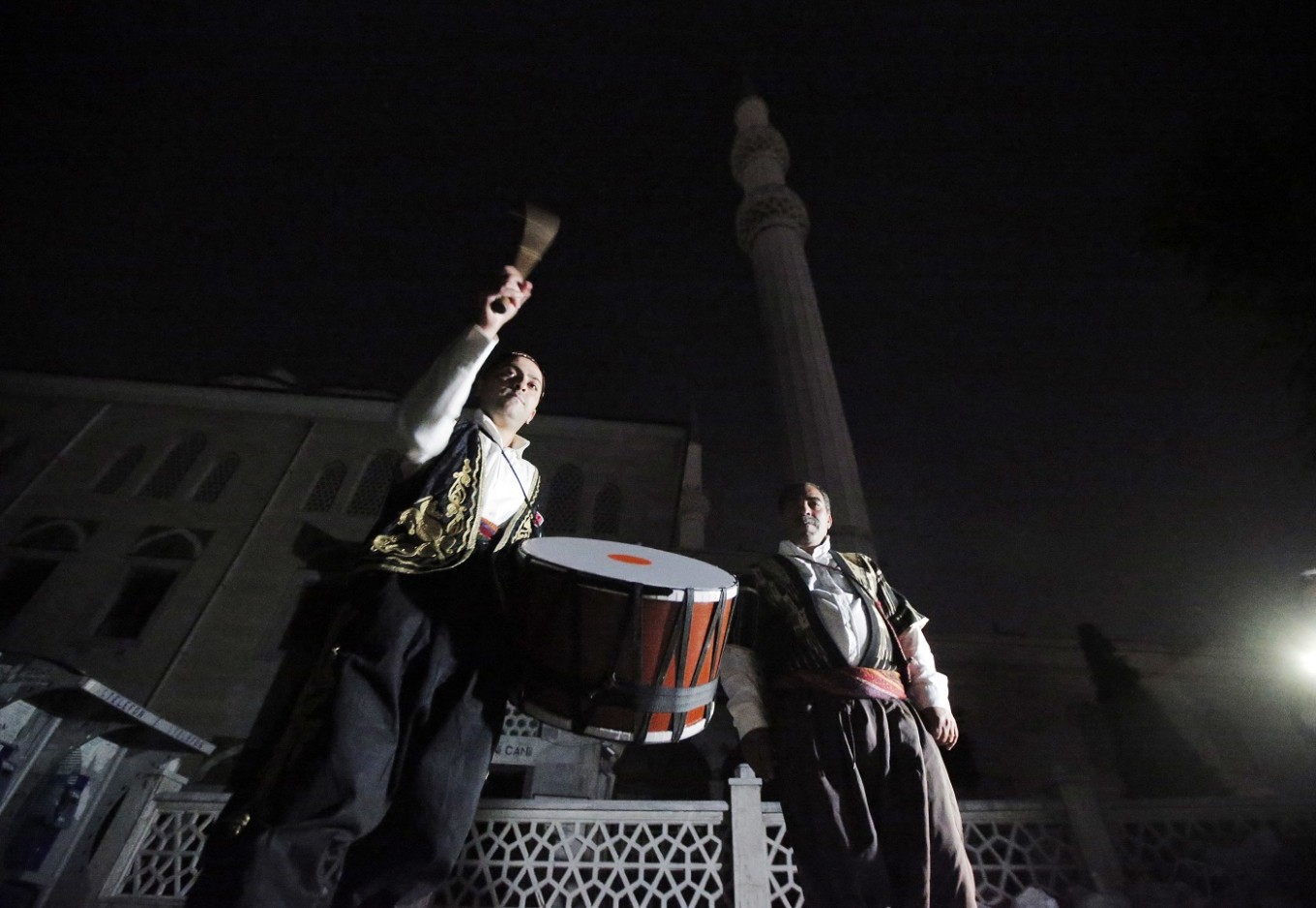 On the first day of the Muslim holy month of Ramadan, a drummer, wearing traditional Ottoman clothes, performs in an Istanbul neighborhood, More than 2000 drummers wander through Istanbul's neighborhoods playing their drums in the early hours to wake up the residents as part of the holiday tradition. (AP/Lefteris Pitarakis)
I
n the dark of night, when the streets of Istanbul enjoy a rare moment of quiet, Ali Buldu sets out beating his drum to wake up his neighborhood. For most, Buldu's passing is a welcomed sign that the Muslim month of fasting and prayer has begun.
The 55-year-old decked in traditional Ottoman attire has been making these pre-dawn Ramadhan rounds for half of his life. It's a tradition he treasures, just like his forefathers did, and one that he is trying to pass on to the next generation.
Roughly 2,000 drummers wander around Istanbul's neighborhoods during Ramadhan, a time when Muslim families fast from sunrise to sundown and come together for prayer and copious meals sweetened by dates and pastries to break off the fast. The drummers wander the streets to wake up residents for "sahur" — meals eaten before dawn.
"The Ramadhan drummer has existed since the age of the Ottomans," Buldu says with pride as his 23-year-old nephew Emrah, who is joining him in the tradition, vigorously stirs sugar into his teacup before they march off in different directions at the speed of seasoned soldiers.
Throughout the year, Buldu and many of his male relatives earn money by playing at weddings and other festivities. But during Ramadhan, they rely on the generosity of residents to survive.
"During Ramadhan, we don't have a job as no one organizes weddings," he tells The Associated Press before his first outing of the year. "May God bless the neighborhood residents, we take tips from those who (want to) give."
On average, Istanbul's drummers are in their forties or fifties. Most young people are not interested in taking on the task and seek out different jobs, says Buldu who picked up the sticks when his uncle died. Sometimes, the veteran drummer worries the craft will disappear and that drummers will be unceremoniously replaced by alarm clocks.
However, the introduction of Ottoman costumes five years ago and official membership cards for those who play have restored a sense of pride to the age-old tradition and helped expand the network of drummers in the booming metropolis.
(Read also: Break the fast in style at these hotels in Jakarta)
In the past three years, the ranks of drummers have grown from about 900 to 2,000, says Selami Aykut, a neighborhood administrator in the middleclass district of Bahcelievler. Before, there would be just one drummer per neighborhood.
"We want to keep the old traditions alive," Aykut tells the AP after his family shares a light pre-dawn meal.
The practice is welcomed by most, except a small minority who are bothered by the bang of the drum — typically the elderly, sick or mothers with young babies, Aykut says.
"It is important because people know that Ramadhan has come from the sound of the drum," he says. "People were complaining because they couldn't hear the drummers on the streets anymore."
There is not much money in the business, with drummers knocking doors twice in the month to collect bakhshish, a small reward that can run from less than a dollar to around $20.
But for Buldu's young nephew, who is bucking the trend among his contemporaries, the best reward is keeping the tradition alive.
"It makes people happy and it makes us happy to play during Ramadhan," Emrah Buldu says.
___
Neyran Elden and Bram Janssen in Istanbul contributed to this report.