TheJakartaPost
Please Update your browser
Your browser is out of date, and may not be compatible with our website. A list of the most popular web browsers can be found below.
Just click on the icons to get to the download page.


Popular Reads
Top Results
No results found. Please check your search term and try again
Can't find what you're looking for?
View all search results
Popular Reads
Top Results
No results found. Please check your search term and try again
Can't find what you're looking for?
View all search resultsEvictions for green space will rise: Expert
The city administration may need to evict more squatters from riverbanks and railways to meet its green space target, if the 29 gas stations are no longer an option, an expert says
Change text size
Gift Premium Articles
to Anyone
Share the best of The Jakarta Post with friends, family, or colleagues. As a subscriber, you can gift 3 to 5 articles each month that anyone can read—no subscription needed!

The city administration may need to evict more squatters from riverbanks and railways to meet its green space target, if the 29 gas stations are no longer an option, an expert says.
Urban expert Yayat Supriatna of Trisakti University said Saturday the administration had only one choice left to substitute the gas stations originally included as target areas to be restored in its greening campaign (but now rejected from the list).
"The administration will perhaps be forced evict more squatters living next to rivers and railway lines, since they have illegally occupied city and state land," he told The Jakarta Post.
The government and administration have already plans to destroy more than 15,000 shanties around railways, dams and riverbanks in Jakarta this year.
"However, such a move will be costly and the administration must be ready to deal with social conflicts that will arise afterwards," Yayat said.
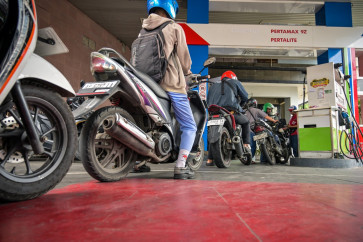
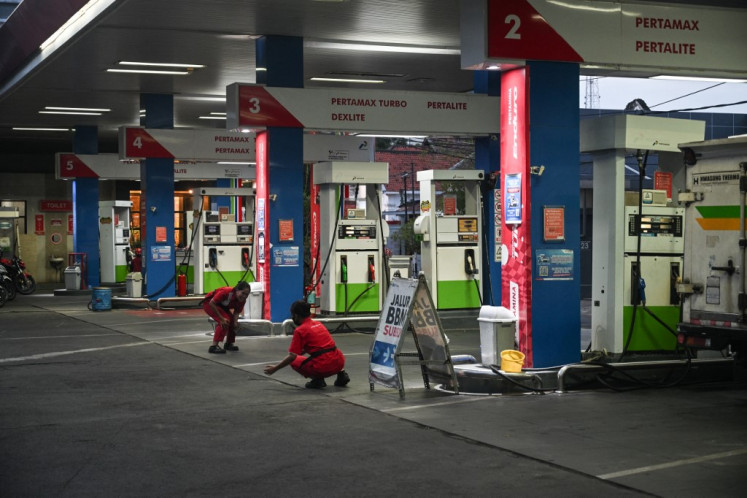
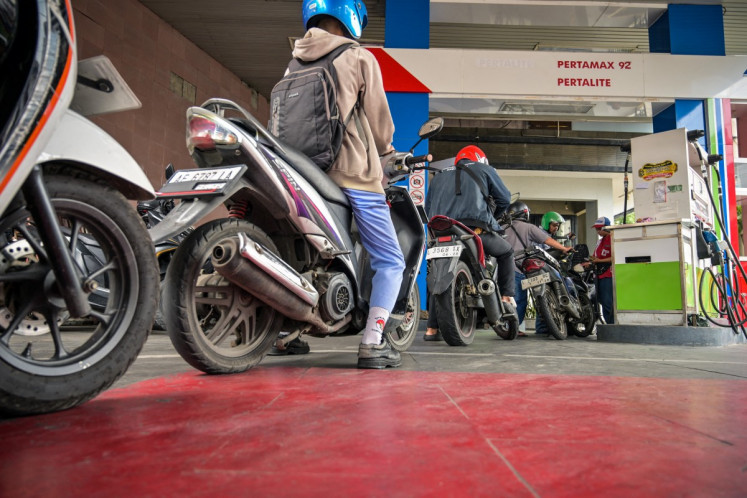
The city parks agency had planned to recover green spaces occupied by 29 gas stations, including two newly renovated stations on Jl. Jenderal Sudirman, South Jakarta, and two stations involved in a legal dispute on Jl. Hayam Wuruk, West Jakarta.
It had proposed some Rp 2.6 billion (US$286,900) to cover the costs of the stations in the draft city budget this year. The proposal, however, was rejected during the final budget deliberations.
The administration expected to gain some 100,000 square meters of new green space this year, by relocating gas stations and residents.
It estimated the relocation of residents alone would create some 55,540 square meters of green space, at a cost of Rp 27.3 billion.
The administration hopes to expand green areas from the existing 9.6 percent to 13.94 percent of Jakarta's total landmass of 63,744 hectares, by 2010.
As a result of budget cuts, Governor Fauzi Bowo said, the administration would not likely meet its green areas target this year.
"But we'll think of other ways," he said over the weekend, without giving any details.
Yayat said the administration should also consider providing incentives for Jakartans who wanted to voluntarily build community parks as alternative green spaces, to help the city meet its target.
Earlier, architect Ridwan Kamil said green space could be created with a "green buildings" policy.
The simplest way to meet at least a portion of the target was by greening roofs, he said.
"It's not impossible to have a big tree growing on top of a building here, like those in Japan--one country I know which has a green roof policy," he said.
A green roof, he said, could immediately reduce ambient temperatures inside a building by one or two degrees Celsius.
Architect and urban planner Darrundono suggested the administration plant more trees in existing green spaces as this would also to increase the city's water catchment areas and reduce pollution.