TheJakartaPost
Please Update your browser
Your browser is out of date, and may not be compatible with our website. A list of the most popular web browsers can be found below.
Just click on the icons to get to the download page.


Popular Reads
Top Results
No results found. Please check your search term and try again
Can't find what you're looking for?
View all search results
Popular Reads
Top Results
No results found. Please check your search term and try again
Can't find what you're looking for?
View all search resultsYouth Pledge Day points to conflicts
More than anything else, the youth pledge taken by Indonesia’s young leaders 82 years ago stressed the importance of living in unity in a nation with a legacy of diversity
Change text size
Gift Premium Articles
to Anyone
Share the best of The Jakarta Post with friends, family, or colleagues. As a subscriber, you can gift 3 to 5 articles each month that anyone can read—no subscription needed!

M
ore than anything else, the youth pledge taken by Indonesia’s young leaders 82 years ago stressed the importance of living in unity in a nation with a legacy of diversity.
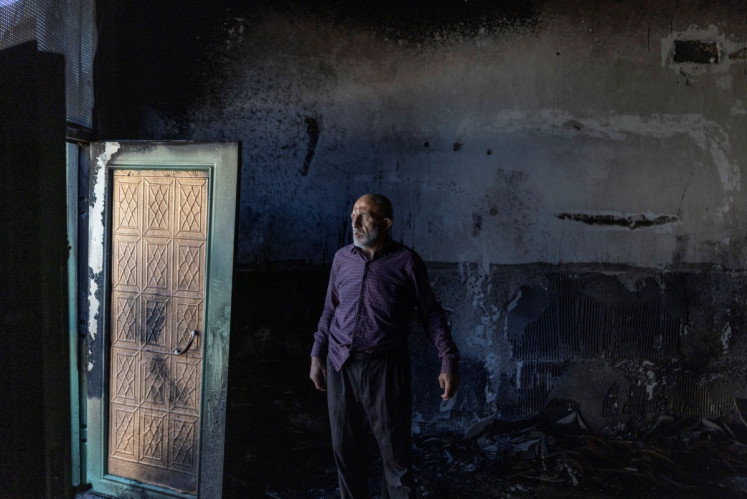
But the country observes Youth Pledge Day today at a time marked by persecution and ostracism of the Ahmadis, with sharia-based bylaws discriminating against minorities and clashes between church congregations and the Muslim majority.
In a report released in August, the Setara Institute for Peace and Democracy recorded 291 incidents categorized as violations of freedom of faith in Indonesia. Of this number, 33 targeted followers of the Ahmadiyah religious sect.
In 2008, the figures were even higher. Of 367 incidents, 238 related to persecution of Ahmadis. Setara Institute blames this on the issuance of a joint ministerial decree seeking to regulate the sect’s activities.
A conflict resolution and security expert at Gadjah Mada University in Yogyakarta, Samsu Rizal Panggabean, told The Jakarta Post on Wednesday that a trend towards social segregation had become more marked since the adoption of democracy, as part of a natural process.
“During the New Order regime, it seemed like we had unity in Indonesia. But it was a false unity. It was based on authoritarianism and did not grow naturally. We had a controlled harmony in which our laborers, farmers and press were repressed from speaking against [the government],” he said.
When democracy came in more than a decade ago, it brought with it the freedom of speech and choice.
And among other things it entailed were that sectarian conflicts began to develop here and there.
The cry for democracy culminated in riots infused with anti-Chinese sentiment in May 1998. By the year end, a street brawl in Poso, Central Sulawesi, triggered a bloody conflict lasting eight years, claiming more than 1,000 lives and displacing 25,000 people.
In 2001, a conflict erupted in Central Kalimantan’s cities of Sampit and Palangkaraya between native Dayaks and migrant Madurese settlers. Hundreds were killed and more than 50,000 displaced.
In the past few years, the country has witnessed sharia-based bylaws introduced in many regions.
Many have criticized these as discriminating against women and minorities and as a violation of rights.
Legal efforts to overturn several bylaws stumbled. The Supreme Court, for example, turned down a 2007 request to review a Tangerang municipality bylaw that bans “everyone exhibiting suspicious behavior, and therefore creating suspicion that he or she is a prostitute” from wandering public areas.
More recently, disputes and clashes between Christians and Muslims occurred in several areas. These rows have centered on the building of new Christian churches.
Rizal said Indonesians needed to learn how to manage their newly found freedom of speech and choice.
“We should determine whether we will allow hate speeches or discrimination against minorities? But we cannot have violence, that’s where we have to draw the line. The law should be enforced against those who use violence,” he added.
In a new era of democracy, he said, the people and the government are required to make adjustments here and there to maintain harmony.
“The people should now think in the framework of pluralism and the government needs to come up with regulations that improve social harmony. We also need to remember that living side by side with others in harmony is not a new experience for us Indonesians,” he said.