TheJakartaPost
Please Update your browser
Your browser is out of date, and may not be compatible with our website. A list of the most popular web browsers can be found below.
Just click on the icons to get to the download page.


Popular Reads
Top Results
No results found. Please check your search term and try again
Can't find what you're looking for?
View all search results
Popular Reads
Top Results
No results found. Please check your search term and try again
Can't find what you're looking for?
View all search resultsWHO warns RI of danger in rising degenerative diseases
The World Health Organization (WHO) has warned Indonesia and other Southeast Asian countries against rising cases of non-communicable diseases (NCDs) such as cancer and diabetes, saying the burden of NCDs will worsen in the future
Change text size
Gift Premium Articles
to Anyone
Share the best of The Jakarta Post with friends, family, or colleagues. As a subscriber, you can gift 3 to 5 articles each month that anyone can read—no subscription needed!
 Set as preferred source

T
he World Health Organization (WHO) has warned Indonesia and other Southeast Asian countries against rising cases of non-communicable diseases (NCDs) such as cancer and diabetes, saying the burden of NCDs will worsen in the future.
The UN agency said Indonesia is facing compounding burdens from both NCDs and communicable diseases.
Health Minister Endang Rahayu Sedyaningsih said the percentage of deaths from NCDs in Indonesia in 1995 was 41.7 percent. In 2007, the figure was 59.5 percent, according to the Basic Health Research conducted that same year.
She added that strokes accounted for 15.4 percent of the deaths, the highest cause of death by degenerative disease.
Samlee Plianbangchang, WHO regional director for Southeast Asia, said most NCDs could be prevented or eliminated by early detection, good diet, exercise and access to treatment.
“If one family member is ill, it can draw other family members into a downward spiral of worsening health and unrelenting poverty. Many countries will face difficulties in allocating budgets for NCDs unless they begin re-prioritizing their efforts and funding,” Plianbangchang said, adding that effective control of NCDs would be cheaper than treatment, both for governments and families.
In 2005, the WHO found that NCDs accounted for 54 percent of the 14.7 million annual deaths in South East Asia, with cardiovascular disease as the number-one NCD (28 percent). According to the WHO, of all deaths cause by NCDs, 22 percent were in Southeast Asia.
The WHO estimated that the region would see an increasing number of deaths from NCD, estimating a 21 percent increase between 2006 and 2015.
In 2008, the WHO found that breast cancer and lung cancer were the top NCDs. The 2008 report showed that 36.2 percent of breast cancer cases were found in Indonesian women younger than 40, and 29.8 percent of lung cancer cases in men younger than 30.
The Global Adult Tobacco survey, conducted between 2008 and 2010, showed that Indonesia ranked first among Southeast Asian nations in smoking prevalence among adults with 65.2 percent of men and 4.5 percent of women.
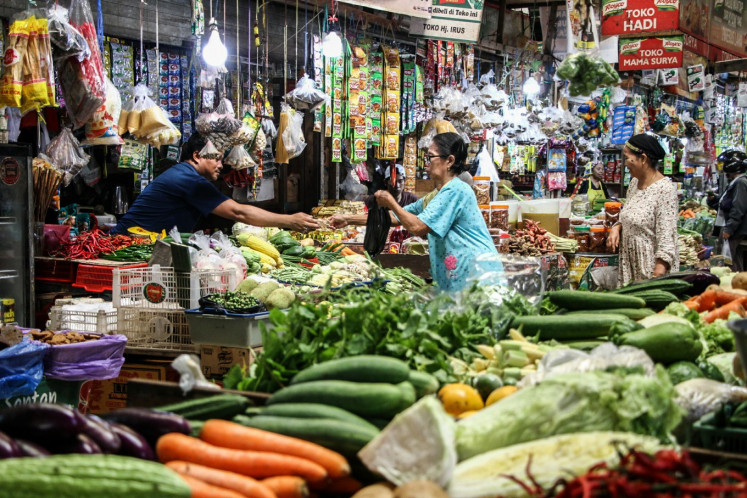
According to the WHO, the top risk factors causing NCDs are the between 8 percent and 26 percent of adults who do not get physical exercise as advised by physicians, the 250 million smokers in Southeast Asia, around 80 percent of the citizens do not eat enough fruits and vegetables and obesity among children and teenagers.
Endang said the ministry covered 60 percent of the provinces for NCDs as the ministry also focused on communicable diseases in certain regions.
“But we realize we need to carry out preventative measures for NCDs before it’s too late. I have asked the related division to make simple leaflets on how to cut the consumption of salt, sugar and fritters,” she said.