The Jakarta Post
Please Update your browser
Your browser is out of date, and may not be compatible with our website. A list of the most popular web browsers can be found below.
Just click on the icons to get to the download page.


Popular Reads
Top Results
No results found. Please check your search term and try again
Can't find what you're looking for?
View all search results
Popular Reads
Top Results
No results found. Please check your search term and try again
Can't find what you're looking for?
View all search resultsAnalysis: CPO outlook: Well-oiled
Our recent attendance at a major palm oil conference in Kuala Lumpur with 1,593 registered delegates from over 50 countries revealed a mostly positive outlook on crude palm oil (CPO) due to the higher biodiesel mandate and weather risks
Change text size
Gift Premium Articles
to Anyone
Share the best of The Jakarta Post with friends, family, or colleagues. As a subscriber, you can gift 3 to 5 articles each month that anyone can read—no subscription needed!
 Set as preferred source

O
ur recent attendance at a major palm oil conference in Kuala Lumpur with 1,593 registered delegates from over 50 countries revealed a mostly positive outlook on crude palm oil (CPO) due to the higher biodiesel mandate and weather risks. However, some speakers also continued to see risks from the improving production of other vegetable oils.
Dorab Mistry of Godrej International believes the Malaysia CPO price could go as high as 3,500 Malaysian ringgit per ton if an El Niño weather pattern occurs and about 3,000 ringgit per ton if it does not occur. Similarly, James Fry of LMC International believes that if the Brent oil price remains at US$110 per barrel, the Rotterdam CPO price could reach $1,030 this year. Thomas Mielke takes a slightly more conservative approach, estimating a Rotterdam CPO price of $970 per ton.
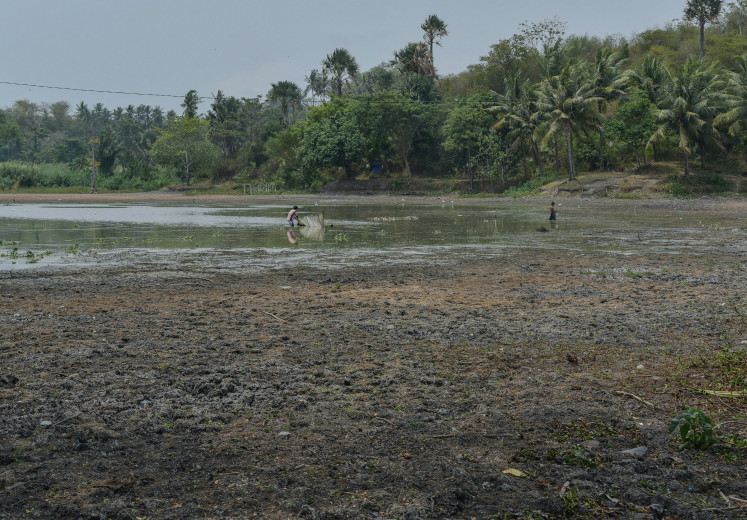
Weather is likely to be the key factor in determining the short-to-medium-term outlook for the CPO price. Mistry expects the seasonally low production cycle that started in March 2013 to continue through May 2014. The continued unusually dry weather in Malaysia and some parts of Sumatra, which began at the beginning of this year, could lower production in the short (six months) to medium term (24 months).
Many speakers agreed that continued weather problems in the next two weeks would disrupt harvesting activities, lowering an already tight CPO supply. Additionally, based on the Predictive Ocean Atmosphere Model for Australia (POAMA), there is more than a 50 percent probability that an El Niño pattern will occur in the near future, as the last El Niño was four years ago. While bad weather conditions will likely harm the CPO supply, we believe an El Niño pattern will disrupt a huge amount of CPO supply. During the last few El Niño and La Niña occurrences, the CPO price rose significantly.
Mistry believes additional demand for biodiesel will be a game changer for global CPO supply-demand. Additionally, for 2014 Mistry expects biodiesel to absorb an additional vegetable oil volume of 3 million tons, of which 1 million tons would be from Indonesian biodiesel demand. In addition to Indonesia, Malaysia plans to apply a 5 percent biodiesel blending requirement. In South America, Brazil (up from 7 percent to 10 percent) and Argentina (up from 8 percent to 10 percent) also plan to increase their biodiesel blending requirements in 2014.
Although additional demand for biodiesel should be a key factor supporting the CPO price outlook, few expect Indonesia to secure all 3.3 million kiloliters of 2014's forecast biodiesel supply. Mielke expects Pertamina to only secure 2.4 million tons of 2014 biofuel supply, which basically amounts to the current supply secured from the first and the second tenders. We believe there is still downward risk for the CPO price, as Mielke expects 2014 world vegetable oil production to reach 559,000 tons, up 6 percent year-on-year (y-y). However, some vegetable oils cannot be exported given extremely high export taxes (Argentina) and severe logistical problems (South America and Canada). We expect higher world edible oil production in the second half of 2014 (2H14).
Support for the CPO price will stem from low CPO production in the short to medium term due to poor weather conditions. Through the 1H14, we expect CPO production to be low in Indonesia and Malaysia, coinciding with huge demand on Lebaran festivities at the end of 1H14, pushing inventory levels down further. We expect the CPO price to surpass the psychological level of $1,000 per ton during 1H14.
However, we think a revisit to below $1,000 per ton in 2H14 on seasonality is likely, before continuing its strong momentum in 2015 as production volumes should be affected by current dry weather conditions.
Thus, we raise our Rotterdam CPO expectation from $871 per ton to $964 per ton, based on the Malaysian Palm Oil Board (MPOB) price: 2,859 ringgit ($869) per ton, up 13 percent y-y in 2014, and from $915 per ton to $1,025 per ton (MPOB price: 3,025 ringgit per ton), up 6 percent y-y in 2015.
At this stage, we have not included an El Niño risk in our numbers, although this could be offset by a stronger rupiah. Hence, our neutral rating on the sector remains.
The writer is an analyst at PT Bahana Securities