TheJakartaPost
Please Update your browser
Your browser is out of date, and may not be compatible with our website. A list of the most popular web browsers can be found below.
Just click on the icons to get to the download page.


Popular Reads
Top Results
No results found. Please check your search term and try again
Can't find what you're looking for?
View all search results
Popular Reads
Top Results
No results found. Please check your search term and try again
Can't find what you're looking for?
View all search resultsGovt revokes thousands of import licenses
The government has revoked thousands of import licenses for a wide range of products because of administrative incompliance
Change text size
Gift Premium Articles
to Anyone
Share the best of The Jakarta Post with friends, family, or colleagues. As a subscriber, you can gift 3 to 5 articles each month that anyone can read—no subscription needed!

T
he government has revoked thousands of import licenses for a wide range of products because of administrative incompliance.
Two thousand, one hundred and sixty-six licenses for registered importers (IT) were annulled, comprising 836 import licenses for electronics, 321 licenses for apparel, 290 licenses for food and beverages, 256 licenses for cosmetics and home care, 179 licenses for toys, 133 licenses for medicine and food supplements and 151 licenses for footwear, according to data released by the Trade Ministry.
The revoked licences represent 43.17 percent of the overall 5,017 licenses issued by the ministry and affect US$849 million in imports. The licenses were scrapped because the importers failed to report the realization of their import plan as stipulated in a trade minister regulation issued earlier this year, according to Trade Minister Rachmat Gobel.
Under the regulation, which is a revision to the 2012 version, registered importers of certain products, including electronics and apparel, must regularly disclose their realized overseas purchases within six months.
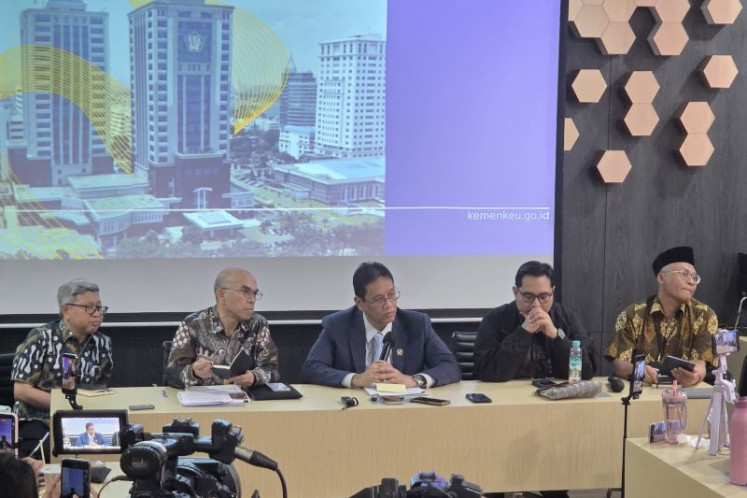
'The termination of the IT licenses is part of the government's efforts to create an orderly import arrangement in a bid to provide much more room for the development of the domestic industry,' Rachmat told reporters in a press briefing on Friday.
Earlier this week, the ministry also revoked 24 licenses for registered importers of cell phones and tablets because they had not delivered importation for six consecutive months as required by a trade minister regulation on cell phone and tablet importation.
Following the revocation, 74 registered importers for cell phones and tablets remain.
The Trade Ministry's director general for foreign trade, Partogi Pangaribuan, said, however, that despite the revocation, the government would not blacklist the offending importers but would not issue them with new permits for an extended period of time, though he declined to specify the period.
'These importers may later apply for new permits but we will note in our records that they have breached the rules in the past,' he said.
Partogi added that in the near future, his office might revoke import licenses for importers of other products, such as horticultural products and meat, who did not comply with the existing regulations.
The action against incompliant importers is part of the intensifying measures from the Trade Ministry to supervise circulating goods in the local market of 250 million people.
Imports have reached new heights in the past few years, driven by higher demand from a rising middle class that makes up more than half of the population of Southeast Asia's biggest economy.
In addition to revoking the import licenses, the government plans to ban quality testing of imported goods charged with mandatory Indonesian National Standards (SNI) in overseas laboratories.
At present, it still allows some imported goods, such as baby clothes and toys, to be tested overseas, particularly in China, and later obtain certificates from local authorities as a prerequisite to be certified under the SNI system.
SNI compliance is deemed to uphold consumer protection in terms of health, safety and environmental sustainability.