TheJakartaPost
Please Update your browser
Your browser is out of date, and may not be compatible with our website. A list of the most popular web browsers can be found below.
Just click on the icons to get to the download page.


Popular Reads
Top Results
No results found. Please check your search term and try again
Can't find what you're looking for?
View all search results
Popular Reads
Top Results
No results found. Please check your search term and try again
Can't find what you're looking for?
View all search resultsNew paradigm in trade essential for integration in global chain
Indonesia needs to embrace a new paradigm that is more open to trade to allow economic transformation and deeper integration with the global supply chain, a former European trade official says
Change text size
Gift Premium Articles
to Anyone
Share the best of The Jakarta Post with friends, family, or colleagues. As a subscriber, you can gift 3 to 5 articles each month that anyone can read—no subscription needed!

I
ndonesia needs to embrace a new paradigm that is more open to trade to allow economic transformation and deeper integration with the global supply chain, a former European trade official says.
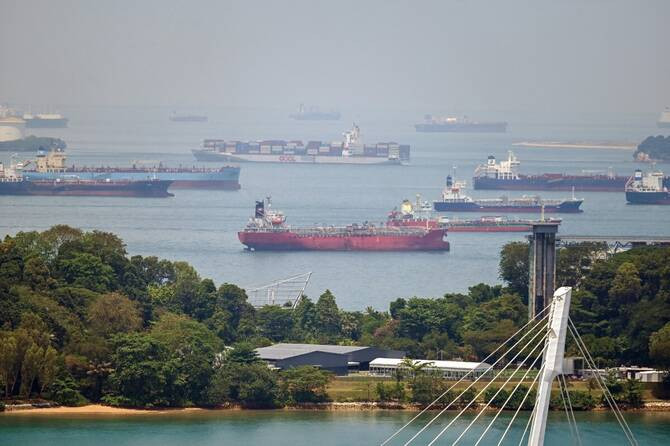
While praising the vision of President Joko 'Jokowi' Widodo that sees Indonesia as a maritime fulcrum as being the right choice, former European trade commissioner Peter Mandelson advised that the country should aim beyond transshipment, serving as an entrepot economy, and instead become a fully integrated part of the Asian marketplace and its production networks.
That would require changes in the characteristics of trade from finished goods to extended supply chains, which cause imports of further processing along with exports of unfinished and finished goods as well.
'The import content of exports is growing enormously. Twenty years ago it was 20 percent; today it is 40 percent; and it is likely to be 60 percent in 20 years' time. So classic measures to protect trade, to protect the producers do not make sense,' Mandelson said in his address during the Europe-Indonesia Business Network Luncheon on Thursday.
He further said that there had been a long thread of economic self-sufficiency in Indonesian policies, but that was not the approach to cope with the current world.
Trade liberalization has been a contentious issue in Indonesia, Southeast Asia's largest economy, as it is often used as a political commodity to trigger nationalist sentiment.
But in reality, deindustrialization remains the biggest hurdle the country has to overcome to enable its greater participation in global production networks.
The manufacturing industry has never rebounded to its peak of 12 percent in the period before the financial crisis in 1997/1998 and only reached 7.51 percent at the highest after the crisis.
A World Bank report titled 'Picking up the Pace, Reviving Growth in Indonesia's Manufacturing Sector' pointed out a phenomenon called 'a missing middle', which refers to a large proportion of small and unproductive manufacturing firms that prevent the manufacturing industry from contributing a bigger share to economic growth and job creation.
With such a situation, concerns continue to mount on whether the country can benefit from trade liberalization by way of free trade agreements (FTAs).
Speaking during the event, former finance minister Chatib Basri pointed to a lack of capacity as the reason why most emerging economies like Indonesia are reluctant to open up trade and seal FTAs with trading partners.
Despite greater access to the markets of their FTA partners, these countries cannot fully tap into available potential as they have shortages on the supply side, such as an inability to meet the high standards of export destinations.
'So if you want to make those emerging markets do that, you should involve capacity building. Without that, the developing countries will not see the benefit of FTAs,' Chatib said.
He cited a proposal for the development of a joint quarantine facility in Surabaya, East Java, with Australia to ease the flow of Indonesian goods to Australia, which comes by way of eliminating inspection processes upon entry to the country when goods have passed domestic inspection.
'JP/Linda Yulisman