TheJakartaPost
Please Update your browser
Your browser is out of date, and may not be compatible with our website. A list of the most popular web browsers can be found below.
Just click on the icons to get to the download page.


Popular Reads
Top Results
No results found. Please check your search term and try again
Can't find what you're looking for?
View all search results
Popular Reads
Top Results
No results found. Please check your search term and try again
Can't find what you're looking for?
View all search resultsOJK expects to bag deal with Myanmar soon
The Financial Services Authority (OJK) expects to seal a bilateral deal with Myanmarâs banking regulator before year-end to help safeguard a local bank that will operate in the neighboring country
Change text size
Gift Premium Articles
to Anyone
Share the best of The Jakarta Post with friends, family, or colleagues. As a subscriber, you can gift 3 to 5 articles each month that anyone can read—no subscription needed!

T
he Financial Services Authority (OJK) expects to seal a bilateral deal with Myanmar's banking regulator before year-end to help safeguard a local bank that will operate in the neighboring country.
OJK chairman Muliaman D. Hadad said the bilateral agreement would be the first deal between the banking regulators of the countries, as ASEAN members prepare to liberalize their financial industries by 2020 as part of the ASEAN Economic Community agenda.
'We are actively seeking opportunities to discuss with Myanmar's banking regulator, because one of Indonesia's state banks is preparing to operate in that country and we hope the future agreement will provide protection for that,' Muliaman said.
State-owned Bank Negara Indonesia (BNI) recently received approval for its Myanmar representative office from the Central Bank of Myanmar, paving the way for the lender to begin operations there in the second half of the year.
BNI compliance and risk management director Imam Budi Sarjito said that in the first phase, the bank's new representative office in Myanmar was prepared to bridge business-to-business relations between Indonesia's state-owned enterprises and local companies in that country.
State-owned construction company Wijaya Karya has a presence in Myanmar as it has signed a
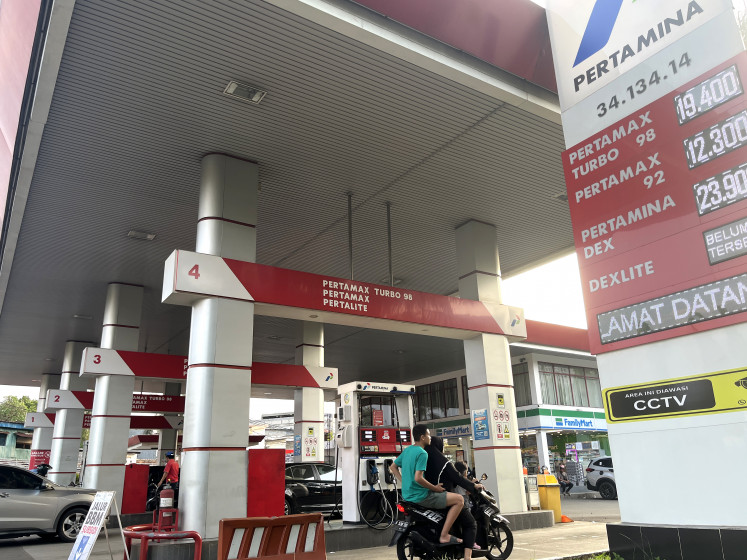
US$125 million contract to build a residential tower in Yangon. Meanwhile, state oil and gas giant Pertamina also expects to open gas stations in the country.
The OJK expects that the bilateral agreement with Myanmar's banking regulator could be completed this year as their delegations have set a schedule to visit Indonesia and start discussions with the agency soon, according to Muliaman.
He added that the awaited agreement with Myanmar would be in line with the ASEAN Banking Integration Framework (ABIF), which enacts reciprocity principals and stands as a legal basis for all future bilateral agreements on ASEAN banking integration.
'The ABIF corridor ensures that when an ASEAN country has given leniency for one of its counterparts, it should provide similar treatment to other ASEAN members as well,' Muliaman explained.
The reciprocity principals in the ABIF guideline formed the solid basis for the OJK and Bank Indonesia when they signed an agreement with Malaysian banking regulator, Bank Negara Malaysia (BNM), highlighting a commitment to equal treatment and eased restrictions in the two countries on further banking integration.
The ABIF guideline is covered in the ASEAN Framework Agreement on Services (AFAS) signed in March this year by the finance ministers and central bank governors of ASEAN's 10 member countries, who agreed on the creation of the 'Qualified ASEAN Bank' (QAB) concept.
Under the concept, banks that have acquired QAB status will be able to carry out their operations in neighboring countries and receive equal treatment with local banks. However, the QAB status can be applied only to 'indigenous' ASEAN banks, which means that the lenders are based in an ASEAN country and their shares are owned by ASEAN citizens.
OJK deputy commissioner for banking supervision Mulya E. Siregar said prior to the implementation of QAB, banking regulators should harmonize existing regulations in each of their countries so as to provide similar grounds for the QABs to operate in the future.
'The ABIF guideline puts a high priority on prudential principles so that QABs can operate. For instance, ASEAN countries that have not yet implemented Basel III regulations should be able to catch up with their counterparts that have already applied the rules,' Mulya said.