TheJakartaPost
Please Update your browser
Your browser is out of date, and may not be compatible with our website. A list of the most popular web browsers can be found below.
Just click on the icons to get to the download page.


Popular Reads
Top Results
No results found. Please check your search term and try again
Can't find what you're looking for?
View all search results
Popular Reads
Top Results
No results found. Please check your search term and try again
Can't find what you're looking for?
View all search resultsTackling plastic waste problem through circular economy principles
Change text size
Gift Premium Articles
to Anyone
Share the best of The Jakarta Post with friends, family, or colleagues. As a subscriber, you can gift 3 to 5 articles each month that anyone can read—no subscription needed!
 (Courtesy of TJP)
I
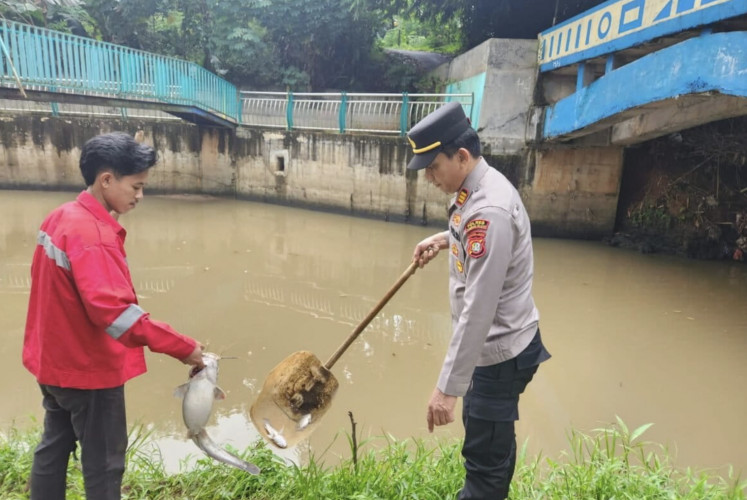
ndonesia has a plastic waste management issue. The problem was first brought to people’s attention in 2015 by a researcher named Jenna R. Jambeck, whose data showed that Indonesia was the second-biggest plastic waste producer in the world, with 187.2 million tons of plastic trash, second only to China with 262.9 million tons.
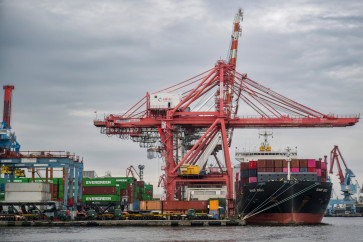
The problem persists today: February 2020 data from the Environment and Forestry Ministry show that out of the 64 million tons of waste that Indonesia produces on average every year, 15 percent is plastic waste. Most of the plastic waste here, according to the ministry’s data, comes from food and beverage packaging and plastic bags.
Generally, Indonesia also has not managed its waste well, with only 60 percent of the 64 million tons transported to the final disposal site and only 10 percent recycled. The remaining 30 percent, however, is just dumped into the environment without any control measures.
The Indonesian government has in fact already committed itself to deal with this waste (and specifically, plastic) problem accordingly. Presidential Regulation No. 97/2017, also known as the road map on waste management, has set a mission to reduce Indonesia’s plastic waste output by 70 percent by 2025.
To support the mission, the Finance Ministry has planned to impose excise tax on plastic bags in 2021, targeting an extra Rp 1.5 trillion (US$105.9 million) for state income.
Besides the policy agendas already in place, Indonesia’s climb toward plastic waste management remains a steep one. Collecting waste is one thing, while a pile of challenges still abound for the country’s recycling industry.
Thus, the central government needs to continuously translate its policy agendas into concrete actions creating an enabling environment to make waste management more effective and support a circular economy.
Therefore, the central government also needs to make sure that circular economy practices get decentralized so every region in the archipelago can work together to achieve the target. The nongovernmental organizations and private sector players also need to lend their support to these efforts.
If you are a relevant stakeholder who is interested in contributing more to creating a circular economy in Indonesia, or are simply curious to find out more how we can tackle the plastic waste issue through a circular economy, you might be interested to tune into The Jakarta Post’s JakPost UpClose webinar session called Protecting the Environment through Recycling, which would be organized on Friday, Dec. 4, from 3 p.m. to 5 p.m.
The webinar, the first part of the Jakpost Up Close’s circular economy series, has been brought to you in collaboration with PT Coca-Cola Indonesia.
It will be featuring Environment and Forestry Ministry waste management director Novrizal Tahar, Bandung Institute of Technology (ITB) waste management professor Enri Damanhuri, Greeneration executive director Vanessa Letizia, PT Coca-Cola Indonesia public affairs and communication director Triyono Prijosoesilo.
Triyono is also the secretary general of the Packaging and Recycling Association for Indonesia’s Sustainable Environment (PRAISE).
Each of these speakers, representing different types of stakeholders, will present a very unique perspective regarding these issues. The event as a whole seeks to increase public awareness of waste management, while exploring potential partnerships and possible regulations needed to improve waste management in Indonesia.
The webinar also seeks to encourage collaborations between the government, private sector and the public on recycling efforts. The webinar will be hosted by two Post journalists, Ni Nyoman Wira and Kharishar Kahfi. You can register for free via http://bit.ly/jp-webinar24