TheJakartaPost
Please Update your browser
Your browser is out of date, and may not be compatible with our website. A list of the most popular web browsers can be found below.
Just click on the icons to get to the download page.


Popular Reads
Top Results
No results found. Please check your search term and try again
Can't find what you're looking for?
View all search results
Popular Reads
Top Results
No results found. Please check your search term and try again
Can't find what you're looking for?
View all search resultsIs dim light affecting our cognition?
Change text size
Gift Premium Articles
to Anyone
Share the best of The Jakarta Post with friends, family, or colleagues. As a subscriber, you can gift 3 to 5 articles each month that anyone can read—no subscription needed!
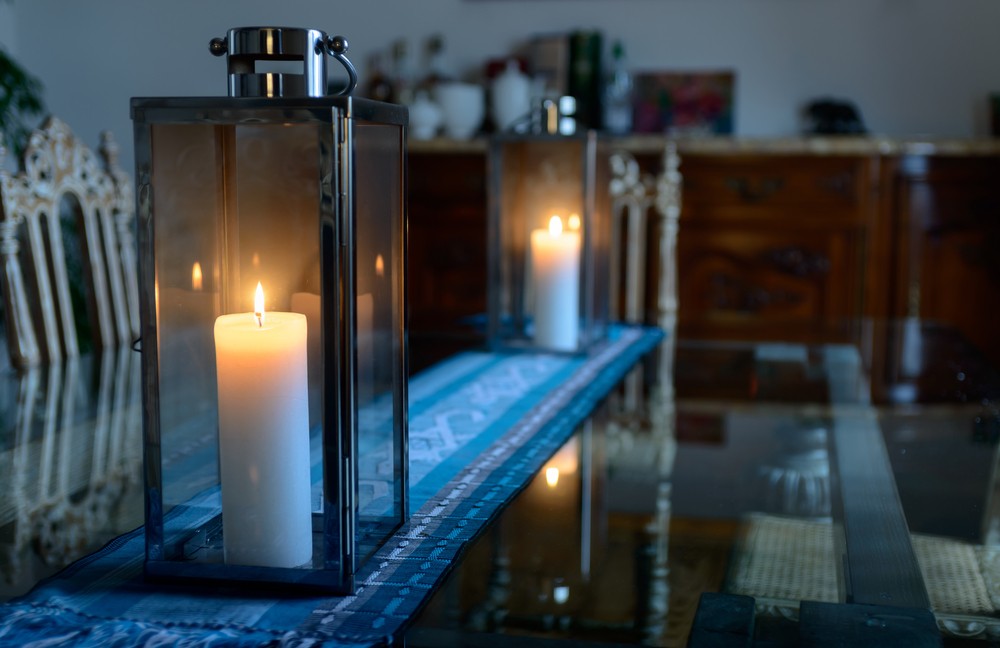 The study is the first to show that changes in environmental light, in a range normally experienced by humans, leads to structural changes in the brain. (Shutterstock/File)
I
n a new study, United States researchers have found that spending too much time in dimly lit rooms and offices could actually change the brain’s structure and impair our ability to remember and learn.
Carried out by Michigan State University neuroscientists, the new animal study looked at the brains of Nile grass rats (which, like humans, are awake during the day and sleep at night), after exposing them to dim and bright light for a four-week period.
The team found that the rats exposed to dim light lost about 30 percent of capacity in the hippocampus, a region of the brain critical for learning and memory, and also performed poorly on a spatial task that they had trained on previously, whereas the rats exposed to bright light actually showed a significant improvement on the spatial task.

Moreover, when the rodents that had been exposed to dim light for four weeks were then exposed to bright light for four weeks (after a month-long break) their brain capacity and performance on the task both recovered fully.
The study is the first to show that changes in environmental light, in a range normally experienced by humans, leads to structural changes in the brain.
The findings could have important implications, with the Environmental Protection Agency reporting that on average Americans spend around 90 percent of their time indoors.
“When we exposed the rats to dim light, mimicking the cloudy days of Midwestern winters or typical indoor lighting, the animals showed impairments in spatial learning,” commented co-investigator on the study Antonio “Tony” Nunez. “This is similar to when people can’t find their way back to their cars in a busy parking lot after spending a few hours in a shopping mall or movie theater.”
Read also: Does playing action video games change your brain?
Joel Soler, who worked with Nunez on the project, explained that sustained exposure to dim light led to significant reductions in a substance called brain-derived neurotrophic factor, which is important for maintaining healthy connections and neurons in the hippocampus.
“Since there are fewer connections being made, this results in diminished learning and memory performance that is dependent upon the hippocampus,” said Soler. “In other words, dim lights are producing dimwits.”
The team are now looking at carrying out further research on how light affects a particular site in the rodents’ brains which produces a peptide called orexin, known to influence a variety of brain functions. The research will aim to find out if giving orexin to rats that are exposed to dim light is enough to help their brains recover without being re-exposed to bright light.
The project could have implications for the elderly and people with glaucoma, retinal degeneration or cognitive impairments, whose eye don’t receive much light.
The results can be found published online in the journal Hippocampus.