TheJakartaPost
Please Update your browser
Your browser is out of date, and may not be compatible with our website. A list of the most popular web browsers can be found below.
Just click on the icons to get to the download page.


Popular Reads
Top Results
No results found. Please check your search term and try again
Can't find what you're looking for?
View all search results
Popular Reads
Top Results
No results found. Please check your search term and try again
Can't find what you're looking for?
View all search resultsElections Law revision hangs in balance
The proposed revisions concern a variety of crucial electoral issues, from the plan to bar members of outlawed organizations from running in elections to the legislative threshold and the presidential nomination threshold.
Change text size
Gift Premium Articles
to Anyone
Share the best of The Jakarta Post with friends, family, or colleagues. As a subscriber, you can gift 3 to 5 articles each month that anyone can read—no subscription needed!
P
olitical factions at the House of Representatives have yet to decide on whether to drop a proposal to revise the Election Law that includes a plan to move forward several regional elections currently scheduled for 2024.
The proposed revision has been included in the House’s 2021 priority legislation program, but several political factions have retracted their support for the plan, reportedly following a meeting with President Joko “Jokowi” Widodo.
The House failed to make a decision on the bill during the last preliminary meeting on Wednesday, putting its deliberations on hold until March 7.
“We are still accepting input from the public while political party factions in the House are still holding talks with each other,” House Deputy Speaker Sufmi Dasco said during Wednesday’s plenary meeting.
The proposal to revise the Election Law, enacted only three years ago, has divided political factions at the House.
The proposed revisions concern a variety of crucial electoral issues, from the plan to bar members of outlawed organizations from running in elections to the legislative threshold and the presidential nomination threshold.
However, the debate over the bill apparently revolves around the question of whether the nation should hold all regional elections simultaneously in 2024, as stipulated in the prevailing Election Law, or move some of them forward to 2022 or 2023.
Read also: Local leaders face hurdle of delayed polls
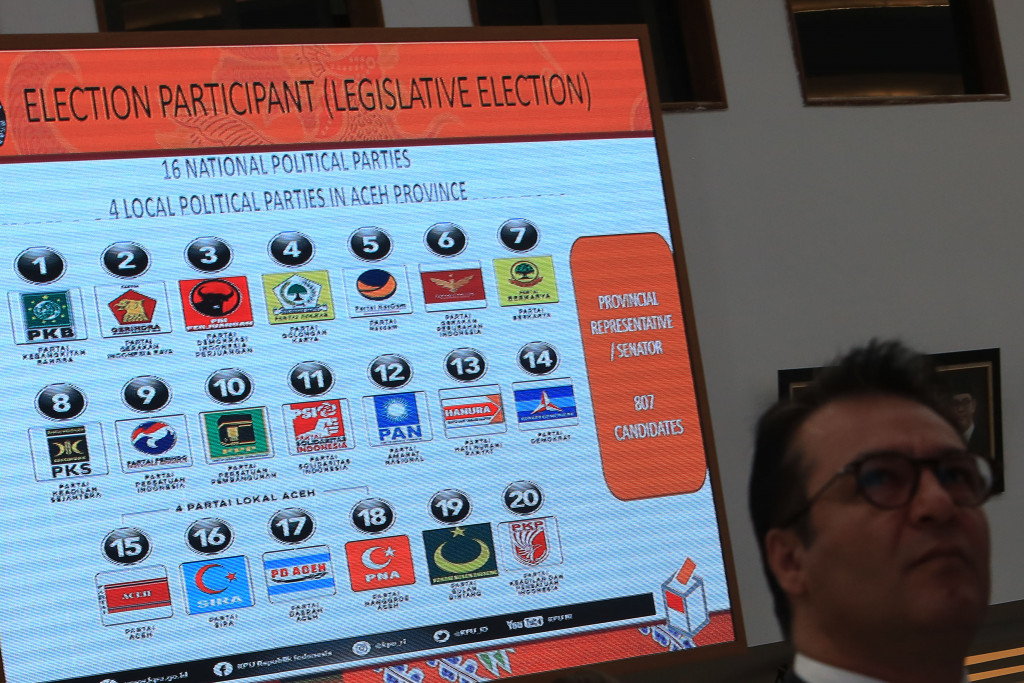
The opposition parties — the Prosperous Justice Party (PKS) and the Democratic Party — have argued that some of the regional elections should be moved forward, as it would be logistically impossible for election organizers to hold nationwide regional elections along with the presidential and legislative elections that would also be held in 2024.
“The PKS remains istiqomah [steadfast] in continuing discussions on the Election Law revisions, because there is a lot that needs to be fixed,” House Commission II member and PKS politician Mardani Ali sera said. He added that forcing the regional elections to be held in 2024 would lower the quality of the elections and would take a toll on election organizers, referring to the 894 poll administrators who died back in 2019.
Democratic Party strategic communication head Herzaky Mahendra Putra said the party insisted that the next regional elections be conducted in 2022 and 2023, because failing to do so would mean handing 272 regional offices to Home Ministry officials.
The pro-government parties — the Indonesian Democratic Party of Struggle (PDI-P), Gerindra Party, National Awakening Party (PKB), United Development Party (PPP)), Golkar Party and NasDem Party — and the National Mandate Party (PAN), meanwhile, have rejected the proposal on the grounds that it was too early to revise the law again and that the country should now be focusing on handling the pandemic.
NasDem and Golkar were the latest members of the ruling coalition to join the bandwagon after previously supporting the proposed revisions.
“Following an internal discussion, Golkar has decided to drop its support [for the proposed revisions],” Golkar Party politician M. Azis Syamsuddin said.
NasDem chairman Surya Paloh, meanwhile, ordered his party to withdraw its support for the legislative initiative and suggested that the next regional elections be held in 2024, as scheduled in the law. The party, he said, should stand together with the President in the fight against the pandemic.
“The goal of the NasDem Party is the same with that of the President, which is for the advancement and a better future of the country,” he added.
Read also: Indonesia’s democracy 'deteriorating' over past five years
The opposition parties, however, said they believed the rejection of the draft election bill were nothing but a political ploy by the ruling parties to prevent several regional leaders, such as Jakarta Governor Anies Baswedan, Central Java Governor Ganjar Pranowo and West Java Governor Ridwan Kamil, from seeking a second term. The current schedule practically strips the regional leaders, seen as potential presidential candidates, of the opportunity to use their office as a political stage for the 2024 presidential race.
With the opposition parties having meagre support for their proposed revision, chances are slim that the House will press ahead with the plan. But analysts say it is not impossible that the parties might change their stance again.
“This is no longer a matter of coalitions but a matter of each individual party’s interests. They could either gain or lose a lot by revising the Election Law,” Indonesian Institute of Sciences (LIPI) political analyst Firman Noor said.