Can't find what you're looking for?
View all search resultsCan't find what you're looking for?

View all search resultsAnthony Fauci, chief medical advisor to United States President Joe Biden, stated that “neutralizing antibodies are the gold standard for protective immunity”.
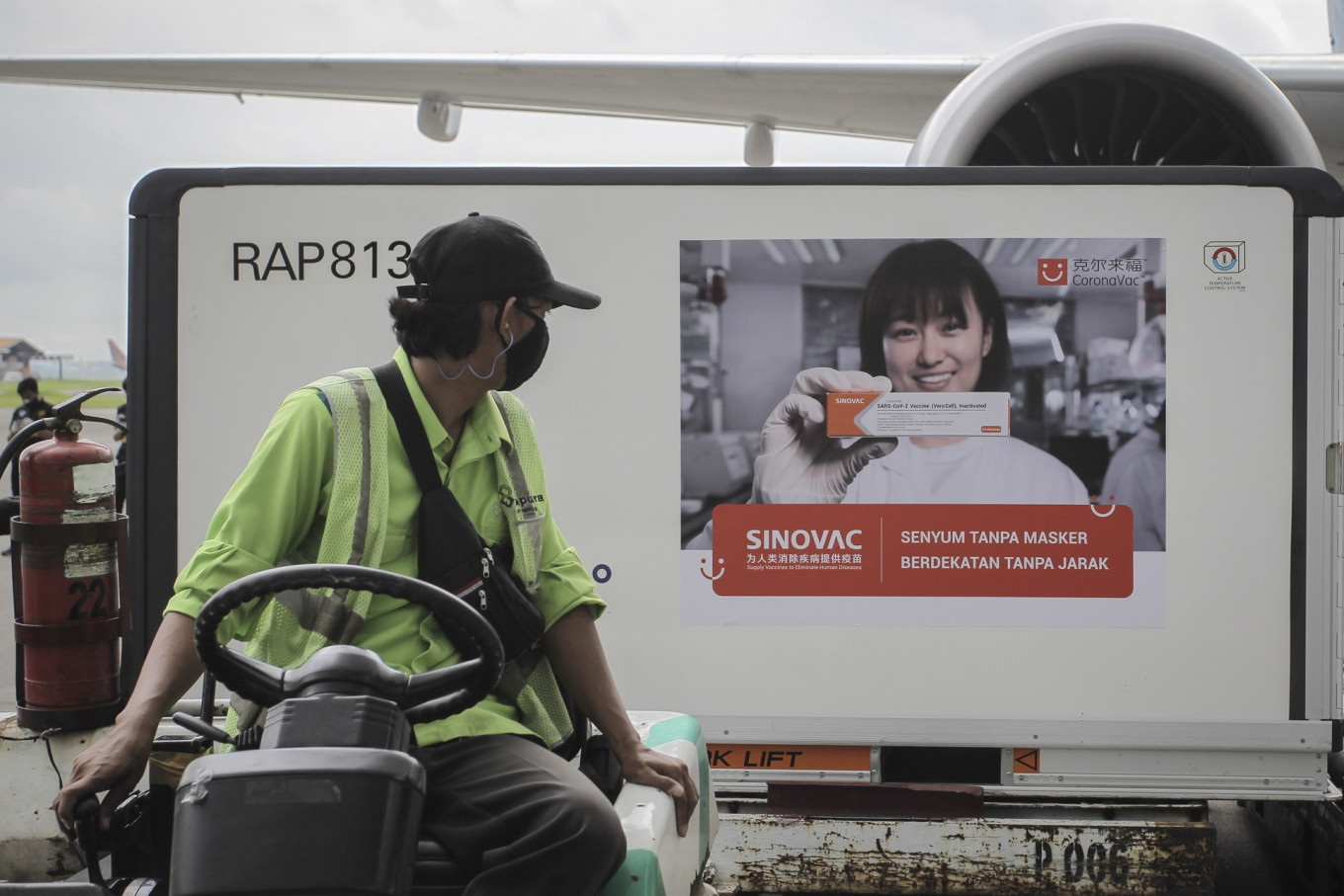
he world is in shock watching the grim unfolding of uncontained COVID-19 infection in India and its escalating death toll. Despite mounting challenges, skepticism, vaccine nationalism and export embargoes, countries make their best efforts to vaccinate their citizens.
At the moment, Indonesia continues its efforts to vaccinate its citizens. There remains great hope and optimism regarding the potential of the COVID-19 vaccines to overcome and mitigate the pandemic, saving lives and restoring economic activity. The holy grail of the vaccination campaign is to achieve the coverage required for herd immunity.
The government has rightly placed the highest priority on expanding the vaccination program and allocated significant resources in order to achieve the goal of vaccinating the Indonesian population. At the time of writing, the UNICEF dashboard recorded that there would be 486.7 million doses of COVID-19 vaccines for Indonesia.
Given the likelihood that vaccine supply and allocation will remain a challenge in the near future and the fact that vaccines, regardless of manufacturer, are unlikely to be 100 percent effective in real-world mass immunization campaigns, and also taking into account cost considerations, a critical question to be addressed will be “how do we ensure that COVID-19 vaccines are deployed in the most efficient and effective manner possible?”.
To answer such a big question, we first need to know the answers to the following questions: Of those who receive the vaccine, who are actually protected from infection and disease? How long does the protection last? Will there be a need for booster vaccinations in the future? Who are likely to be non-responders to the vaccine? At the highest level, all these questions are related to the ultimate one: How will the pandemic end or be effectively contained?
The answers to these questions lie in our collective understanding and willingness to learn how our immune system’s “molecular soldiers” actually differ and fight the SARS-CoV-2 virus.
The human immune system produces vast arrays of “molecular soldiers”, and it is important to acknowledge they are not created equal. Following a COVID-19 vaccination, it is straightforward enough to determine the body’s response by testing for the presence of antibodies to the SARS-CoV-2 virus.
However, here is the critical fact. Bodies of research conclusively prove that the mere presence of an antibody that recognizes and binds to the virus is not always a strong determinant of whether the vaccinated individual is actually protected from infection and disease. Virological research over the last 50 years or so has conclusively shown that the best predictor and correlate of protection is a class of antibody called neutralizing antibodies—that is the “elite antibody”.
These “elite force” soldiers are capable of not only binding to the virus, but also neutralizing its threat by preventing any docking and entry into susceptible human cells thus aborting replication of the virus. Anthony Fauci, chief medical advisor to United States President Joe Biden, stated that “neutralizing antibodies are the gold standard for protective immunity”.
So, how do we find out the presence or absence of these elite force soldiers? Most of the accurate tests available to date are complex, time-consuming and require significant levels of technical expertise and sophisticated, biosafety level 3 (BSL-3) laboratory facilities. The test involves handling live virus, cell cultures, and therefore, stringent laboratory safety protocols. While Indonesia has BSL-3 facilities, it still makes the standard test costly and time-consuming for deployment in the context of a mass vaccination rollout program.
But the cost of not knowing can possibly result in missed public educative moments and inevitably have dire results. The Chilean experience is a case in point that all should now strive to avoid. In the past, Chile was heavily criticized over its weakness in diagnostics and tracing infected people. Despite the shortcoming, Chile attempted to redeem itself by successfully vaccinating its population at lightning speed. So fast that it was just behind Israel, the UAE and the UK in vaccination coverage. In March 2021, the country became a model of fast rollout to be admired.
Yet, excelling only in vaccination speed is not enough to exit the pandemic. At the time of writing, Chile is seeing an infection surge. In fact, its infection number is at its highest, considerably higher than any of its previous infection peaks since the pandemic began.
Nonetheless, investing in adequate diagnostics with the capability to measure, quantify and differentiate the quality of the actual “molecular soldiers” against SARS-CoV-2 remains strategically important. Without the ability for detailed understanding and monitoring, it will be similar to shooting arrows in the dark and hoping one will hit the target. In this regard, a newly developed test to measure neutralizing antibodies against SARS-CoV-2 has been developed which is accurate, sensitive and rapid, and which can be scaled-up as part of vaccination programs in the country.
At the policy level, precise and well-informed intervention strategies that combine vaccination with accurate diagnostic testing will help to bring an end to the pandemic in a cost-efficient manner, while keeping unnecessary suffering to a minimum. This will require not only knowledge about the infection rate, but evidence of the attainment and continuous monitoring of the herd immunity level after a roll-out of large-scale vaccination programs.
With good and informative diagnostics, clusters of the population with suboptimal herd immunity can be identified as well, and the right education and corrective interventions can be deployed. And at the individual level, it is always important to know whether our immunity waned or persisted against such a novel virus, and thus we are better informed to better care for ourselves and those we love, and not let ourselves be caught off guard.
***
Tikki Pangestu is a professor at Yong Loo Lin School of Medicine, National University of Singapore and Grace Dewi is a lecturer at Widya Mandala University, Surabaya.
Share your experiences, suggestions, and any issues you've encountered on The Jakarta Post. We're here to listen.
Thank you for sharing your thoughts. We appreciate your feedback.
Quickly share this news with your network—keep everyone informed with just a single click!
Share the best of The Jakarta Post with friends, family, or colleagues. As a subscriber, you can gift 3 to 5 articles each month that anyone can read—no subscription needed!
Get the best experience—faster access, exclusive features, and a seamless way to stay updated.