Can't find what you're looking for?
View all search resultsCan't find what you're looking for?

View all search resultsHealth system capacity and access to vaccine supplies remain key challenges in vaccination efforts. But it is not just supply getting in the way of increasing vaccine coverage.
s countries in the Asia-Pacific region, including Indonesia, grapple with surging cases and increasing deaths as a result of COVID-19, there is much interest in the potential for vaccines to help end and contain the pandemic.
Health system capacity and access to vaccine supplies remain key challenges in vaccination efforts. But it is not just supply getting in the way of increasing vaccine coverage. The pandemic has highlighted another significant barrier: a lack of confidence in vaccines and hesitancy among different groups to get vaccinated.
Some of the countries with rising cases, such as Indonesia and Thailand, have witnessed increasing suspicion of vaccines ahead of mass immunization drives. A recent study found that Indonesia saw one of the largest falls in vaccine confidence and public trust worldwide between 2015 and 2019.
Vaccine confidence is a complex and “volatile”, ever-changing field and, in the words of Heidi Larson, the director of the Vaccine Confidence Project, “Sentiments toward vaccines reflect both external events as well as internal emotions.”
While concerns around efficacy and safety explain people’s unwillingness to get vaccinated, it goes beyond that to include their trust in government institutions and the motivations of policy makers, the perceived reliability of health systems, equitable access and compatibility with religious and cultural beliefs.
Between 2015 and 2021, vaccine confidence dropped the most in Indonesia and the Philippines, which resulted in a “knock-on” effect in reducing childhood immunization coverage more broadly. In Indonesia, this was driven by a fatwa claiming that certain vaccines were not halal, as well as local healers promoting natural alternatives.
The history of a country’s experience of previous vaccine rollouts also plays a key role. In the Philippines, fears over a dengue vaccine, which posed a risk to individuals who had not previously been exposed to the virus, prompted outrage and panic across the population. In both countries, this resulted in tragic consequences by disrupting routine immunization and resulted in major outbreaks of measles, which caused the deaths of hundreds of children.
How can issues of vaccine hesitancy then be addressed through effective and accurate engagement and communication? Across all Asia-Pacific countries, there is a need to build a strategic response to address these trends, including effective public communication strategies. Transparency, equitable approaches and accountability around the COVID-19 response and vaccines increase confidence in the government and in vaccines themselves.
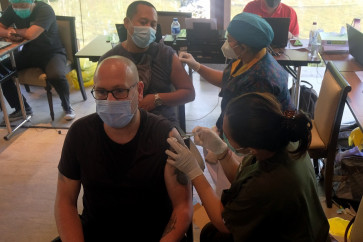
Singapore, where vaccination has reached more than a third of the population, can attribute its success to the generally high trust in government, the free provision of vaccines and the ease of getting vaccinated at multiple centers. Importantly, it is because of a communication and engagement strategy that recognized the specific concerns of the aging population and countered them with targeted messages on their increased vulnerability.
Misinformation, hoaxes and conspiracy theories have gone viral and resulted in diminished trust and confidence in vaccines. Overcoming misinformation is a “tipping point” issue if we are to reach desired levels of herd immunity to help control and end the pandemic. It is important to strengthen public acceptance of vaccination by being transparent, open, honest and accountable about the process. This includes explaining the science behind vaccines by independent experts, the reasons for “breakthrough” cases and the reporting of adverse events following vaccination.
The wider public should be brought into the dialogue on how scientific knowledge can be communicated better and into the shaping of public policies that are responsive to their needs and preferences. Such a goal can be achieved through a process of cocreation focused on listening and truly engaging with all stakeholders across the entire cycle of vaccine development – including research, regulation, licensing, program planning, implementation and monitoring. There is a need to change our approach to engagement by truly listening to the people, validating and acknowledging their concerns rather than dismissing them.
A robust social engagement strategy needs to consider the use of multiple platforms, easily understood language and graphics tailored to specific segments of the population. Identifying the most effective types of messages and messengers is critical. For example, messages which focus on vaccination as a “moral obligation” were found to be less effective than simpler messages which focus on gratitude and the idea of “protection” rather than “stop infection”.
Messages coming from health professionals, social influencers, religious leaders and relatable common people are also more effective. It is also important to convey the message that vaccines do not constitute a “magic bullet” and continued adherence to proven public health measures such as personal hygiene, the wearing of masks and safe distancing should continue.
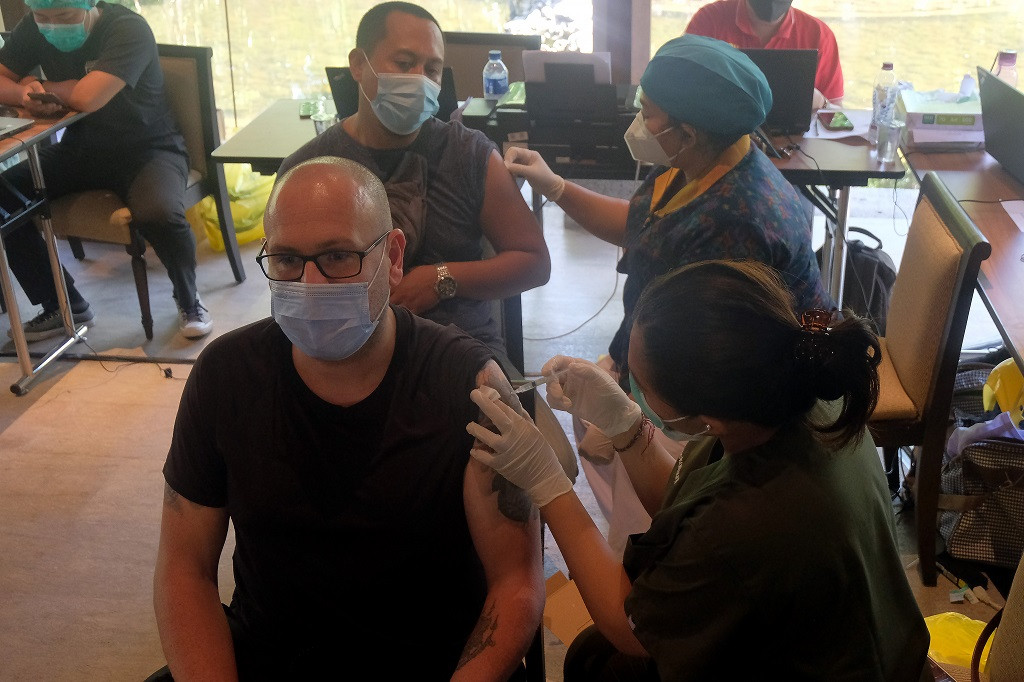
The Indonesian government, in partnership with UNICEF, has included a peer face-to-face communication intervention in its COVID-19 vaccine program. This included training over 70,000 vaccinators to pass on messages about the safety and efficacy of the vaccine, including that it was halal and recommended during the pandemic.
Since each country in the region has its particular experience of the pandemic, an evidence-based understanding of the drivers of vaccine hesitancy is pivotal and will allow policymakers to develop context-specific engagement strategies. With a dearth of qualitative studies on contextual drivers, there exists a critical knowledge gap that must be bridged.
While scientific evidence remains the mainstay of successful vaccine implementation, personal stories and emotional testimonies have become part of the new landscape of evidence, adding a dimension of humanity to the hard sciences. A holistic response is needed to strengthen trust in the government and its institutions – a response that strikes the right balance in public health policies between scientific knowledge, political exigencies and human behavior.
Arguably, this will be the only way to end the pandemic and return to a semblance of normalcy in the way we live, work, play and learn.
***
Tikki Pangestu is a visiting professor at Yong Loo Lin School of Medicine, National University of Singapore (NUS). Ananta Seth holds a master’s degree from the Lee Kuan Yew School of Public Policy, NUS. Chong Yap Seng is the dean of Yong Loo Lin School of Medicine.
Share your experiences, suggestions, and any issues you've encountered on The Jakarta Post. We're here to listen.
Thank you for sharing your thoughts. We appreciate your feedback.
Quickly share this news with your network—keep everyone informed with just a single click!
Share the best of The Jakarta Post with friends, family, or colleagues. As a subscriber, you can gift 3 to 5 articles each month that anyone can read—no subscription needed!
Get the best experience—faster access, exclusive features, and a seamless way to stay updated.