TheJakartaPost
Please Update your browser
Your browser is out of date, and may not be compatible with our website. A list of the most popular web browsers can be found below.
Just click on the icons to get to the download page.


Popular Reads
Top Results
No results found. Please check your search term and try again
Can't find what you're looking for?
View all search results
Popular Reads
Top Results
No results found. Please check your search term and try again
Can't find what you're looking for?
View all search resultsAnti-communist movie has dubious legacy among Indonesia's youth
The controversial Penumpasan Pengkhianatan G30S/PKI was once must-see cinema, literally. But a new generation has grown up without watching the movie.
Change text size
Gift Premium Articles
to Anyone
Share the best of The Jakarta Post with friends, family, or colleagues. As a subscriber, you can gift 3 to 5 articles each month that anyone can read—no subscription needed!
F
or a while, Penumpasan Pengkhianatan G30S/PKI was a must-see film -- literally. The New Order government herded millions into open air fields each year, compelling them to watch the dramatic reenactment of the Sept. 30 affair. Since the Reformation, though, the film has fallen out of favor and a new generation has grown up without it.
How does this new generation view the legacy of this controversial film?
Endless gore
For older generations, these scenes will awaken ghosts of childhood's past: the Politburo meeting before the coup, staffed by terrifying, burly, smoking men. The torture scene set to the tune of “Genjer-Genjer”. The brutal murder of a child who was instinctively trying to protect her father. Of course it lingered -- it had to.
When it was released in 1984, Penumpasan Pengkhianatan G30S/PKI was the most ambitious cinematic project the country had ever seen. It had an all star cast, the personal blessing of the country’s dictator, thousands of extras and a then-unheard-of budget of Rp 800 million. It broke box office records, won awards and cemented the director’s legacy. But the ruling New Order regime went one further -- it made viewing the film compulsory.
Every year since 1984, millions were herded into open air fields, crowded living rooms and schools to watch the movie. A dramatic retelling of the events surrounding the alleged Communist coup attempt on Sept. 30, 1965, the movie had no time for historical nuance. There was no mention of the convoluted political atmosphere, or room to explore the many contentious details surrounding the events. Instead, the State Film Company (PPFN) produced a monumental, 4.5-hour gore fest designed to terrify and traumatize.
Watching the movie only stopped becoming compulsory after the regime fell in 1998. But since then, it has enjoyed sporadic revivals. National television networks, hard-line clerics and fiery military figures have called for the reinstatement of compulsory screenings, and even held screenings themselves. Controversially, in 2017, President Joko "Jokowi" Widodo attended a screening organized by then-Army chief Gatot Nurmantyo.
Despite this, an entire generation has grown up without compulsory viewing of the movie. Instead, they grew up in a country that still legally bans Marxism, but is forced at the same time to reckon with its considerable historical burden. Being arguably the first generation to grow up without it, what do they think of this movie? Does it have any historical merit for them? Should their peers watch it again, in schools, like their parents did?
Argia Adhidhanendra, 24. Office worker.
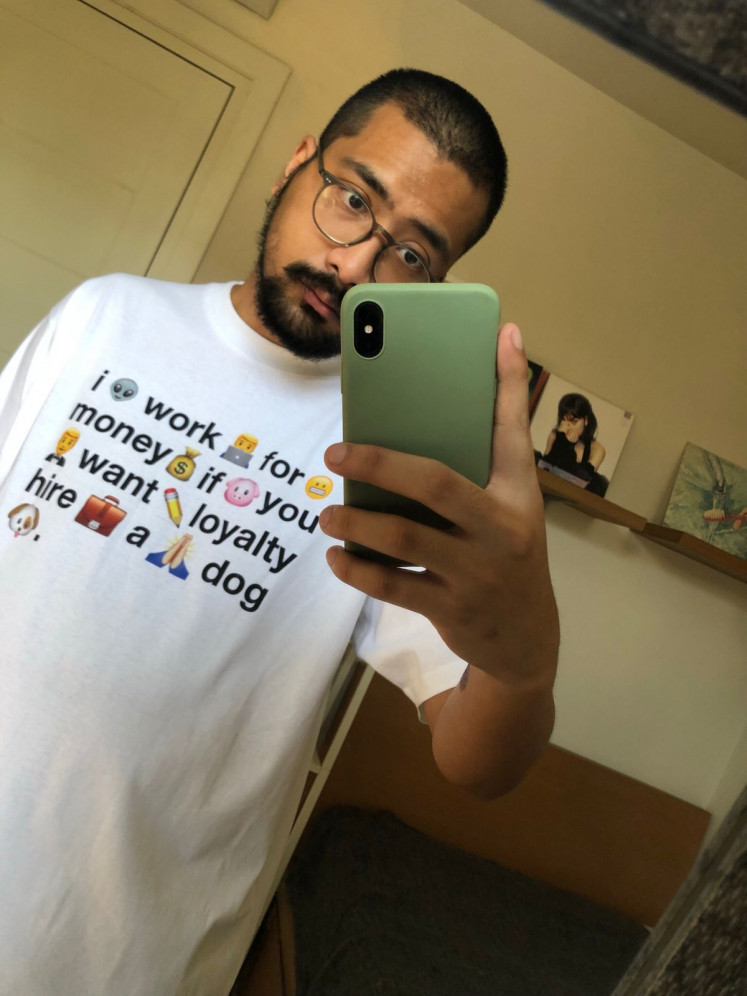
“I haven’t watched the film since I was a teenager, but when I was at school, our teachers talked about the scenes in detail. But we only focused on what happened on Sept. 30, not the events leading up to that.
Through the internet and my personal interest in history, I learned more about the background. And I realized there’s a lot we missed out on. We never talked about the political situation back then, our agrarian issues, tensions between the military and the police, or anything of the sort.
My parents were born right after the New Order took over. They grew up under Soeharto, and always had an understanding that something wasn’t right. They never suggested I watch the film, but they didn’t like me poking around about communism either. When I did a school paper about class struggle, they asked me point-blank if I was a communist.
That was what the film did. It turned communism into a boogie man.
I think it’s important for young people to know about our own history. So if you want to watch the movie, go watch it. But it’s important that you don’t stop here. It should just be one side of the story, a trigger for you to study history and ideology further. Otherwise, our generation would miss out on so much.”
Timami Yestha, 26. Fashion designer.
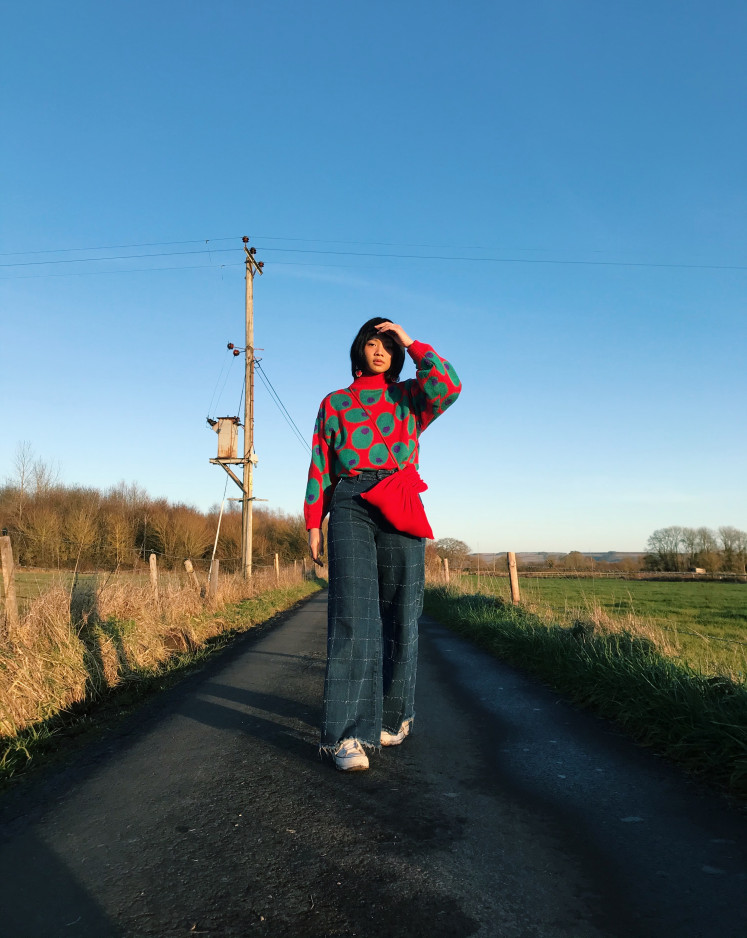
“When I was still in middle school, I watched the movie on YouTube. But to be honest, I don’t remember much of it. All I knew was that the movie was dark, informative, but very clearly biased. Even back then I suspected it was propaganda. My parents never asked me to watch the movie, nor did they speak about it at length. I think they were content to put it to bed.
I think for every issue, there’s someone who benefits. If you need to make somebody famous, they will find ways to detract from their competitors. And it’s the same with communism. I’m no fan of communism myself, but I know it’s not the ugly thing many Indonesians think. We’re used to being spoon fed the negative side of things without getting an alternative view, so we’re not used to being neutral and objective. We just get angry.
Young people need to watch this film again. Simply because it’s useful to know about history, so you can make an informed opinion. But you can’t stop at this film. Every movie is the result of the scriptwriter and director’s biases, so it's better if we inform ourselves through more sources and not rely on a single film.”
Dwi Rahma Kurnianto. 23. Researcher.
“My mother never suggested I watch the movie. But she had a very different memory of the compulsory screenings. Since it was held in fields and public spaces, it became sort of a way for the community to come together. Economically, it also didn’t hurt the street vendors who sold out their goods that night.
But personally, I couldn’t finish the movie. It lasted four hours but it only painted a one-way dialogue. And that’s the way it still is. Every September, we get the same [lies] that the communists were evil and the PKI deserved it. We’re never presented with an alternative.
If we actually break down the movie, a lot of scenes don’t add up. At first glance it might seem like a condemnation of the PKI, but the movie actually shows how messed up our history is. There’s no attempt to review or revise the narrative presented in the movie. Even today, the descendants of these so-called communist traitors still live with repression.
Throughout my time in the education system, I believed that our history teachers were incapable of explaining this story. They’re hampered by the rules. They can’t mess with the curriculum and syllabus, they can’t deviate from the norm, and teaching Marxism is still forbidden. There’s no way to legitimately present an alternative view of history, even though this alternative is out there. In the end, our youths will simply discredit any other views that don’t fit this mold. We’re not used to discourse and alternatives.
Whether or not this film should be watched every year is a moot point. It’s up to you, but in my opinion, there’s too much unnecessary violence. What’s more important is -- can we make a movie that presents a more balanced, or at least alternative, view of Sept. 30, 1965? Other filmmakers like Joshua Oppenheimer and survivors of the massacre have attempted to tell their story. Can they have equal footing in this discussion, too?”
Zara Zahrina. 24. Freelancer.
“I think it’s camp! I wonder if Soeharto personally selected the actor who played himself in the movie. If so, then it’s peak camp.
From a historical standpoint, though, you wouldn’t trust something coming from the guy who wanted the transfer of power to happen in the first place. We all know it’s fake, it’s propaganda, and it’s dumb, but it has camp value. It’s hilarious. Look, if I had the power to influence the masses by having someone play me in my imaginary scenario, I’d do it. To be honest, I kinda get why Soeharto made the movie.
We never talk about communism in public. Neither did my family. But when people are trying to hide something, a lot of other people will be itching to find out why they’re hiding this. My Dad was fed up with the movie, he told me it was fake, and it was stupid that we had to watch it every year. When I told him I saw the movie at school, he was legit worried. “Why are they showing that [expletive] at schools again?” I told him my friends were curious. He was a bit relieved, but told me it was a dangerous film.
I think people should watch the movie for the camp factor. But content-wise, you don’t need to hear a story that’s been told so many times and is probably super-biased anyway. Just watch it for the cool fake blood, and to appreciate how Soeharto probably picked a guy to play himself.