TheJakartaPost
Please Update your browser
Your browser is out of date, and may not be compatible with our website. A list of the most popular web browsers can be found below.
Just click on the icons to get to the download page.


Popular Reads
Top Results
No results found. Please check your search term and try again
Can't find what you're looking for?
View all search results
Popular Reads
Top Results
No results found. Please check your search term and try again
Can't find what you're looking for?
View all search resultsVictims of the Bali bombings’ agonizing path to finding peace
The families of terrorist attacks owe nothing to those who have taken the lives of their loved ones. But for some people, forgiveness is a part of moving on.
Change text size
Gift Premium Articles
to Anyone
Share the best of The Jakarta Post with friends, family, or colleagues. As a subscriber, you can gift 3 to 5 articles each month that anyone can read—no subscription needed!
T
he families of victims of terrorist attacks owe nothing to those who have taken the lives of their loved ones. But for some people, forgiveness is a part of moving on.
The 2002 Bali bombings killed 202 people including Aris Munandar, a driver for the Sari Club nightclub on Jl Legian, where two bombs exploded. At the time of the explosion, he was waiting to pick up a guest.
His death continues to leave a wound for his wife, Endang Isnaini. But after holding on to anger and grief for close to two decades, she is now able to “forgive” the perpetrators.
“The praying I do has helped me to finally be able to forgive,” she said. She was disappointed and angry, questioning why she had to experience sorrow for so long and carry such a heavy burden.
Getting to a spot to forgive was a heart-rending process.
“My heart was so broken, no words could describe it. My three children were still kids and a baby, and my husband was the backbone of the family,” said Endang.
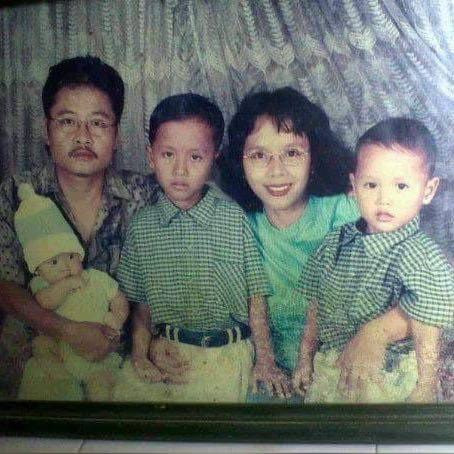
Today, the 50-year-old no longer holds a steady job. She suffers from rheumatoid arthritis, which makes it difficult for her to walk. But at the time, the tragedy forced Endang into taking over her husband’s position as the main breadwinner by doing various jobs, including sewing.
“The first month [after her husband was killed], I couldn't eat. I could only cry. I felt like I didn't have the strength to do anything,” she said.
Endang received support from a number of parties, including from nonprofit organizations and the government. Somehow, she has been able to send her three children to school. One of them is now a college graduate.
Her life remains a challenge, but Endang sees forgiveness as having helped her start a better life.
“For sure, I will never be able to forget it. However, after living [with grief] for so long, forgiving [the past] has helped me live a calmer life,” she said.
Second chance
Another victim of the 2002 bombing, Teolina Marpaung is still trying to get back on her feet.
"I was a patient for three years, [and] I had to continue to undergo eye treatment and surgery [for many years afterward]," she said. Teolina was injured by pieces of broken glass from the bombing. The now-46-year-old has so far undergone four surgeries, all in Australia.
She recalls a lingering feeling of “disappointment” and “anger”.
“That's human. But, later I asked myself, ‘How long will I continue to hold this anger?’” she said.
Those ruminations led to deeper thoughts.
"I once dreamt of an angel - a man dressed in white, waving his hand toward me, as if he was asking me to do something," she said.
It took her a while to understand it. However, when the BNPT [Indonesia’s National Counter Terrorism Agency] asked the bomb victims to reconcile with the main terrorist, Ali Imron, Teolina began to understand.
"I was not present at the time, but if I were to meet Ali Imron at that time, I would also have forgiven him," she said.
Stronger together
Teolina said that God has been very good to her — the proof that she is still alive today and has gone through what she feels are deep spiritual experiences.
“When God gave me a second chance, it was a miracle, as such, was there still a reason for me not to forgive? Because God teaches us to forgive. If you forgive, your sins will also be forgiven. I don't want to keep living in hatred.”
“For me it is a miracle, there have been many people who have helped me to get back up, to live life again. Since then I've been thinking, it's too selfish to not be able to forgive," she said.
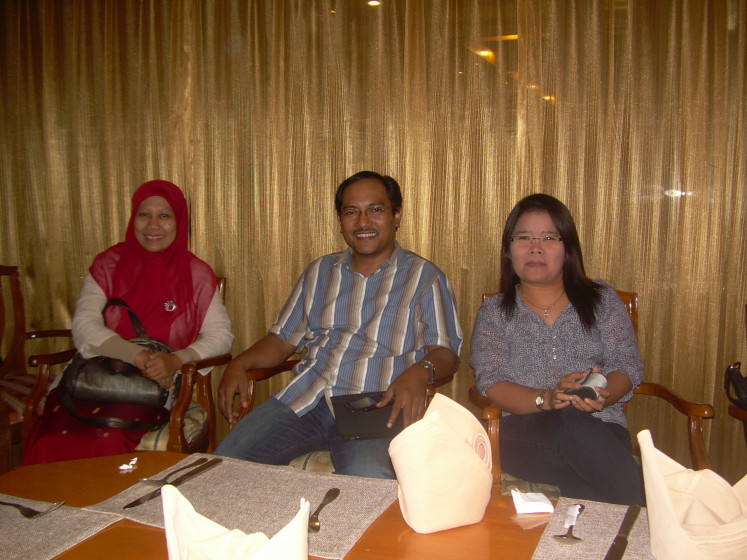
Teolina meets with 40 other survivors and families of the victims of the Bali bombings at the Isana Dewata Foundation, which was set up by, among others, the survivors themselves.
"There are still those [in the foundation] who have not been able to forgive, but I myself have forgiven," she said.
Not everyone
For others, forgiveness is not in the cards.
Sue Cooper Tisdall has not been able to forgive the terrorists who killed her brother, Paul, in the 2002 Bali bombings. This bloody incident left Tisdall and her family with grief and anger.

Paul worked as general manager at the Saphir Hotel and the Mabisa in Kuta. Two days after the bombing, Sue and her father received sad news from Paul's assistant. His body had been located at Sanglah Hospital. When he was about to be buried, her family was asked not to look at his corpse.
In her book titled One Way Ticket From Bali To Hell, published in November 2021, Tisdall wrote about the story of her brother's death, including the family’s efforts to bring his body back to his home country, the United Kingdom. She also described her disappointment at those who did not appear to support the victims’ families.
“How can I forgive those who killed my only brother, who was so kind to me?” she said.
Her disappointment bubbled because of the lack of empathy from the Indonesian government.
“We have never received an [official] apology for what happened from the Indonesian government, and we have not received any form of compensation for our loss.”
“I will never forgive the terrorists for taking my only brother away from me,” Tisdall said.
In God’s hands
Confronting their hate face on was something some victims' families decided to do.
In February 2020, the BNPT brought Endang and her son to meet with one of the convicted terrorists, Ali Imron.
"If asked how many years it took for me to forgive, I can't say - but I was only able to forgive after going through my life's journey of raising my children after my husband died. I thought, if I continue to hold hatred or grudges in my heart, when will I live my life in peace? I don't want it to continue to disturb my mind," she said.
Isnaini said that anger, hatred and revenge did not make her feel any better.
"If I live only for hate, then how can I work for my family?" she said.
“At first I was angry and resentful. I even wanted the terrorists to be put to death, but later I realized that life and death are in God's hands,” she said.