TheJakartaPost
Please Update your browser
Your browser is out of date, and may not be compatible with our website. A list of the most popular web browsers can be found below.
Just click on the icons to get to the download page.


Popular Reads
Top Results
No results found. Please check your search term and try again
Can't find what you're looking for?
View all search results
Popular Reads
Top Results
No results found. Please check your search term and try again
Can't find what you're looking for?
View all search resultsJokowi’s governing algorithm, a playbook for the next president
With such an overwhelming coalition, Jokowi maintains a relatively stable balance in the executive and the House of Representatives to enact his priorities on infrastructure and pandemic recovery and to direct the delivery of policies.
Change text size
Gift Premium Articles
to Anyone
Share the best of The Jakarta Post with friends, family, or colleagues. As a subscriber, you can gift 3 to 5 articles each month that anyone can read—no subscription needed!
F
rom earlier this year until quite recently, the national political sphere has been embroiled in an increasingly tenuous clash between two powerful competing groups.
One, promoted by several senior politicians and ministers – including the President’s most trusted lieutenants – wishes to extend the current presidential term for another three years or to allow Joko “Jokowi” Widodo to run for a third term. They contended that Jokowi needs more time at the helm to steer Indonesia out of the severe downturn caused by the COVID-19 pandemic.
Others, a mix of the opposition figures and Jokowi’s political allies, insist on the scheduled 2024 election. The two groups were at loggerheads and the tension erupted into massive student demonstrations in early and mid-April. For the time being, President Jokowi has attempted to calm nerves by committing to the 2024 election timetable.
Indeed, the President’s approval rating – while recently in a downward turn – is still high for a leader in a democratic society. Inevitably though, Indonesia will have a new president by Oct. 20, 2024.
Previously, we offered a political algorithm for parties and candidates who would vie for the presidency in 2024 (The Jakarta Post, Feb. 18). Extracting from previous presidents and the Jokowi years, we have extended this into a governing algorithm so that the next administration can pursue its ambitions on social development and economic growth with sufficient political stability.
There is no power in the incumbent that cannot be acquired by the next person in the role. A smooth ride depends on leaders playing their cards right.
As such, this is a playbook for the next leader, who, once successful in applying the political algorithm to get elected, will enter the next phase: governing sprawling, dynamic and competing actors in political, economic, technocratic and security (PETS) spheres to achieve coherent and advancing policy machinery. PETS constitutes the key elements of this governing algorithm.
First is the political sphere. Many have commented on – and criticized – Jokowi’s accommodation of super-majority party representatives in his government, including his main rival, Prabowo Subianto.
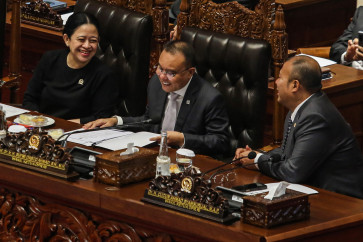
Notwithstanding the critics, with such an overwhelming coalition, he maintains a relatively stable balance in the government and the House of Representatives to enact his priorities on infrastructure and pandemic recovery and to direct the delivery of policies.
More critical in his quest for stability is ensuring representation from the sociocultural pillars of Indonesian society. Figures from the two most important institutions in the country – Nahdlatul Ulama and Muhammadiyah – are prominent in the Cabinet. Similarly, people from different ethnic and religious communities have been appointed to government posts. Jokowi’s Cabinet is the most representative of Indonesian faces.
By embracing most elements of Indonesian society, ardent opponents can draw only the small remaining, and scattered, groups. Some of their institutions have been dismantled and even disbanded, such as Hizbut Tahrir Indonesia and the Islam Defenders Front (FPI). In many instances, the opposition has been rendered ineffective.
On the economy, the second factor, Jokowi places a significant emphasis on organizing and employing the nation’s sprawling state-owned enterprises (SOEs) as the primary arm in building his infrastructure projects.
His bigger vision, though, is to consolidate the entities into several giant corporations that dominate their respective sectors: oil and gas, mineral mining, plantations, construction, airports, seaports and others. The consolidated SOEs are also the vehicles with which to take divested assets from foreign companies in the oil and gas and mining industries.
The ultimate goal, it seems, is to create an Indonesia Inc., a huge enterprise with assets close to US$650 billion.
While Jokowi has had a combative stance against trade barriers for Indonesian commodities – palm oil, nickel, etc. – at the same time he has sought new investments from funds in the United Arab Emirates, South Korea, China and elsewhere.
Domestically, the President has strengthened his influence over the Indonesian Chamber of Commerce and Industry (Kadin). With its vast network across the country of businesses and entrepreneurs, this is a key political pillar for election and governing. Having been the traditional backbone of the Golkar Party, Kadin is now being more heavily influenced by Jokowi.
At the intersection of the economy and the third factor – technocrats – is the national budget. As much as it is a political product, it requires policies and programs developed by technocrats at ministries and agencies. These technocrats are particularly critical in administering the COVID-19 pandemic response by applying an agile approach and a whole-of-government framework, a novel practice in the traditionally rigid bureaucracy.
Meanwhile, for delivering his priorities, Jokowi has entrusted nonpartisan and more professional appointees for foreign affairs, home affairs, health, education, public works, energy, transportation, SOEs and as attorney general. This ensures that his vision is realized with minimal interference from political parties.
In parallel, the professional class – the technocrats’ ally – has also thrived during Jokowi’s tenure. The drive for infrastructure, digitalization, climate action, new finance and health care have placed them in more prominent and influential positions in the public and private sphere. Moreover, this has increased the participation of many in the millennial and Gen Z cohorts in the science, technology, engineering, arts and mathematics fields, where they acquire and apply skills to be productive.
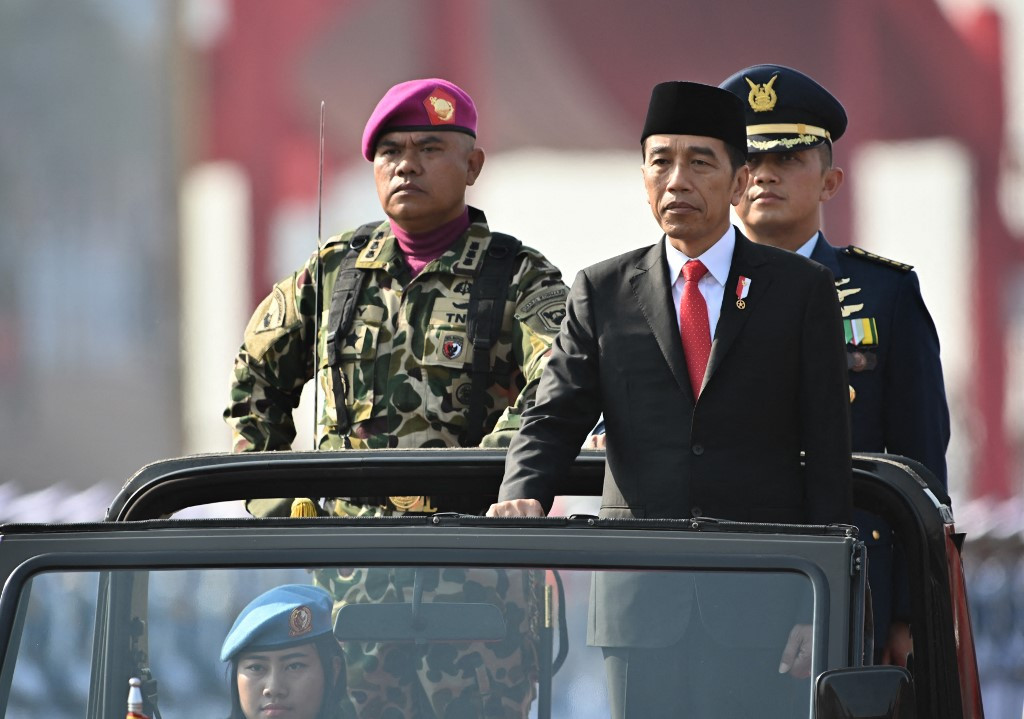
A critical factor – the fourth – in ensuring a stable body politic is control over the security sector, which in Indonesia encompasses the police, the military and the intelligence service. In all three, the President has appointed highly trusted persons as leader. His current home affairs minister is a former police chief, while the current chief served alongside the President in Surakarta and later as his aide. National Police chief Gen. Listyo Sigit Prabowo could serve until 2028, well after Jokowi’s presidential term expires.
Gen. Andika Perkasa, the current Indonesian Military (TNI) commander, once headed the presidential detail. The previous commander, Hadi Tjahjanto, was well-known to the President from his Surakarta tenure. Hadi served the longest as TNI commander in the last 20 years and oversaw major structural changes in the three services. More posts have been created to allow for expanded career paths and unwind a huge bottleneck in the field officer ranks, resolving the most pressing issue in the military.
To complete the package, the President’s intelligence chief is a reliable operative and, crucially, the confidant bridge to the country’s political leaders.
Granted, organizing and aligning all the factors above requires great skill, and Jokowi has proven to be a master. However, the contents of this playbook are not mysteries, nor do they require an out-of-this-world tesseract to activate.
As the Avengers fought the long war and passed on the leadership baton to the next generation and entrusted the future success and safety of the universe to them, so should Jokowi. To accomplish his or her ambitions, the next president needs to find the most stable mixture of politics, the economy, technocrats and people in uniform in this governing algorithm.
***
Adi Abidin, a research fellow at Populi Center, and Charine Pakpahan are consultants at Indovibrant Strategic Advisory. The views expressed are their own.