TheJakartaPost
Please Update your browser
Your browser is out of date, and may not be compatible with our website. A list of the most popular web browsers can be found below.
Just click on the icons to get to the download page.


Popular Reads
Top Results
No results found. Please check your search term and try again
Can't find what you're looking for?
View all search results
Popular Reads
Top Results
No results found. Please check your search term and try again
Can't find what you're looking for?
View all search resultsInflation may exceed 4% next year, BI warns
The high inflation rate in Indonesia is likely to continue in 2023 as Bank Indonesia projects that prices will remain stubbornly high next year, extending what the country has been suffering throughout this year.
Change text size
Gift Premium Articles
to Anyone
Share the best of The Jakarta Post with friends, family, or colleagues. As a subscriber, you can gift 3 to 5 articles each month that anyone can read—no subscription needed!
T
he high inflation rate in Indonesia is likely to continue in 2023 as Bank Indonesia (BI) projects that prices will remain stubbornly high next year, extending what the country has been suffering throughout this year.
BI warns that the inflation rate may hover above its targeted 2 to 4 percent next year, according to presentation material shown by the central bank on Thursday during a national coordination meeting to tackle inflation.
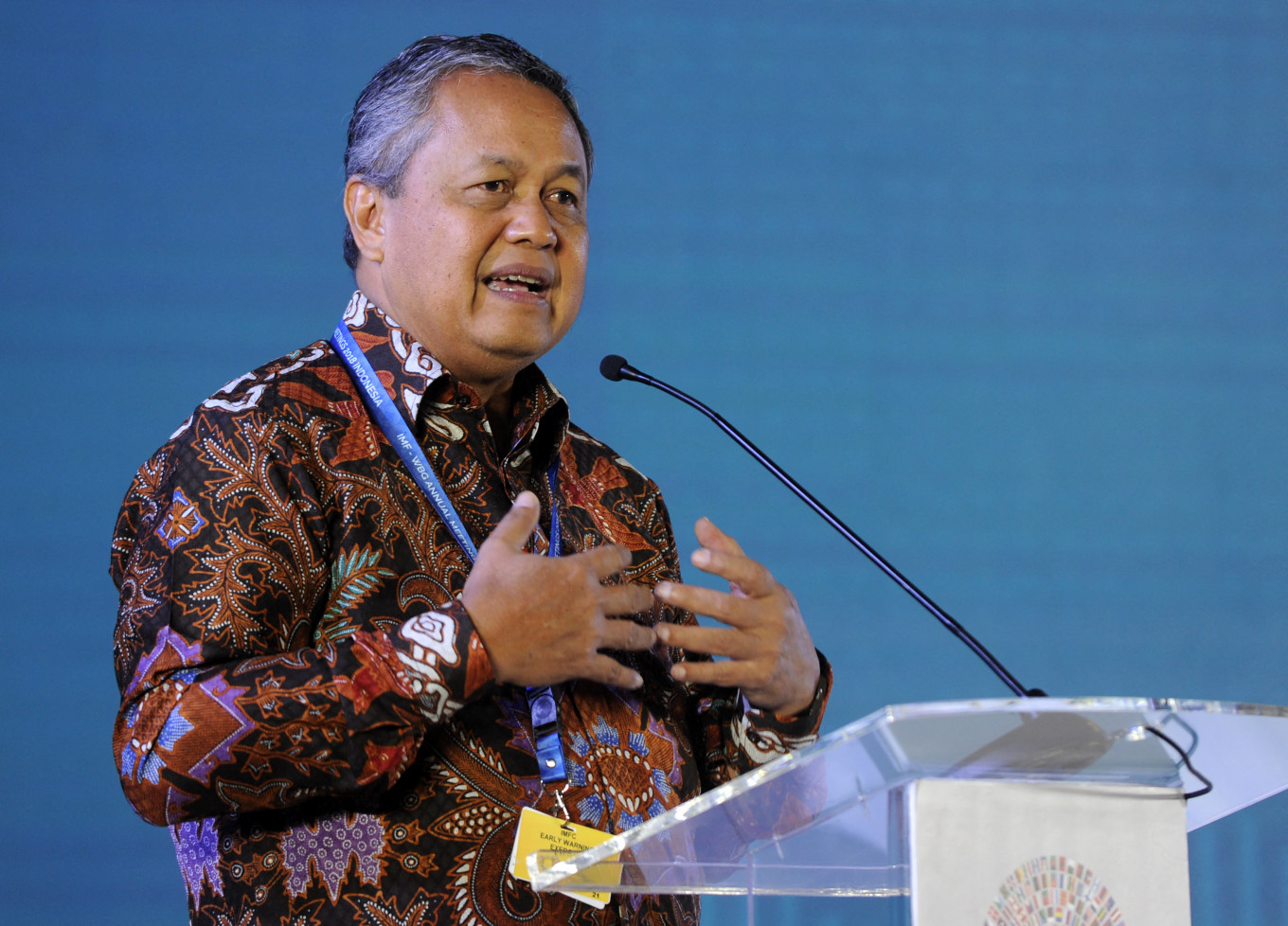
“There is a risk that inflation may exceed the upper limit of the target range of 3 plus/minus 1 percent, as food and energy prices will [likely] remain high, while continued increase in demand will add more pressure to inflation,” BI Governor Perry Warjiyo said.
Read also: Govt prepares for 'turmoil' with prudent 2023 budget
The central bank estimates that, for next year, there is a possibility that inflation may go sideways again, just like in 2022.
In the 2023 state budget draft, the government has set a moderate inflation target at 3.3 percent next year, which is higher than 3 percent typically set in previous budget plans.
For this year, BI and the government set the inflation target at 2 to 4 percent, but the bank has reaffirmed that the figure would likely surpass the upper range.
As of July, the inflation rate had reached 4.94 percent, driven by high food prices along with goods in administered price categories like airline fares and fuel prices.
To prevent the worst from happening, the government has been stepping up its measures at least for this year.
In this regard, President Joko “Jokowi” Widodo has asked his aides to allow regional leaders to use funds allocated for unforeseen contingencies, primarily to address emergency spending needs, in order to cover transportation and logistics costs to move excess staple foods toward deprived regions.
Jokowi also asked Transportation Minister Budi Karya Sumadi to ensure airlines would add more flights, hoping that would lead to a reduction in fares.
This included asking State-Owned Enterprises (SOEs) Minister Erick Thohir to ensure Garuda Indonesia could quickly bring back aircraft laid-off due to its debt-restructuring program in the first half of the year.
Jokowi has also pointed out that Indonesia has kept inflation from progressing further by allocating Rp 502 trillion (US$33.8 billion) worth of subsidies and compensation payable to energy SOEs from this year’s state budget, but he has asked Finance Minister Sri Mulyani Indrawati to keep an eye on sustainability.
Coordinating Economic Minister Airlangga Hartarto also said on Thursday that, with any measures in hand, the government aimed to bring down this full year inflation rate to between 4 and 4.8 percent, much lower than July’s figure of 4.94 percent.
He said such a figure was possible as most food prices, the largest contributor to inflation, such as rice, meat, poultry, sugar, shallots, onions and red chilies, were declining.
“Of course, we will make more effort along with several programs to control inflation,” Airlangga said.
Read also: Indonesia plans fuel price hike to control ballooning subsidies: reports
Private lender Bank Permata chief economist Josua Pardede told The Jakarta Post on Thursday that an inflation rate above 4 percent is plausible next year, arguing uncertainties have not shown any sign of slowing down just yet.
“It’s true that many [experts] project commodity prices will decline next year, but prolonged geopolitical tension between Russia and Ukraine, also heightened tension between China and Taiwan, may drive food and energy prices up,” Josua said.
On the other hand, Josua noted the government’s plan to hike the price of subsidized Pertalite gasoline might make it harder to lower inflation, especially for next year, unless the government could compensate by stabilizing other prices like staple foods.
A 30 percent increase to Rp 10,000 per liter would trigger additional inflation of 0.92 percentage points on top of the already high figure, he estimated.
He added that Indonesian consumers now have greater sensitivity to high prices compared with normal times, as they had only just recovered from the pandemic, implying that the government should watch for risks of economic-led social unrest.
“Like the President said, our economy has not fully recovered yet,” Josua said.