TheJakartaPost
Please Update your browser
Your browser is out of date, and may not be compatible with our website. A list of the most popular web browsers can be found below.
Just click on the icons to get to the download page.


Popular Reads
Top Results
No results found. Please check your search term and try again
Can't find what you're looking for?
View all search results
Popular Reads
Top Results
No results found. Please check your search term and try again
Can't find what you're looking for?
View all search resultsPay attention: Local genre novelists are finally recognized
Change text size
Gift Premium Articles
to Anyone
Share the best of The Jakarta Post with friends, family, or colleagues. As a subscriber, you can gift 3 to 5 articles each month that anyone can read—no subscription needed!
The public and filmmakers have started to shift their gaze from the more mainstream fiction novels.
There was a long period when local mainstream novelists ruled the best-seller list and the silver screen.
Indonesian novelists such as Ika Natassa (Critical Eleven), Ilana Tan (Winter in Tokyo), Erisca Febriani (Dear Nathan), and Risa Saraswati (Danur) have turned romance and horror novels into mainstream fiction that drew not only huge sales and bankable motion picture adaptations but also a flock of wannabe novelists who attempted to follow the exact blueprint. It is no longer a secret commercial viability has always been on any aspiring novelist's mind, and looking at the success of their predecessors, it is a no-brainer the former would immediately assume exploring romance or horror was the way to go.
However, a recent trend in the past couple of years has hinted at what is possibly a new dawn in the Indonesian pop-literature landscape. Local genre novels such as Anastasia Aemilia's Katarsis (thriller), Sabda Armandio's 24 Jam Bersama Gaspar (futuristic noir) and Eka Kurniawan's Vengeance Is Mine, All Others Pay Cash (dark comedy) have finally entered the public's radar and gone so far as to receive media adaptations that, subsequently, enjoyed warm responses in their own right.
Be that as it may, the question remains: Are the flowers these local genre novelists received for keeps or simply for the time being?
How 'no ambition' leads to success
Sabda Armandio explained, in a chat with The Jakarta Post on April 11, that he understood how public reception could influence a novelist's creative decisions. Nonetheless, when it came down to writing his novels, the author had opted not to give in to the "pressure". It was a bold principle that, fortunately, paid off.
"I have no ambition to become a famed writer, let alone a littérateur," he asserted, "because I have so many [other] interests: music, [video] games, watching cartoons, reading and other fun things that make me feel like I want to live longer. When writing, I write what I like [to write]."
Sabda often found himself inspired by those hobbies and reading, as he put it, "classic ghost tales and weird fiction" in his downtime. He was excited when 24 Jam Bersama Gaspar was adapted into a feature film, set to premiere in Indonesian theaters this year, in which three-time Citra Award winner Reza Rahadian portrayed the titular protagonist.
Nonetheless, Sabda decided not to get ahead of himself.
"Some might like the kind of story I wrote, and others might not. I just tried to stay true to my style and vision in building a fictional world. Therefore, I cannot comment on saturation in metro-pop romance or anything [considered] popular," he added.
Novelist Eunike Hanny shared a similar sentiment. Her latest novel, a psychological teen drama, Klub Bunuh Diri, based on a story idea by Ichwan Persada, made headlines in 2021 for its thematic exploration of teen suicide. The same year, the novel was announced to receive a miniseries adaptation starring pop singers Samuel Cipta and Jennifer Rachel.
Just like Sabda, Eunike was adamant about sticking to her vision. Despite its theme, she believed her story would be light enough for local readers' taste.
"Whenever I write, I am more inclined to what I want to write. Not whether the readers could accept it," she told the Post on April 10.
Also, she learned from experience nothing good comes from adopting what is in vogue: "Let's say what's popular right now is romance. There's a good chance I can't write at all once I follow the inclination of others."
Diamonds, emerging from the 'dust'...
Desire to be authentic might be the fuel that eventually earned novelists like Sabda Armandio and Eunike Hanny a seat at the table. The latter underscored local genre novels could also stand toe-to-toe against similar books by international authors.
"I have read several incredible Asian novels, but I have also read novels by my fellow countrymen, which were great. So, in terms of competition, I think [the latter novels] have a chance. Local novels are no less good [than novels from overseas]," Eunike opined.
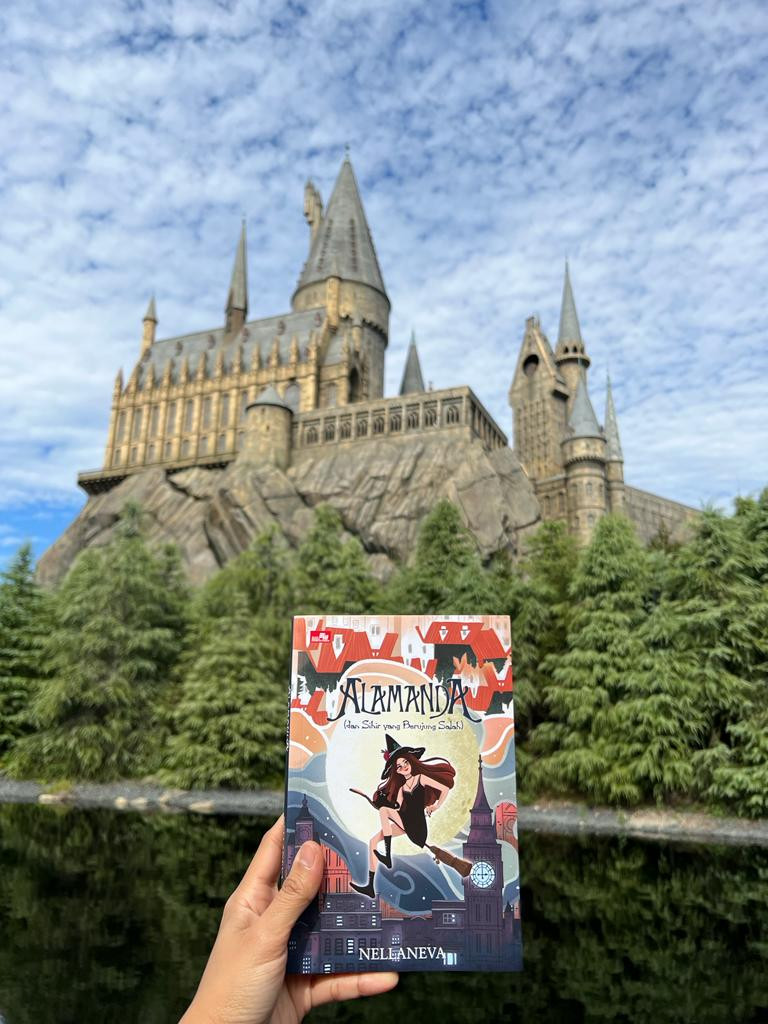
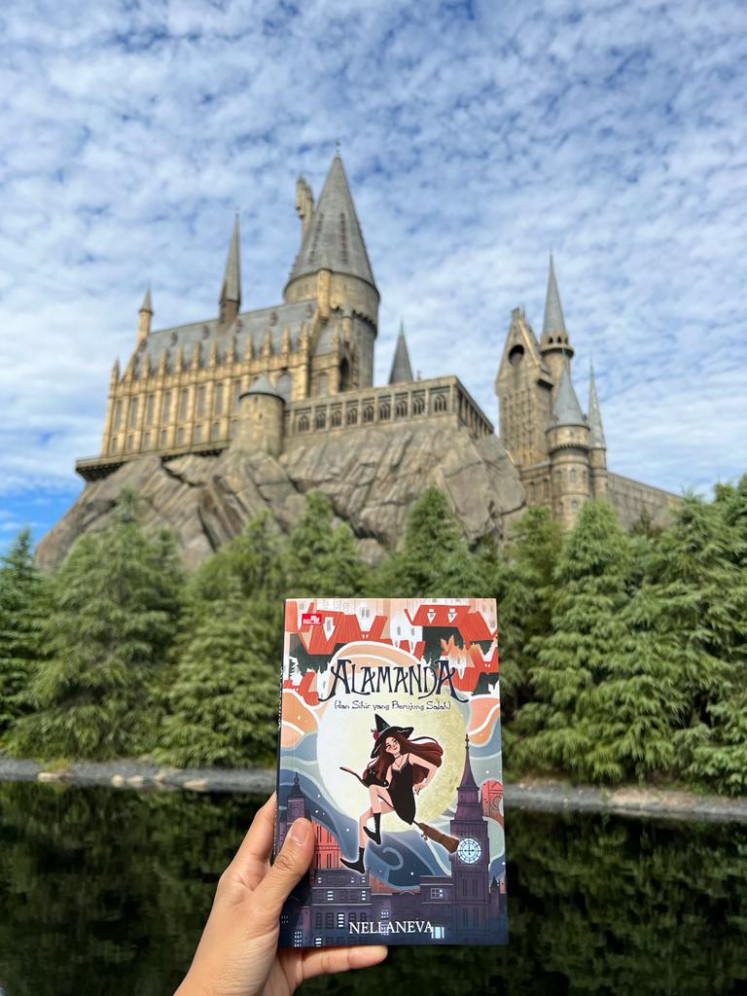
Nellaneva, who has written fantasy-driven Alamanda and mystery-driven Ranah Pusaka, has also welcomed the rise of local genre novelists. While the novelists' authenticity and tunnel vision for their craft might play a significant influence, Nellaneva also observed how online storytelling platforms, the likes of, to name a few, Wattpad, Kwikku, Storial and Tapas, have helped grow the younger readers' interest as well.
"When writers gather massive views on those platforms, there's a chance a publisher will be interested," she explained to the Post on April 7. "Also, these writers' strength is perhaps how they are generally 'interactive' with their readers, which results in more interest and recognition for genres outside what is mainstream."
The future seems "promising" for local genre novelists. However, Nellaneva acknowledged how, even today, there are still extra challenges faced by writers who dare to offer something unique at the table. The novel's marketability, for example, would always be up for debate.
"It does feel like you have to take it up a notch regarding branding and promotion. If the mainstream genres are like dust, then we are akin to diamonds trying to emerge from the dust," she analogized.
Also, it is difficult to deny mainstream genres, such as romance, still sit on the throne.
"Is there fatigue with the mainstream genres? I say, not really. Because people, as it turns out, are still into them," she quipped.
A 'vicious' competition
Hetih Rusli, an editor in charge of Anastasia Aemilia's thriller, Katarsis, a novel later adapted into a web miniseries starring Pevita Pearce, welcomed the rising enthusiasm for not-so-mainstream genres, especially during the past year. The emergence of streaming platforms looking for more exciting stories to adapt has also played a part.
Still, the trend does not guarantee a significant shake-up on the best-seller list.
"The series did help the sales of Katarsis. However, if I have to answer honestly, let's just say there are two [media] adaptations simultaneously: one for a romance and one for a thriller. The former will [still] enjoy better sales," explained the editor to the Post on April 10.
There is, however, an underlying nuance. Hetih further highlighted writing romance did not guarantee a spot on the best-seller list.
"Even though the [romance] market is still huge, so many novelists want to write a romance. It's different from a thriller: The market exists, but few novelists exist. And the competition is not as tight as the one in the romance market. The [competition] is vicious in romance," she cautioned.
Hetih pointed out an "interesting" discovery. Even among the left-wing genres such as crime, fantasy, mystery and psychological drama, one particular genre remains underexplored by local novelists: Family.
"Family-themed films like Ngeri Ngeri Sedap and Cek Toko Sebelah should have encouraged novelists, but the number of novels in the genre, I think, is still lacking. We all have families, right? That could be relatable [for readers]. Relationships between siblings, mother and child, and father and child would be very riveting to explore," she concluded.