TheJakartaPost
Please Update your browser
Your browser is out of date, and may not be compatible with our website. A list of the most popular web browsers can be found below.
Just click on the icons to get to the download page.


Popular Reads
Top Results
No results found. Please check your search term and try again
Can't find what you're looking for?
View all search results
Popular Reads
Top Results
No results found. Please check your search term and try again
Can't find what you're looking for?
View all search resultsLocalizing SDGs to achieve 2030 Agenda
The involvement of local community members, village authorities and relevant stakeholders in the decision-making process has successfully brought innovative solutions tailored to the specific needs of each village.
Change text size
Gift Premium Articles
to Anyone
Share the best of The Jakarta Post with friends, family, or colleagues. As a subscriber, you can gift 3 to 5 articles each month that anyone can read—no subscription needed!
T
he localization of Sustainable Development Goals (SDGs) has been a hot topic since the time of the Millennium Development Goals (MDGs) and was further amplified by the 2030 Agenda for Sustainable Development. However, the power of local action has not yet been brought to the fore in the various discussions on how to achieve the 2030 Agenda.
People tend to focus on what is happening on the global and national levels, but concrete action starts closer to home. The catchphrase “act locally, think globally” still rings true today and should be our guiding principle.
Eight years have passed since the adoption of the SDGs, and yet there is progress in only one fifth of the target categories, while the rest stagnate or even regress.
I believe the time is ripe for us to bring the localization of SDGs to the center, ensuring that local projects become essential to our transformative action to fix the course of the 2030 Agenda and to attain all the targets thoroughly and in a timely manner.
Ever since its foundation, Indonesia has been a country that relies heavily on its villages and local communities. In fact, during the independence struggle, there was a saying that villages were our first line of national defense.
Today, of course, this adage speaks to a greater degree of many other things, particularly development. Building a great nation starts in the village. In Indonesia, 91 percent of the national territory is comprised of villages, and 71 percent of the population resides in rural areas. By optimizing the role of villages, we identify a significant opportunity to contribute to the success of national development in support of the SDGs.
Indonesia’s 75,265 villages are therefore our source of strength and progress. Recognizing the immense potential and transformative power of grassroots development, we initiated SDGs Desa (Village SDGs) in villages across the archipelago in 2020.
Through the SDGs Desa initiative, we empower our villages to take ownership of their development, while keeping in line with the SDGs and ensuring that they are inclusive, socially equitable and environmentally sustainable in the process.
By employing this bottom-up approach, we were able to address the unique needs, priorities and aspirations of each village. The involvement of local community members, village authorities, and relevant stakeholders in the decision-making process has successfully brought innovative solutions tailored to the specific context of each village. From poverty eradication, provision of quality education, water and sanitation, to renewable energy and sustainability, all hands are on deck in achieving impactful outcomes.
There are at least three elements worth mentioning as crucial parts of the SDGs Desa initiative. Data collection is the vital entry point. The process of aligning village development with SDGs all started with data collection. We aggregated micro-level data that includes information on the individual, household, neighborhood and village levels.
This information is aligned with national SDG indicators, and then consolidated digitally in the Village Information System. Through this system, all stakeholders can monitor and assess the progress of the SDGs Desa in each village.
The collected data serves as a reference point and recommendation for villages to formulate and prioritize their needs in planning documents like the Medium-Term Village Development Plan and the Village Government Work Plan.
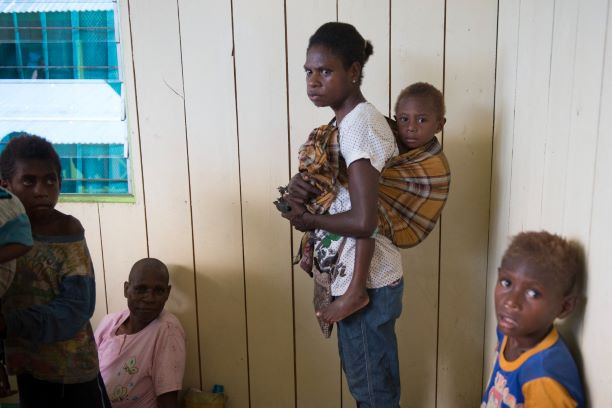
In the village of Vasco Damneen in Bintuni regency, West Papua, we started data collection in 2022, and the locals have applied their SDG-based village budgeting and planning in 2023. In their planning, they have pinpointed the specific SDGs targets that speak to their needs.
These measures have enabled us to allocate the village budgets in a more targeted manner, and in turn have a positive impact on village development, empowerment and well-being, further supporting the achievement of SDGs at the local and national levels.
The multistakeholder approach is a catalytic factor. We believe that the accumulation of concrete actions at the grassroots level will enable us to accelerate progress in various SDG targets, create synergy between different sectors and enhance coordination between national and local governments.
The strong partnership between the central government, local governments, civil society organizations and the private sector is key to ensuring the success of SDGs Desa. Through this approach that fosters collaboration and cooperation among all stakeholders, we have enhanced the effectiveness of our efforts while creating a sense of shared responsibility and collective action in realizing the SDGs.
Continuous support to villages is important. To assist SDGs implementation at the local level, the ministry has launched various programs, including the Direct Cash Assistance for Village Funds, which was implemented during the COVID-19 pandemic to ensure that no villagers suffer from hunger, poverty or a lack of access to basic needs.
In order to empower the marginalized village communities, we have devised the Village Cash for Work program, through which we prioritize the utilization of local resources, labor and technology in various development projects to enhance the income of local residents.
Equitable economic growth in villages is supported through the development of the Village-Owned Enterprises and Village Tourism programs, while innovation in villages is fostered through the implementation of the Smart Village and other appropriate technology programs.
In Nanga Lebang village in Sintang regency, West Kalimantan, the village chief has distributed direct cash assistance (BLT) to villagers in need based on the disaggregated data. In 2022, the BLT amounted to around US$20,880 for 87 households, while in 2023 the number of households in need of support fell to 25. To help villagers during the pandemic, the village authorities initiated several development projects to empower the local people and provide them with job opportunities.
I believe public discussions will provide a strategic opportunity to learn from the experiences of others, exchange best practices and forge partnerships to scale up our local actions to accelerate the implementation of the SDGs.
Together, let us continue to harness the power of local action to leave a lasting impact on the lives of future generations and ensure a prosperous future for all, with no village left behi
***
The writer is Villages, Disadvantaged Regions and Transmigration Minister.