TheJakartaPost
Please Update your browser
Your browser is out of date, and may not be compatible with our website. A list of the most popular web browsers can be found below.
Just click on the icons to get to the download page.


Popular Reads
No popular reads data found
Top Results
No results found. Please check your search term and try again
Can't find what you're looking for?
View all search results
Popular Reads
No popular reads data found
Top Results
No results found. Please check your search term and try again
Can't find what you're looking for?
View all search resultsTuberculosis

Academia 5 months ago
PREMIUM
Funding gap looms, will progress against AIDS, TB, malaria suffer?
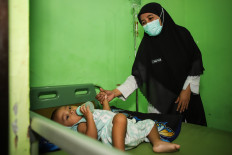
However, with global funding pledges falling short of the target required to sustain health programming, how can countries, including Indonesia, win their goal to end AIDS, tuberculosis and malaria as global health threats?
Editorial 8 months ago
Forgetting healthcare basics
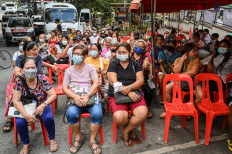
As the health system grapples with the unprecedented spread of misinformation, fueling vaccine hesitancy and eroding public trust in the government’s health programs, it is more critical than ever for the government to reinvest in the foundations of public health.
Society 11 months ago
PREMIUM
Poor communication haunts TB vaccine trial
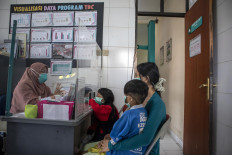
Some Indonesian netizens oppose the clinical trial of a tuberculosis (TB) vaccine candidate in Indonesia, whose development has been supported by the Gates Foundation. They claim that the state is selling people as "lab rats" for the philanthropist’s agenda.
Society 11 months ago
PREMIUM
Govt looks to grassroots communities to bolster fight against TB
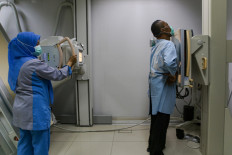
The government has scaled up efforts against tuberculosis by empowering local communities and strengthening health facilities down to the village and subdistrict levels for the early detection and treatment of the world’s deadliest infectious disease.
Society 11 months ago
PREMIUM
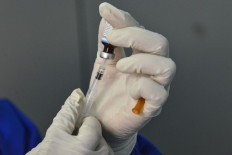
Govt defends tuberculosis vaccine trial in Indonesia
The clinical trials for a tuberculosis (TB) vaccine candidate developed with funding from the Gates Foundation are taking place in Indonesia under close monitoring by multiple national and international institutions and researchers, according to the Health Ministry.
Academia 1 year ago
PREMIUM
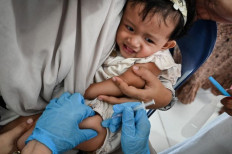
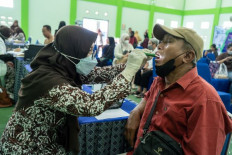
Integrating health services to mitigate the shift in global aid
The US withdrawal from global health aid highlights the vulnerability of global health funding to geopolitical shifts, and serves as a wake-up call for Indonesia to build a self-reliant healthcare model that is capable of delivering integrated services, such as for TB, in anticipation of future uncertainties.
Archipelago 1 year ago
PREMIUM
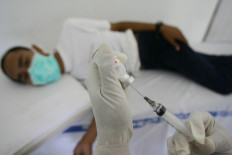
Bogor ramps up tuberculosis detection
The West Java city of Bogor is expanding its efforts in both case detection and public outreach, specifically for groups at high risk of contracting tuberculosis, amid a surge in active cases in one of four TB hot spots in the province.