TheJakartaPost
Please Update your browser
Your browser is out of date, and may not be compatible with our website. A list of the most popular web browsers can be found below.
Just click on the icons to get to the download page.


Popular Reads
Top Results
No results found. Please check your search term and try again
Can't find what you're looking for?
View all search results
Popular Reads
Top Results
No results found. Please check your search term and try again
Can't find what you're looking for?
View all search resultsBI sees inflation easing to below 7% in February
Bank Indonesia (BI) sees inflation easing to below 7 percent on a year-on-year basis in February, a top official has said, citing a downward trend in the country’s staple food prices — mainly rice
Change text size
Gift Premium Articles
to Anyone
Share the best of The Jakarta Post with friends, family, or colleagues. As a subscriber, you can gift 3 to 5 articles each month that anyone can read—no subscription needed!

B
ank Indonesia (BI) sees inflation easing to below 7 percent on a year-on-year basis in February, a top official has said, citing a downward trend in the country’s staple food prices — mainly rice.
“[Inflation] appears to land below the yearly average rate in February, so on a year-on-year basis [the headline rate] is forecast at less than 7 percent,” BI Governor Darmin Nasution told reporters after a news conference at the Finance Ministry in Jakarta on Friday.
Central bank and government officials have expected a slowdown in inflationary pressures, at least over the next couple months, as the harvest season would begin at the end of February and last through April in the country’s rice production centers throughout the archipelago.
Soaring food prices caused by crop failures at home and elsewhere in the world, have resulted in record-high global food prices, affecting Indonesia’s inflation rate, which touched a 21-month high of 7.02 percent in January.
BI Deputy Governor Hartadi Sarwono detailed that the February month-on-month inflation “would not be more than 0.5 percent”, up from 0.3 percent in the same period last year but down from 0.89 percent in the previous month of January.
“This month’s [February] inflation would decrease due to lower food and commodity prices that had pressured inflation in the previous months,” Hartadi said, “although taking into account surging oil prices which would potentially put more pressures on the country’s inflation.”
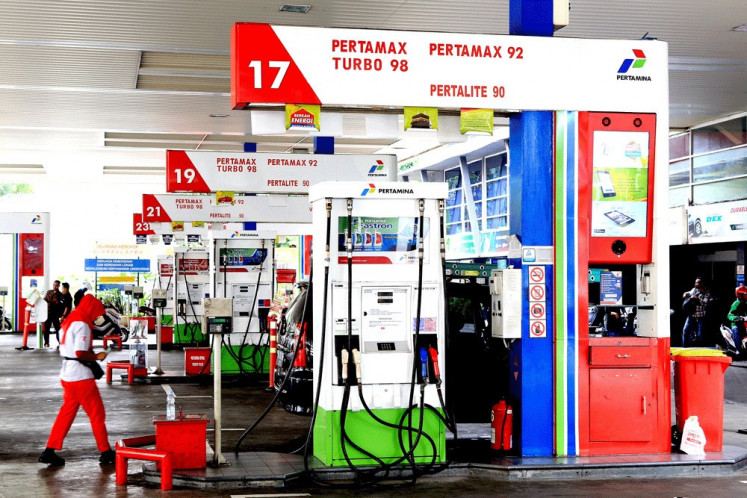
The United States West Texas oil price benchmark surpassed the US$100 psychological mark recently while the European Brent oil benchmark has broken the $110 level per barrel, increasing concerns across global financial markets.
National Development Planning Minister Armida Alisjahbana shared Hartadi’s view, saying that surging oil prices were very concerning.
“But it’s very situational, because of the Libyan crisis. But whatever it is, external shock is something that we need to anticipate.
“We need to anticipate with short-term measures as well,” Armida said at a separate event at her office on Friday, citing state-owned oil and gas company Pertamina’s alternative of importing oil from Malaysia instead of the Middle East if a shortage occurs.
The government’s inflation target is 5.3 percent for full-year 2011, while the central bank sees 4 to 6 percent headline inflation throughout this year.
Finance Minister Agus Martowardojo said to meet the target, BI must maintain core inflation, which accounts for about 65 percent of the inflation measurement, at below
4.2 percent.
The central bank is responsible for managing core inflation, while the government would be held accountable for volatile food and administered price inflation.
“The government has tried to control administered prices and volatile food prices with the recent import duty policy,” Agus said in reference to efforts in lowering supply-side inflation, hoping that the central bank would manage the demand-side.
BI has increased the minimum reserves requirement — or cash banks must store at the central bank, both in rupiah and foreign currency — to mop up trillions of liquidity in an effort to ease demand-side inflation.
— JP/Esther Samboh