TheJakartaPost
Please Update your browser
Your browser is out of date, and may not be compatible with our website. A list of the most popular web browsers can be found below.
Just click on the icons to get to the download page.


Popular Reads
Top Results
No results found. Please check your search term and try again
Can't find what you're looking for?
View all search results
Popular Reads
Top Results
No results found. Please check your search term and try again
Can't find what you're looking for?
View all search resultsGetting in touch with traditions
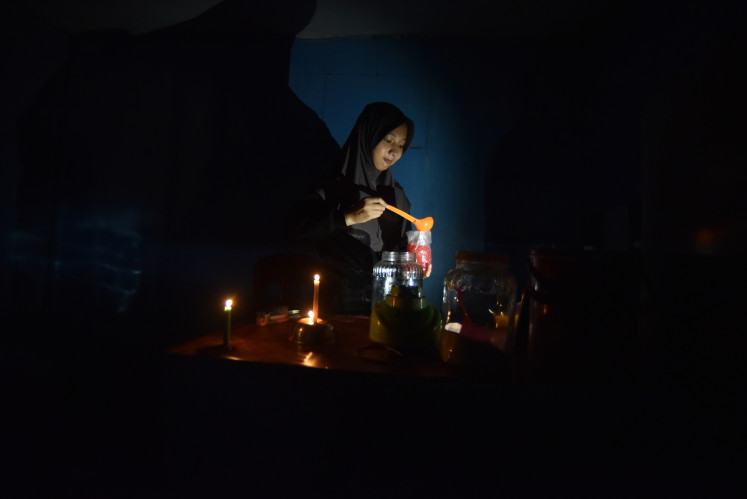
In last year’s movie Arisan! 2, character Meimei tries to reconcile her battle with a terminal illness by leaving the rat race of Jakarta for the simpler life in Lombok
Change text size
Gift Premium Articles
to Anyone
Share the best of The Jakarta Post with friends, family, or colleagues. As a subscriber, you can gift 3 to 5 articles each month that anyone can read—no subscription needed!

I
n last year’s movie Arisan! 2, character Meimei tries to reconcile her battle with a terminal illness by leaving the rat race of Jakarta for the simpler life in Lombok.
While we are hopefully not dealing with a movie character’s particular issues, many of us are seeking to get in touch with a more spiritual side of life. There may be those who glibly dismiss it as New Age angst or anxiety, but by looking at where we came from we can also understand where we are today.
South Korea is one country where tradition and modernity are finely balanced. In this century, there has been the phenomenal success of K-pop, Korean music and entertainment finely tuned for international audiences.
But slick youth culture is not the only attraction. Before the boys and girls of K-pop popped along, there were age-old Korean traditions that are still proudly upheld.
“The culture is rich and fascinating,” says Rani (not her real name), who visited the nation on a business trip a couple of years ago.
“The food is good, and the scenery, especially Jeju Island, is beautiful. And I also found it safe, including in Seoul, for foreigners.”
There are many opportunities to experience cultural tourism in South Korea through well-organized themed tours. One is to have stay in a hanok (traditional home) to get in touch with the way people lived in the past.
Visit Korea (www.visitkorea.or.kr) provides a few tips for experiencing a taste of Korean traditions.
Temple Stay: Designed to allow visitors to better understand Buddhism, with a host of methods to be experienced. The “Temple Life” themed tour includes “Yebul”, or a chanting ceremony, the Dahdoh tea ceremony and Balwoo Gongyang, a communal Buddhist meal eaten in total silence. Visit Korea says participants “can find their ‘true self’ among the harmony of nature while staying at a temple”.
Craft-Making: Korea is known for some of the most interesting traditional crafts in the world, with the time-honored practices of textile making and paper crafts continuing today.
“Craft workshops and museums in Insa-dong and Gahoe-dong, as well as the Korea House, Bukchon Hanok Village and Incheon International Airport offer traditional handicraft-making programs,” Visit Korea advises.
“Gagyo offers a 3-hour program in making quilts or stitching. You can make a simple bojagi [square piece of cloth] which often has charming bright colors so can be hung on the wall for decoration or used to cover a dining table.”
Korea House: Often singled out for its traditional art performance, but there are also activities of learning Hanji paper crafts, knot-making, illustrating fans, traditional mask making and traditional musical instrument classes.
The national tourism body also recommends that travelers with layovers at Incheon International Airport use the time to take part in two free programs of crafting Hanji jewelry boxes or cell phone accessories with traditional sewing techniques.
Also recommended is ceramic-making for foreigners at Icheon city, only 40 minutes by bus from Seoul. Visitors can either decorate unvarnished pieces of pottery, or try their hand at the potter’s wheel.
Palace Visits: There is a noble tradition in Korean society, with the traditions of courtly society still highly respected and preserved. In Seoul, Gyeongbokgung Palace and Changgyeonggung Palace are considered some of the top attractions for tourists. They not only have the opportunity to see the palaces in all their finery but also can watch reenactments of historical ceremonies (changing of the guards, among others) and dress up in the aristocratic regalia for a special photo.
Korean (Oriental) Medicine: People all over the world are seeking traditional ways to heal the physical or emotional problems that ail them. In includes the embracing of yoga to restore balance to one’s life, aromatherapy, Ayurvedic and so-called “alternative” medicine in Indonesia.
Korea Tourism cites Seoul’s Jaseng Hospital of Oriental Medicine for offering medical services, including acupuncture.
For a true immersion in Korean culture while experiencing its medicine, then try Conmaul Gyeongju Oriental Hospital. It is located in a hanok, and has special health tour programs, which also include spas and seeing the sights of the city.
Tae Kwon Do Lessons: Korea’s gift to the world of martial arts and clearly the best place to study it is in its birthplace. There are many programs oriented toward the needs of foreigners and also people of different skill levels. Visit Korea’s recommendations include the Namsangol Hanok Village experience, where people are taught the basic forms of the discipline in an hour-long class held three times a week.
Whatever you choose to do, be open to enjoying a different tradition, because the people of Korea are ready and waiting for you.
“The people are very helpful and do their very best to assist you,” said Rani.