TheJakartaPost
Please Update your browser
Your browser is out of date, and may not be compatible with our website. A list of the most popular web browsers can be found below.
Just click on the icons to get to the download page.


Popular Reads
Top Results
No results found. Please check your search term and try again
Can't find what you're looking for?
View all search results
Popular Reads
Top Results
No results found. Please check your search term and try again
Can't find what you're looking for?
View all search resultsPatra Niaga to develop 1,000 mini gas stations over five years
Change text size
Gift Premium Articles
to Anyone
Share the best of The Jakarta Post with friends, family, or colleagues. As a subscriber, you can gift 3 to 5 articles each month that anyone can read—no subscription needed!
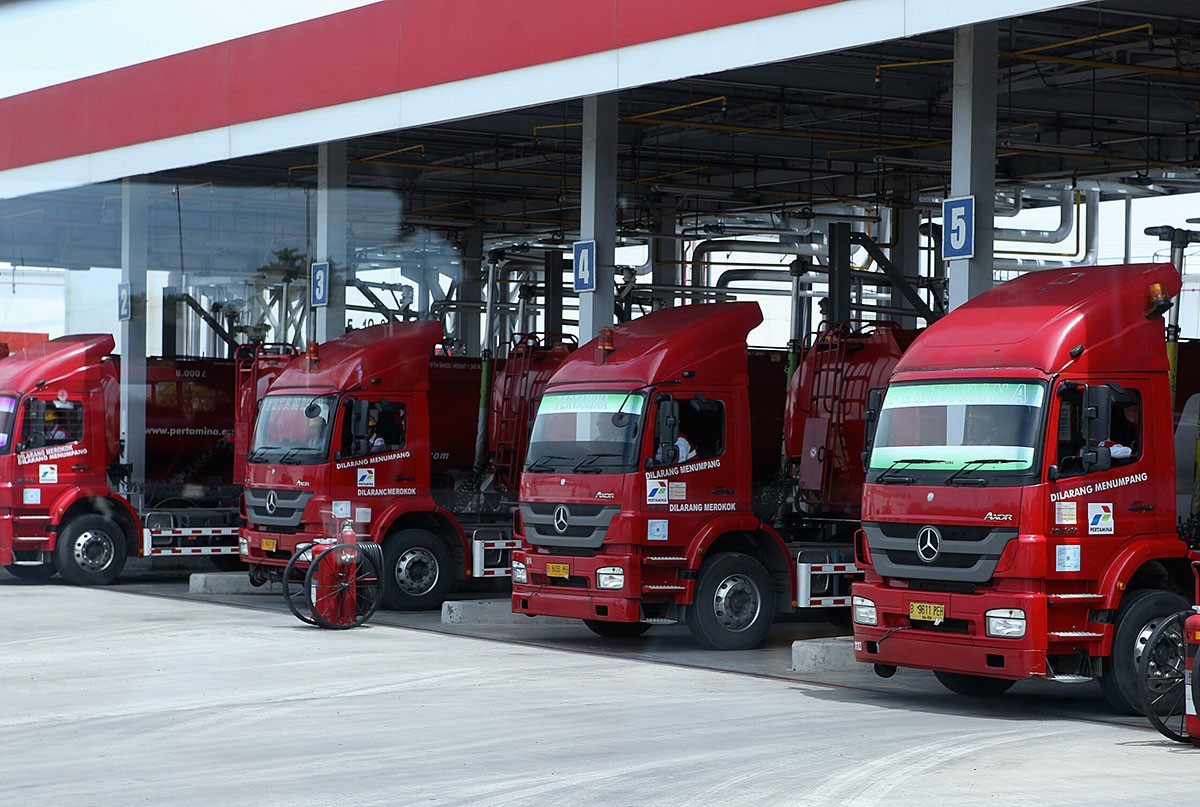 A row of fuel trucks owned by state energy company Pertamina are ready to distribute fuel from a depot. (JP/File)
P
T Pertamina Patra Niaga, a subsidiary of state-owned energy giant Pertamina, plans to develop 1,000 mini gas stations in the next five years to cater to customers in secluded regions across the country.
The mini gas stations, expected to have an investment value of Rp 1 billion (US$75,007) each, will have a capacity of 5 to 10 kiloliters of gasoline per day.
The stations will only sell non-public service obligation (PSO) gasoline, including Pertalite, which has a research octane number (RON) of 90, and Dexlite diesel fuel.
“This year, we will initiate the project by first establishing 50 mini gas stations,” Patra Niaga president director Gandhi Sriwidodo said recently.
Read also: Patra Niaga to acquire Shell fuel terminal“We will team up with small and medium enterprises so that they will be the ones to own the assets,” he said.
Gandhi said Patra Niaga wanted to gradually reduce its dependence on its fuel trading business, which currently accounts for 73 percent of the company’s total revenues, because of the risks that came with the volatility of global oil prices.
In the first half of 2017, the firm booked an 11.3 percent annual increase in its top and bottom lines, which stood at $630 million and $39 million, respectively.
Within the next five years, the company eyes to jack up its annual revenues by three times to nearly $4 billion from only $1.3 billion in 2016. It expects the proportion of revenues from its fuel trading and logistics businesses will be equal. (bbn)