TheJakartaPost
Please Update your browser
Your browser is out of date, and may not be compatible with our website. A list of the most popular web browsers can be found below.
Just click on the icons to get to the download page.


Popular Reads
Top Results
No results found. Please check your search term and try again
Can't find what you're looking for?
View all search results
Popular Reads
Top Results
No results found. Please check your search term and try again
Can't find what you're looking for?
View all search resultsNew bond regulations set to boost infrastructure
Central Java has considered issuing municipal bonds to help spur infrastructure development across the province
Change text size
Gift Premium Articles
to Anyone
Share the best of The Jakarta Post with friends, family, or colleagues. As a subscriber, you can gift 3 to 5 articles each month that anyone can read—no subscription needed!

C
entral Java has considered issuing municipal bonds to help spur infrastructure development across the province.
With the Financial Services Authority (OJK) having recently simplified the procedure of selling bonds in the capital market for alternative funding, the regional administration looks poised to take steps to realize the plan.
Central Java Governor Ganjar Pranowo said the municipal bonds were an innovative means of generating fresh funds crucial in infrastructure projects.
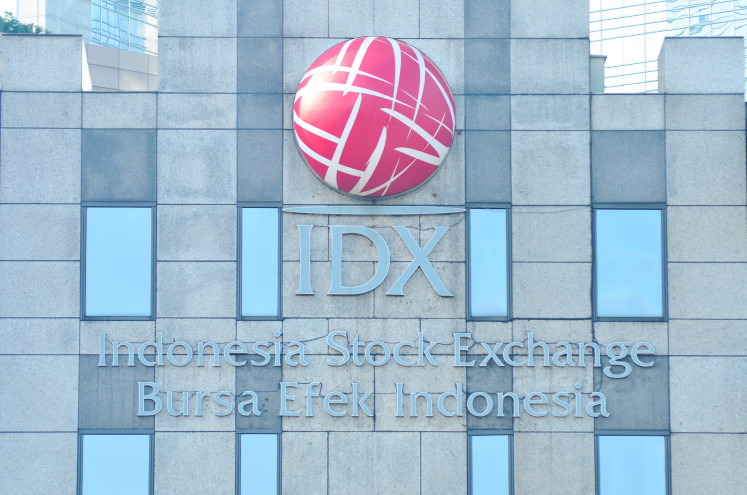
“I will invite the OJK to Central Java to disseminate information about municipal bonds […] so the benefits would be clear,” Ganjar said recently at the Indonesia Stock Exchange (IDX). Under prevailing regulations, regional governments are allowed to launch such bonds for more than a decade. However, none have done so because of complex procedures laid out by the central government.
The simplified procedure, outlined in an OJK regulation issued recently, is set to pave the way for local administrations to issue the bonds while still guaranteeing their ability to repay debts.
Central Java, East Java and West Java were regions that had considered rolling out municipal bonds, said OJK chairman Wimboh Santoso.
The value of a bonds issuance would depend on the region and the types of projects to be financed, he added.
“This should spur financing for public facilities in the regions, not only using the regional budget and the state budget, but also through a municipal bonds issuance,” Wimboh said.
To assess the feasibility of regions looking to launch such bonds and avoid a default, the authority will apply a rating system. Those looking to launch the bonds would require approval from the Finance Ministry, the Home Affairs Ministry and the City Legislative Council (DPRD).
In addition to regulating the municipal bonds, the OJK also passed a regulation on green bonds to allow companies to fund environmentally friendly projects, such as renewable energy development projects and the renovation of public buildings into energy-efficient ones.
With the green bonds regulation, the government hopes that companies reduce their reliance on bank loans in funding projects.
The regulation is also in line with the country’s commitment to environmental sustainability. It follows in the footsteps of China and India, which had released green bond guidelines and sold their green bonds in 2016.
Lastly, the OJK also introduced a regulation on e-registration to make its service to stakeholders more effective and efficient through a digital system. To implement it, the authority has prepared an electronic system called the integrated licensing and registration system (SPRINT).
“In the digital age, all industries, be it banking or non-banking, appreciate licensing systems that are wholly carried out electronically,” Wimboh said.
In addition to the regulations, the OJK also introduced several policies to improve the capital market.
Together with the bourse, the Indonesian Central Securities Depository (KSEI) and the Indonesian Stock Market Clearing House (KPEI), the OJK has accelerated the settlement of transactions in the bourse.
Transaction settlements in the capital market can now be completed within two days after the transaction, faster than the previous three-day time frame.
The implementation of the quicker process is set to benefit the industry by way of boosting harmonization of the local bourse with global stock exchanges, easing transactions across bourses worldwide, improving operational efficiency and reducing systemic risks in the capital market.