TheJakartaPost
Please Update your browser
Your browser is out of date, and may not be compatible with our website. A list of the most popular web browsers can be found below.
Just click on the icons to get to the download page.


Popular Reads
Top Results
No results found. Please check your search term and try again
Can't find what you're looking for?
View all search results
Popular Reads
Top Results
No results found. Please check your search term and try again
Can't find what you're looking for?
View all search resultsBehind diplomatic crisis, Japan’s economic slide
Takaichi Cabinet to demand more stimulus, which, in turn, would further penalize medium- to long-term economic and financial market stability.
Change text size
Gift Premium Articles
to Anyone
Share the best of The Jakarta Post with friends, family, or colleagues. As a subscriber, you can gift 3 to 5 articles each month that anyone can read—no subscription needed!
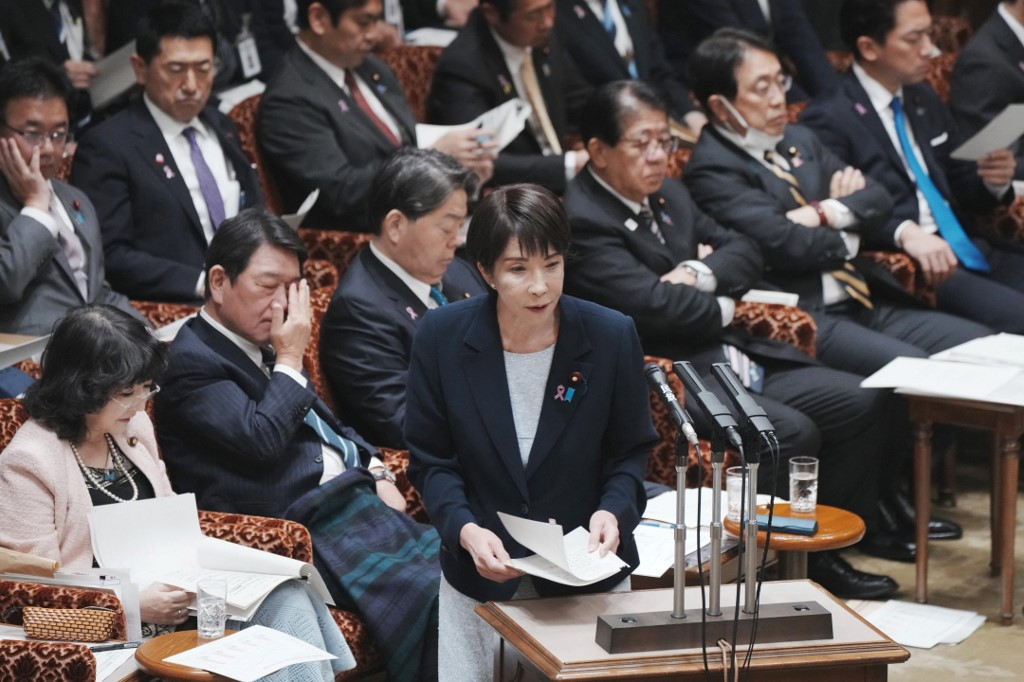 Japan's Prime Minister Sanae Takaichi (center) attends the Nov. 14 session of the House of Councillors Budget Committee at the National Diet in Tokyo. (AFP/Kazuhiro Nogi)
O
n Oct. 21, Sanae Takaichi, the president of the ruling Liberal Democratic Party (LDP), was voted in as the 104th prime minister of Japan, the first woman selected for the nation’s highest post.
Barely a month later, in her first Diet address, Takaichi, 64, stated that Japan could become militarily involved in a conflict between China and Taiwan. That sparked a diplomatic crisis as Japan's relations with China plunged to their lowest level in years.
Yet, this crisis has been long in coming. Takaichi needs a geopolitical spat to steer attention away from Japan’s structural economic challenges.
Instead of a continued partnership with the centrist Komeito Party, Takaichi launched her coalition with the center-right Nippon Ishin Party. With the end of the 26-year coalition with Komeito, the LDP took a turn to the hard right.
Initially, Takaichi’s Cabinet enjoyed some of the highest approval rating, 65 percent to 85 percent, of any Japanese government in the last two decades, with strong support among young and middle-aged respondents. The Japanese see the administration’s national priority as tackling inflation at 84 percent, economic stimulus at 64 percent, social security at 53 percent, and security at 47 percent. Bread-and-butter issues far outweigh military concerns.
Only a minority of Japanese, 17 percent, approved of Hagiuda Koichi being appointed as executive acting secretary general. Hagiuda had previously been involved in a slush fund scandal regarding unreported campaign kickbacks, and after Abe’s assassination, his intimate ties with the controversial Unification Church came under scrutiny.

Moreover, both Takaichi and Hagiuda are members of the Nippon Kaigi, Japan's largest far-right and ultranationalist nongovernmental organization. It seeks to change the postwar Tokyo Tribunal's view of Japanese history, restore the divine status of Japan’s emperor, and undermine gender equality. It champions official visits to Japanese war criminals’ Yasukuni Shrine and denies the forced prostitution of the “comfort women” in World War II.