TheJakartaPost
Please Update your browser
Your browser is out of date, and may not be compatible with our website. A list of the most popular web browsers can be found below.
Just click on the icons to get to the download page.


Popular Reads
Top Results
No results found. Please check your search term and try again
Can't find what you're looking for?
View all search results
Popular Reads
Top Results
No results found. Please check your search term and try again
Can't find what you're looking for?
View all search resultsFour circuit breakers stand between the US-Iran war and World War III
Commentators reach for the most dramatic analogy: World War III. The analogy, while not absurd, overstates the probability of escalation.
Change text size
Gift Premium Articles
to Anyone
Share the best of The Jakarta Post with friends, family, or colleagues. As a subscriber, you can gift 3 to 5 articles each month that anyone can read—no subscription needed!
 Set as preferred source
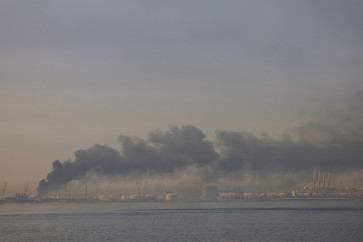
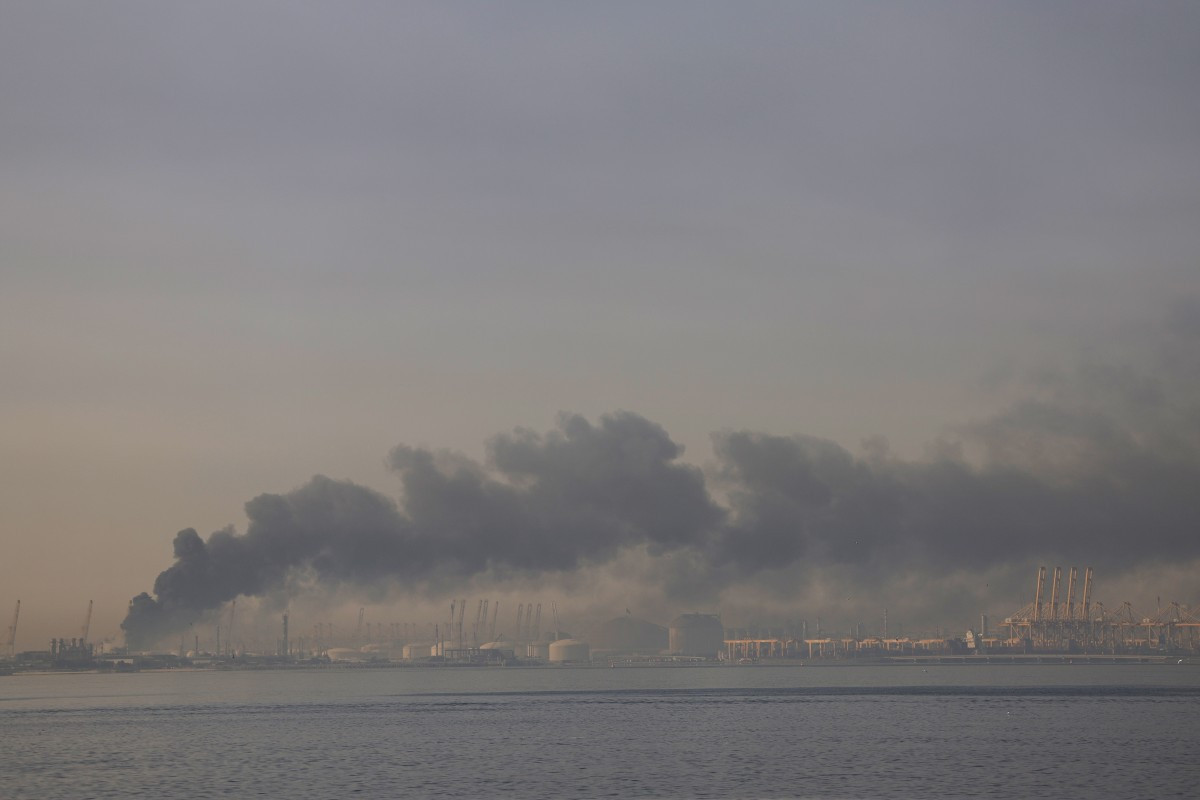 A plume of smoke rises from the port of Jebel Ali on March 1 following a reported Iranian strike in Dubai, the United Arab Emirates. (AFP/Fadel Senna)
O
n Saturday, the United States and Israel struck Iran’s nuclear facilities, missile infrastructure and regime leadership across Tehran, Isfahan, Qom and Kermanshah. Tehran responded with salvos targeting every US base in the Persian Gulf. Hormuz came under threat.
Commentators reached for the most dramatic analogy: World War III. The analogy, while not absurd, overstates the probability. Four structural circuit breakers continue to separate regional catastrophe from systemic breakdown, though none is guaranteed to hold indefinitely.
First, one must understand what is actually being fought over. Center of gravity analysis reveals both sides targeting not each other’s armies but each other’s political foundations. Washington and Tel Aviv have identified Iran’s center of gravity as the regime itself: its survival capacity, nuclear claims, leadership cohesion and Islamic Revolutionary Guard Corps (IRGC) loyalty. The targeting of nuclear sites, Khamenei’s compound and IRGC command nodes, combined with US President Donald Trump’s call for Iranians to “take over your government,” confirms the coalition seeks to dismantle the regime’s capacity to function.
Iran’s calculus mirrors this in reverse. Unable to contest American superiority directly, Tehran targets the architecture sustaining Washington’s power projection: forward basing across Qatar, Kuwait, Bahrain and the United Arab Emirates, Gulf alliance cohesion and American domestic political will. By striking Gulf capitals hosting US forces, Iran fractures the alliance from within.
The IRGC’s declaration of “no red lines” signals maximum pressure to render the war politically unsustainable. Both strategies are inherently escalatory. Yet a punishment spiral between two belligerents, however devastating, is not a world war.
The path to genuine world war would require three simultaneous developments: sustained Hormuz closure forcing China into confrontation with the US, an Iranian nuclear breakout shattering the Non-Proliferation Treaty and opportunistic great power aggression: a Chinese move on Taiwan or a Russian probe of NATO’s flank while American carriers are committed to CENTCOM.

This “perfect storm” is the only plausible path from regional war to systemic one. But plausible is not probable, because four circuit breakers work against it.