TheJakartaPost
Please Update your browser
Your browser is out of date, and may not be compatible with our website. A list of the most popular web browsers can be found below.
Just click on the icons to get to the download page.


Popular Reads
Top Results
No results found. Please check your search term and try again
Can't find what you're looking for?
View all search results
Popular Reads
Top Results
No results found. Please check your search term and try again
Can't find what you're looking for?
View all search resultsNew OPEC+ quotas ignite spending surge
The new MSC mechanism for setting output baselines from 2027 looks set to spur investment via a more equitable and transparent capacity measurement system, leading to a more sustainable market.
Change text size
Gift Premium Articles
to Anyone
Share the best of The Jakarta Post with friends, family, or colleagues. As a subscriber, you can gift 3 to 5 articles each month that anyone can read—no subscription needed!
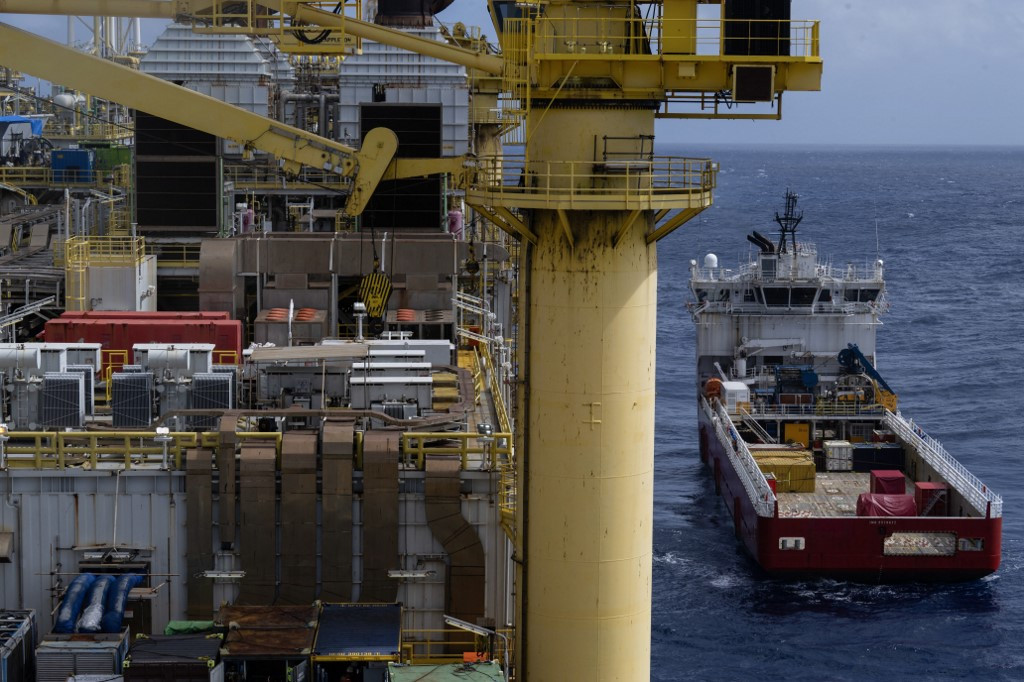 An offshore support vessel approaches the Cidade de Caraguatatuba MV27, a floating production, storage and offloading (FPSO) vessel deployed for TotalEnergies’ production activities in the Lapa Field, off the Brazilian coast near Rio de Janeiro on Oct. 25, 2025. (AFP/Pablo Porciuncula)
T
he changes OPEC+ is making to its oil production quota system will likely spark a wave of upstream investments among members, particularly in low-cost Gulf producers, diminishing concerns of long-term supply shortages.
The Organization of the Petroleum Exporting Countries and other major producing nations, including Russia and Kazakhstan, collectively known as OPEC+, approved on Sunday a new mechanism to assess members' maximum production capacity, which will be used to set output baselines from 2027.
This may seem a highly technical matter. But in theory, it could mark a welcome change from the turmoil of recent years that saw some members flagrantly exceed production quotas as the group’s de facto leader Saudi Arabia struggled to impose discipline, confounding the oil market.
Saudi Energy Minister Prince Abdulaziz bin Salman said on Monday that the new mechanism would help stabilize markets and reward those who invest in production.
OPEC+ accounts for nearly half of the world's oil supply of 106 million barrels per day (bpd) in 2025, according to the International Energy Agency (IEA).
First, it is important to understand the new Maximum Sustainable Capacity (MSC) mechanism.

The capacity assessment will be done between January and September using a reputable United States auditor for 19 out of the group’s 22 members. It will involve a review of each country's oilfields and infrastructure to assess how much oil it can bring onstream within 90 days and maintain for one year.
Among the three countries facing US sanctions, Russia and Venezuela will use a non-US auditor, while Iran has opted to set its baseline using an average production over the three months to October.
Members' capacities will be approved in a November meeting where OPEC+ will also agree on its 2027 output quotas, which will represent an equal percentage of capacity for each member. The MSC will be reviewed on an annual basis going forward.
The system appears primed to spark a wave of investments among members wanting to increase their own production and revenue. It nevertheless favors wealthy members that have low development and production costs such as Saudi Arabia, the United Arab Emirates and Kuwait.
Indeed, Gulf producers are already looking beyond near-term oversupply concerns and downplaying questions about future oil demand as the world shifts away from fossil fuels.
The UAE targets growing its production capacity to 5 million bpd by 2027 from 4.85 million bpd today, though there is speculation it could increase its capacity to as much as 6 million bpd. Its investments suggest that may well be the case.
Abu Dhabi's national oil company ADNOC said on Nov. 24 that it planned to invest US$150 billion over the next five years to expand operations. It also increased the UAE’s conventional oil reserve base by 6 percent to 120 billion barrels following new discoveries.
ADNOC further seeks to unlock so-called unconventional shale reserves, which it estimates contain 22 billion barrels of oil.
Saudi Arabia, the world's top oil exporter, has a production capacity of 12 million bpd and by far the group’s largest spare capacity, which reached 2.2 million bpd in October, 60 percent of total OPEC+ spare capacity, according to the IEA. The country's national oil company Aramco extracts oil at $2 per barrel, its CEO Amin Nasser recently said, among the lowest in the world.
Aramco, whose capital expenditure is set to reach between $52 billion and $55 billion this year, would bring two new fields on stream by the year-end, adding 550,000 bpd of production capacity, it said in its third-quarter results.
Kuwait and Iraq could also now seek to accelerate investment plans.
Kuwait aims to increase capacity to 4 million bpd by 2035 from 2.9 million bpd today, based on IEA figures. Iraq is trying to attract foreign investors, including BP and Exxon Mobil, to boost its production capacity by around 1 million bpd to 6 million bpd by 2028.
The new system, however, puts members whose production is concentrated in more expensive geological structures or offshore, such as Nigeria and Kazakhstan, at a disadvantage, as they will require more time and money to grow capacity.
Russia, Venezuela and Iran may also struggle to increase investments and production capacity due to international sanctions that severely restrict supplies of vital drilling equipment and access to Western technologies.
The new investments will nevertheless serve OPEC's intrinsic goal of growing its market share, in particular after losing ground in recent years as production soared in the US, Brazil, Canada and elsewhere. The spending will also ease growing concerns that the oil industry could face a supply crunch toward the end of the decade and beyond due to lower global spending and the slowdown in production in US shale basins and elsewhere.
The new capacity measurement system appears more equitable and transparent, offering members and external market participants a better understanding of OPEC+ policies.
Yet it still has weak spots. For one thing, members will likely still be able to produce and export more than their stated quota, as some appear to have done in recent years, such as Kazakhstan and the UAE. Furthermore, some members will struggle to grow capacity and production due to sanctions and conflict, creating tensions with other countries that will be able to gain market share.
But overall, the OPEC+ drive will encourage further investments in the oil market that could lead to increased supplies and keep prices relatively low.
---
The writer is a columnist for Reuters.