The Jakarta Post
Please Update your browser
Your browser is out of date, and may not be compatible with our website. A list of the most popular web browsers can be found below.
Just click on the icons to get to the download page.


Popular Reads
Top Results
No results found. Please check your search term and try again
Can't find what you're looking for?
View all search results
Popular Reads
Top Results
No results found. Please check your search term and try again
Can't find what you're looking for?
View all search resultsBrazil-Indonesia: 67 years of friendship
Brazil and Indonesia have the most important tropical forests in the world, which harbor rich biodiversity and abundant natural resources.
Change text size
Gift Premium Articles
to Anyone
Share the best of The Jakarta Post with friends, family, or colleagues. As a subscriber, you can gift 3 to 5 articles each month that anyone can read—no subscription needed!
 Set as preferred source
O
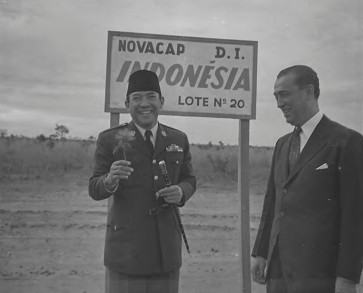
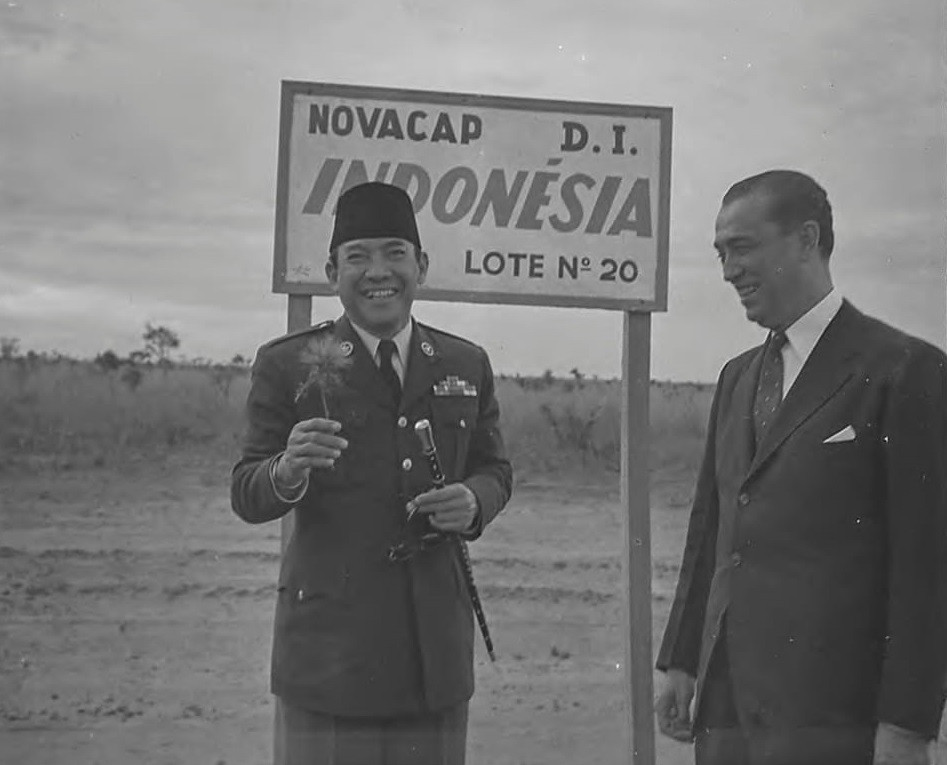
n the 198th anniversary of the independence of Brazil, it seems pertinent to recall the words of Brazilian president Juscelino Kubitschek to president Sukarno in May 1959, during the latter’s historical visit to Brasilia, the soon-to-be inaugurated capital of Brazil:
“[…] You, Excellency, were and still are the builder of a new nationality. By force of your command and through your obstinate belief, ancient peoples have integrated themselves into a new and vigorous state, unified in its diversity, passionate about solving its internal problems and fully conscious of its future leadership role in international affairs. No other place in the world is more appropriate than here, Brasilia, President Sukarno, for me to congratulate you for your efforts toward national integration.”
More than six decades later, those words remain applicable, for it will soon be Indonesia’s turn to deal with the Herculean task of relocating the capital city, as Brazilians did in the late 1950s.
In fact, the pursuit of national integration and development is one of several similarities shared by our peoples and histories. Brazil and Indonesia’s other shared characteristics suggest ample opportunities for further cooperation. Both countries pride themselves on being among the largest democracies in the world; both stand out in their respective regions for their territorial dimensions, demographics and economic output; and both have multiethnic and multicultural populations.
Brazil and Indonesia have the most important tropical forests in the world, which harbor rich biodiversity and abundant natural resources, and share the enormous task and responsibility – of which both are perfectly aware – of promoting sustainable development while enforcing environmental legislation and controlling illegal logging and deforestation in large areas – in the case of the Brazilian Amazonian region, of more than 5 million square kilometers.
Similarities also exist between the positions adopted by Brazil and Indonesia in international fora. It should be highlighted that both countries have traditionally supported multilateralism with a focus on development and the peaceful resolution of conflicts. Indeed, a 2012 statistical survey showed that the two countries had voted the same way on 91 percent of the resolutions presented to the United Nations General Assembly. Such a tradition may prove particularly useful during the present pandemic and its uncertainties.
On the other hand, it definitely seems necessary to further promote and facilitate contacts between producers and exporters in both countries so that the actual competitiveness and potential of the agricultural and industrial sectors of the largest economies of MERCOSUR (South American trade bloc) and ASEAN are fairly reflected in their bilateral trade, lately of only about US$3.2 billion a year. I am, in collaboration with my dear colleague the Indonesian ambassador in Brasilia, committed to this task, having in mind mutual advantages for our countries, their businesses and consumers.