TheJakartaPost
Please Update your browser
Your browser is out of date, and may not be compatible with our website. A list of the most popular web browsers can be found below.
Just click on the icons to get to the download page.


Popular Reads
Top Results
No results found. Please check your search term and try again
Can't find what you're looking for?
View all search results
Popular Reads
Top Results
No results found. Please check your search term and try again
Can't find what you're looking for?
View all search resultsDevelopment drilling to double in 2021 amid recovering crude prices
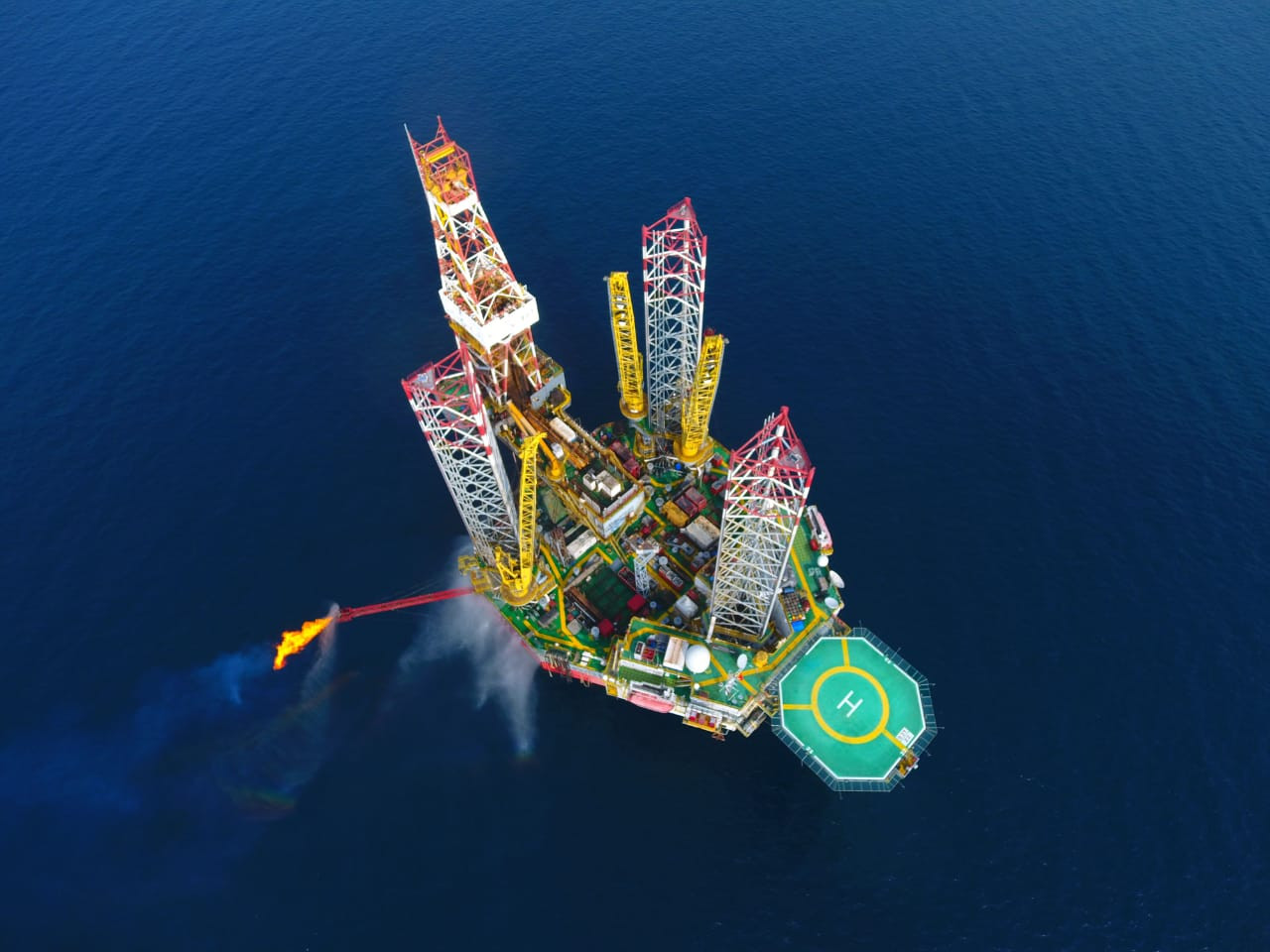
Indonesia plans to drill new development and exploration wells this year to offset the decline rate of its mature oil and gas fields, taking advantage of recovering global crude prices.
Change text size
Gift Premium Articles
to Anyone
Share the best of The Jakarta Post with friends, family, or colleagues. As a subscriber, you can gift 3 to 5 articles each month that anyone can read—no subscription needed!
The Jakarta Post/Jakarta
The Indonesian government estimates that the national oil and gas industry will drill 616 new wells this year as global crude oil prices begin recovering. The target is the highest since 2014 and a 150 percent increase from last year’s drilling activities.
Brent Crude, the global price benchmark, hit US$56 per barrel on Thursday, higher than the 2020 average price of $41.69 per barrel, according to the US Energy Information Administration.
The head of the Upstream Oil and Gas Regulatory Task Force (SKK Migas), Dwi Soetjipto, said on Wednesday that the new development wells aimed to stall the declining output from existing oil and gas fields in the country.
Development wells are drilled in areas with proven oil and gas reserves as opposed to exploration wells, which are drilled to find new reserves. The plan to drill new development wells is one of SKK Migas’ strategies to squeeze out as much oil as possible from the existing fields while exploring new fields to ultimately raise Indonesia’s oil production.
“In 2021, we will be back on track after a pretty sharp decline between 2014 and 2017,” Dwi told lawmakers at a House of Representatives hearing in Jakarta.
SKK Migas, he continued, expected the industry to drill 43 exploration wells this year.
The figure is much lower than the 2020 target of 61 exploration wells. Only 22 of the drilling target were completed last year due to low crude oil prices.
Indonesia’s exploitation activity declined in 2014-2017, but then increased to 2019. It plunged again in 2020, when only 240 out of the targeted 395 development wells were drilled as oil companies cut spending amid low global crude prices.
SKK Migas’ plan to double exploitation activities this year is in line with its “massive, aggressive and efficient” drilling policy to raise the domestic oil output by 2030 to 1 million barrels of oil per day (bopd). Indonesia is the largest oil consumer in Southeast Asia, yet it largely imports the commodity at the expense of its trade balance.
Government data shows that the country’s annual oil and gas output has been declining since 2017 to 1.68 million barrels of oil equivalent per day (boepd) in 2020, when the COVID-19 pandemic hammered global oil demand.
“Our fields are generally mature fields, their decline rates are high, so to compensate, we need to drill that many wells,” secretary-general Hadi Ismoyo of the Society of Indonesian Petroleum Engineers (IATMI) told The Jakarta Post on Wednesday.
SKK Migas plans to escalate exploitation activities until Indonesia is drilling 1,000 development wells per year by 2025. One of its officials previously estimated that drilling this many wells would cost US$2 billion.
Hadi reaffirmed that Indonesia’s upstream oil and gas investment climate was “heading toward a conducive trend” in 2021 as global crude oil prices recovered. However, he also emphasized that the government had a key role in coordinating stakeholders to meet the 2025 national goal.
The government has introduced several incentives for the oil and gas industry to meet its 2025 goal, including eliminating import taxes for liquefied natural gas (LNG) and temporarily postponing fees for abandonment and site restoration (ASR).
The Post has contacted the Indonesian Petroleum Association (IPA) for comment.