TheJakartaPost

Please Update your browser

Your browser is out of date, and may not be compatible with our website. A list of the most popular web browsers can be found below.
Just click on the icons to get to the download page.


Jakarta Post

Unbridled clientelism plagues regional politics

High cost of local elections leads to abuses of power when in office

Budi Sutrisno (The Jakarta Post)
Jakarta
Tue, March 30, 2021 Published on Mar. 29, 2021 Published on 2021-03-29T16:42:48+07:00

Change text size

Gift Premium Articles
to Anyone

Share the best of The Jakarta Post with friends, family, or colleagues. As a subscriber, you can gift 3 to 5 articles each month that anyone can read—no subscription needed!

T

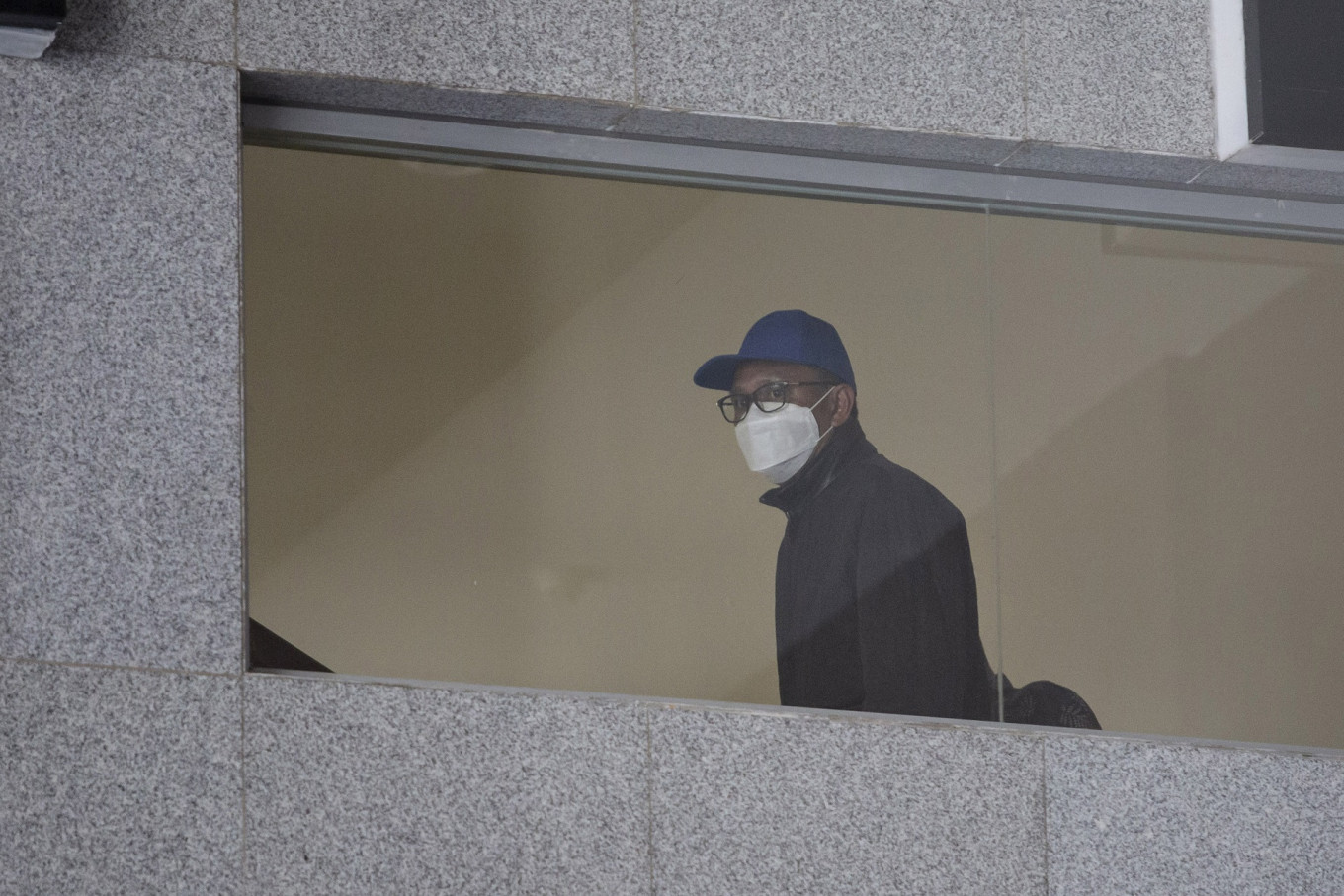
he recent arrest of South Sulawesi Governor Nurdin Abdullah over alleged bribery pertaining to infrastructure projects in the province has brought attention to the practice of clientelism in the country’s regional politics.

The Corruption Eradication Commission (KPK) arrested Nurdin in late February for allegedly receiving Rp 5.4 billion (US$374 million) from contractors in exchange for infrastructure projects for the budget year of 2021.

But activists argued the case was only the tip of the iceberg, alleging the governor had awarded business projects to other individuals supporting him during the regional election.

Projects for old ‘aides’

The Indonesian Forum for the Environment (Walhi) launched an investigation in December 2019 to look at several sand dredging projects in South Sulawesi. Local fishermen had been complaining of the mining activities, claiming it cost them their livelihoods as it damaged the ocean ecosystem.

During the environmental group's investigation, suspicions arose regarding two companies that obtained business permits for sand dredging in the waters off Galesong and Takalar: PT Banteng Laut Indonesia and PT Nugraha Indonesia Timur. The two firms were supplying sand for Dutch construction company Royal Boskalis, which is constructing the Makassar New Port, one of the national strategic mega projects.

Read also: Lauded graft fighter Nurdin Abdullah named bribery suspect
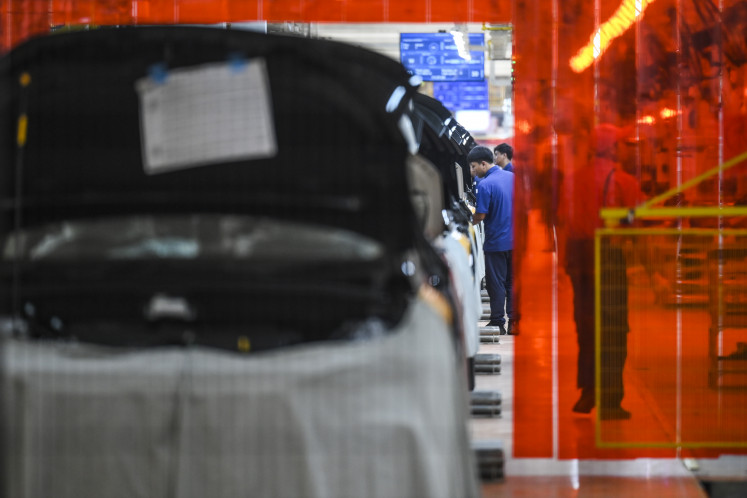
The new port will have a capacity of 500,000 complete built-up vehicles. The first phase of development has been ongoing since 2015 and cost approximately Rp 2.51 trillion (US$173 million). Walhi estimated the dredging companies involved in the project had collected a net profit of around Rp 100 billion.

According to legal records obtained by Walhi, Abil Iksan is the director of both companies. Banteng Laut Indonesia director Akbar Nugraha is recorded as the deputy director of Nugraha Indonesia Timur.

Both individuals were members of Nurdin’s campaign team during the 2018 gubernatorial election. Nurdin and his deputy Andi Sudirman Sulaiman ran against three other pairs in the 2018 election. They were backed by the Indonesian Democratic Party of Struggle (PDIP), the National Mandate Party (PAN), the Prosperous Justice Party (PKS) and the Indonesian Solidarity Party (PSI).

A member of the PSI advisory board, Sunny Tanuwidjaja, was also accounted as a commissioner of Banteng Laut Indonesia. Sunny was previously implicated in a bribery case pertaining to a reclamation project on the north coast of Jakarta.

Alleged ‘expressway’ from regional administration

Muhammad Al Amin, the executive director of the Southeast Sulawesi chapter of Walhi, claimed the provincial environment agency also issued all environmental permits for both companies in a relatively short time.

At least 12 sand mining companies applied for dredging permits in the province in 2019, but Amin claimed only four were given the licenses – two of which were Banteng Laut Indonesia and Nugraha Indonesia Timur.

He alleged Nurdin played “a very central role” in appointing companies for the port project and passing out the permits for the selected firms.

“I suspect these companies were given opportunities [by the governor] to get into the project in exchange for money to pay his debts from the previous elections or to prepare for the next election,” Amin said.

A civil group coalition that includes Walhi and the Mining Advocacy Network (Jatam) reported the two companies to the KPK and the Business Competition Supervisory Commission (KPPU) in October last year. The coalition urged the commissions to investigate the alleged monopoly and collusion between Nurdin and the businesspeople.

Amin claimed the KPPU said representatives from both companies had yet to answer the commission’s summons in relation to the report.

An undated aerial photo of Makassar New Port in Makassar, South Sulawesi. The first phase of the port construction has been ongoing since 2015 and costs approximately Rp 2.51 trillion (US$173 million). (Handout/Pelindo IV)

Akbar dismissed the monopoly allegation, saying Benteng Laut Indonesia only supplied around 30 percent of sea sand for the port project. He added that he had reasserted to the KPPU in late November 2020 that the company only had a small portion of the project.

“The port project is also a national strategic project owned by [state-owned port operator] PT Pelindo, not the South Sulawesi provincial administration,” Akbar told The Jakarta Post on Tuesday.

“[State-owned firm] PT PP won the tender as the main contractor, while Royal Boskalis won the tender as a subcontractor in the reclamation project. Benteng Laut Indonesia was contracted as a secondary supplier of the sea sand,” he went on to say, alleging the civil coalition’s report was a political movement to smear certain politicians.

The Post tried to reach Abil and Sunny to ask for their comments on the matter but received no response.

More rampant in Kalimantan, eastern Indonesia

Jatam national coordinator Merah Johansyah said the high cost of political contestation had triggered the pervasiveness of clientelism.

According to a study by the KPK in 2015, a regional leader candidate could spend up to Rp 30 billion for a mayoral or regent seat and up to Rp 100 billion for a gubernatorial position. Meanwhile, the average assets owned by prospective regional heads were only around Rp 6.7 billion according to their wealth report.

Jatam notes the risk of a clientelism relationship between regional leaders and businesspeople is higher in regions whose economy depends on natural resources. For example, the Kutai Kartanegara regency administration in East Kalimantan issued 191 new mining business permits during the 2010 elections – higher than 93 new permits in the previous year.

“Our political system triggers corrupt practices that make the electoral process oligarchic and transactional. The system should be fixed,” Merah said.

Jatam’s finding was echoed by Ward Berenschot, a researcher with the Royal Netherlands Institute of Southeast Asian and Caribbean Studies (KITLV).

In his paper The Political Economy of Clientelism: A Comparative Study of Indonesia’s Patronage Democracy published in 2018, he noted that clientelistic exchanges were “much more pervasive in eastern Indonesia” and Kalimantan compared to regions in Java.

“[…] politicians do not shift away from clientelistic practices because the yields are decreasing, but rather because of the capacity and willingness of civil society to oppose such practices by, for example, exposing them and propagating a moral discourse that promotes a rule-bound distribution of resources,” Berenschot wrote.

Read also: KPK identify graft methods used by regional heads to get back campaign funds

Amin said many infrastructure projects at the regional level were “controlled” by regional leaders, forcing businesspeople to approach them to win the project.

“Economic activities are centered on a handful of people, not because there are only a few who are worthy of handling the projects, but because regional leaders design these projects to be run by certain parties close to them,” said Amin.

He urged the KPK to develop Nurdin’s case to look at other cases of alleged clientelism involving the governor.

After interrogating seven civil servants of the South Sulawesi administration on March 12, the KPK said it found Nurdin “ordered his officials to allow a certain contractor to win” a road construction project related to the case.

“Nurdin’s arrest should be the start of solving the deadlock of law enforcement against such illicit practices in regions,” Amin said.

The civil groups also urged the government to immediately restore damage caused by the clientelistic practices, as Merah argued that mining practices by companies owned by regional heads’ aides had caused environmental damage and violated people’s rights.

Your Opinion Matters

Share your experiences, suggestions, and any issues you've encountered on The Jakarta Post. We're here to listen.

Enter at least 30 characters
0 / 30

Thank You

Thank you for sharing your thoughts. We appreciate your feedback.

Share options

Quickly share this news with your network—keep everyone informed with just a single click!

Change text size options

Customize your reading experience by adjusting the text size to small, medium, or large—find what’s most comfortable for you.

Gift Premium Articles
to Anyone

Share the best of The Jakarta Post with friends, family, or colleagues. As a subscriber, you can gift 3 to 5 articles each month that anyone can read—no subscription needed!

Continue in the app

Get the best experience—faster access, exclusive features, and a seamless way to stay updated.