Can't find what you're looking for?
View all search resultsCan't find what you're looking for?

View all search resultsThere is an emerging trend of views, teachings, pressure, conditioning, persuasion and coercion of women to return to the home and the family as a way to improve the structure of society.
he Taliban are a radical fundamentalist group based on a certain religious outlook. They started as a collection of male militia members who fought against the Soviet occupation of Afghanistan. From this, a radical group emerged and has developed in its own specific political context and moment – and therefore cannot be imitated or adopted in another time or place.
However, the group’s ideology – its social, political and religious views – can easily spread anywhere because the ideas are not bound by context, time or history.
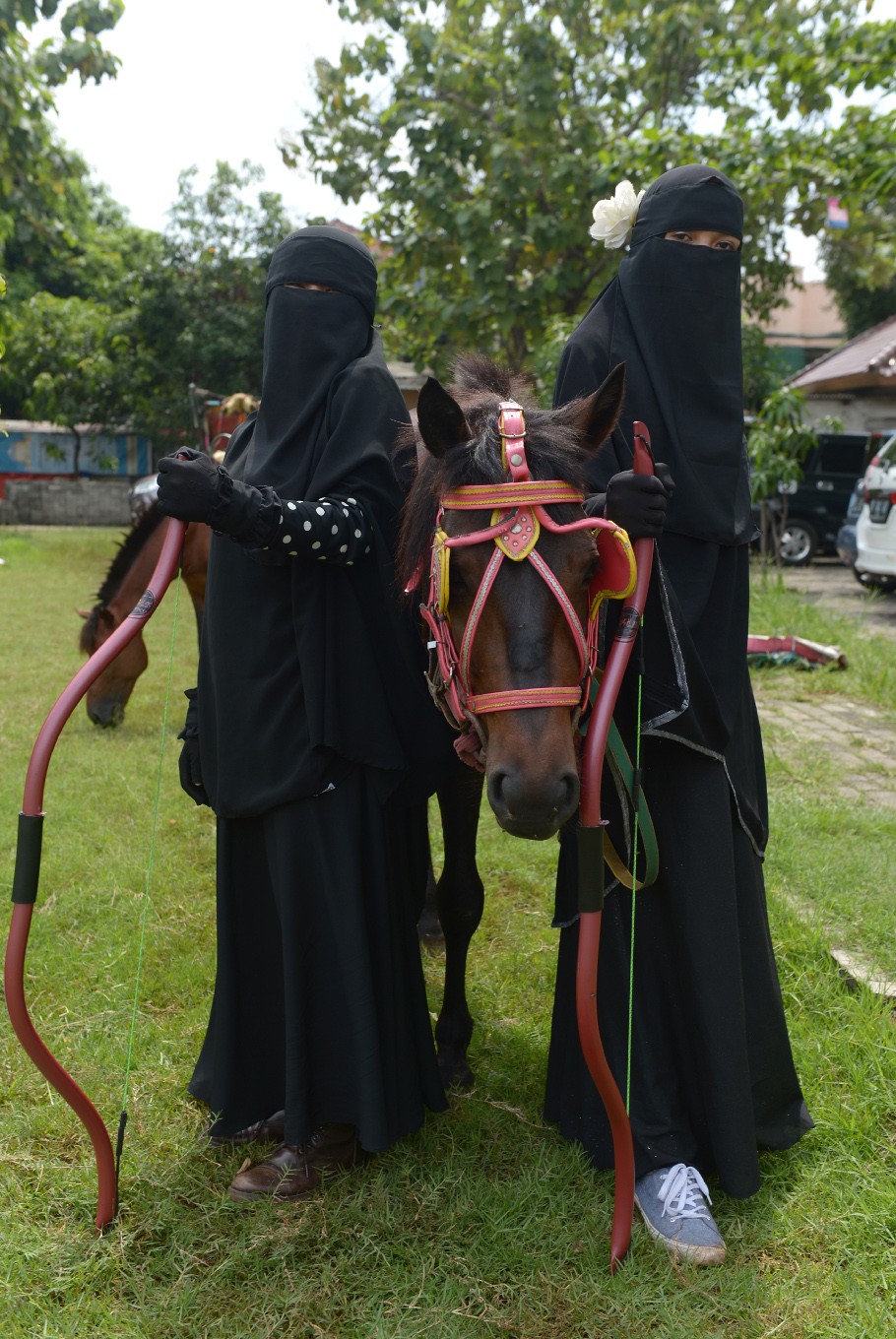
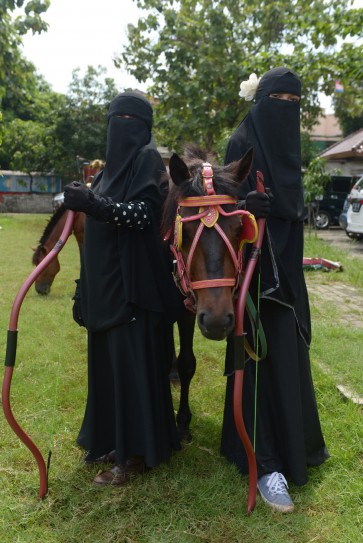
One global legacy of the Taliban is the view that women must be sent back into the home, based on a view that women are a source of social and moral problems in public spaces. Therefore, keeping them at home or restricting their space for movement using symbols such as the burqa or hijab is deemed a temporary solution to reduce moral problems in society.
From 2019 to 2020, Rumah KitaB conducted a study entitled Women and Fundamentalism in five regions: Jakarta, Bandung, Depok, Bekasi and Surakarta. The study examined a number of important factors related to the rise of an ideology that seeks to restrict the movement and thinking of women. The study produced a number of theses regarding the threat of violence, which has up to now been framed as an effort to prevent radicalism and terrorism with a masculine character. Using feminist methods and perspectives, the research arrived at very different findings.
The threat of violence is also experienced by women through efforts to “Talibanize” them, a view that tries to restrict and control women’s thinking, which restricts their space for movement in the name of creating social and moral order in society.
There is an emerging trend of views, teachings, pressure, conditioning, persuasion and coercion of women to return to the home and the family as a way to improve the structure of society, which some say has deviated from the “ideal” Islamic structure of society.
This, in essence, is the threat to women as identified through the research. Such narratives have, at the very least, narrowed the options for women regarding working, not working, or working but only in types of work and at times that are considered morally appropriate and in line with gender norms, rather than the option to work as a free choice. These restrictions are increasingly consolidating the marginalization of women.
For our researchers, it is very clear that the bomb that destroys women is the loss of their freedom to think and express themselves, which robs them of their rights as independent humans.
Obviously, the idea of confining women to the home is not a new concept. It is actually constructed in a framework of “gender harmony” which recognizes divisions of labor between men and women but does not consider this to be a cause of subordination, marginalization or discrimination. Instead, this allocation of roles is believed to be in line with the teachings and recommendations of religion, as some adherents understand them.
The idea of keeping women at home is not, in fact, merely a concept rooted in tradition or culture. Rather, it derives from religious views based on arguments from religious texts that are repeatedly proclaimed in various forums and formats. This view holds that women should stay at home, or relinquish control over their own bodies and movement, because religion emphasizes this as their inherent nature or fate.
By preserving this proposed nature, women will automatically be able to protect “themselves and the world” from fitna (destruction) and will at the same time restore the structure of gender relations in the family to be in line with the teachings of Islam. This will, in turn, reorder society to be in line with an Islamic social structure, as against modernization or the intrusion of “Western” culture and feminism.
Such views are no longer merely in the form of ideas alone but are being realized, for example in the form of organizations like the Love for Family Alliance (ALIA). In their view, women experience multiple burdens: a process of marginalization and violence as the result of their own active participation in public spaces through work, which adherents say cause them to neglect their families and religious values.
By confining women to the family hearth, according to these types of views, women are not merely obeying the teachings of religion and thus eligible for rewards in heaven, they will also be living in a safe space. This view holds that violence against women occurs because women have entered a domain that they should not occupy – public spaces. The view rejects the idea that violence is caused by unequal gender power relations and asserts that one side has unequivocally greater authority over the other and that women “deserve” to suffer violence if they fail to cover up their aurat. These views reject the fact that domestic violence in gender relations between husbands and wives, or vice versa, depends on who is seen to be holding the power, and between fathers and daughters, whether the daughter is wearing “decent” clothing.
Bringing women back to the family sphere, according to this view, will create broader work opportunities for men to participate in public spaces and carry out their roles as leaders, heads of households and breadwinners. This will give men the chance to perform their roles in accordance with what is set forth by religion. This view contends that the exploitation of women occurs because they have neglected the rules of religion by both managing the household and working to earn a living.
The growing strength of such views cannot be seen in a simple way if we remember that the tradition of Islam in Indonesia has, since ancient times, been open to women performing roles in public spaces. Even in pesantren (Islamic boarding schools), at the practical level, women have freedom to develop themselves, to organize and even to be leaders managing thousands of male and female santri (students).
The process of the “Talibanization of women” by eliminating women from public spaces is a problem because such a view actually develops “naturally” as a response to poverty and other social problems in an effort to restore peace to society through the concept of “family resilience”. True, we do not yet see indications of coercion or violence in the process. Yet the process of instilling an ideology of family resilience, through various ways and institutions, constitutes a threat of Talibanization.
This ideology is present and faced by the public in daily life, as if there is no other solution than to control the morality and gender norms of women under the authority and control of men and an entirely male and patriarchal culture.
***
The writer is a researcher at Rumah KitaB.
Share your experiences, suggestions, and any issues you've encountered on The Jakarta Post. We're here to listen.
Thank you for sharing your thoughts. We appreciate your feedback.
Quickly share this news with your network—keep everyone informed with just a single click!
Share the best of The Jakarta Post with friends, family, or colleagues. As a subscriber, you can gift 3 to 5 articles each month that anyone can read—no subscription needed!
Get the best experience—faster access, exclusive features, and a seamless way to stay updated.