TheJakartaPost
Please Update your browser
Your browser is out of date, and may not be compatible with our website. A list of the most popular web browsers can be found below.
Just click on the icons to get to the download page.


Popular Reads
Top Results
No results found. Please check your search term and try again
Can't find what you're looking for?
View all search results
Popular Reads
Top Results
No results found. Please check your search term and try again
Can't find what you're looking for?
View all search resultsIs ASEAN branding still attractive for the youth?
The weak emphasis on political and security among the youth could be because the region has relatively enjoyed peace and stability over the past decades.
Change text size
Gift Premium Articles
to Anyone
Share the best of The Jakarta Post with friends, family, or colleagues. As a subscriber, you can gift 3 to 5 articles each month that anyone can read—no subscription needed!
S
ince ASEAN launched the 2025 ASEAN Community Vision, the regional bloc’s branding has garnered excitement from its citizens, particularly the youth. The aspirations toward market integration, enhanced mobility and even the “hype” discussion over a single currency in the region have laid the foundations for the youth to reorient themselves to the global standards for future economic transformation.
As the community vision passes the midterms, assessing how the youth perceives the ASEAN branding is timelier than ever. The Youth, defined as individuals aged 15-35 years old, constitutes 34 percent of the ASEAN’s 654 million population. Hence, their perceptions and enthusiasm over regional integration will shape the strategic policy direction on future regional vision.
A recent survey launched by the ASEAN Secretariat on Understanding How Young People See ASEAN: Awareness, Values and Identity shows that university students across the region possess a strong awareness of ASEAN.
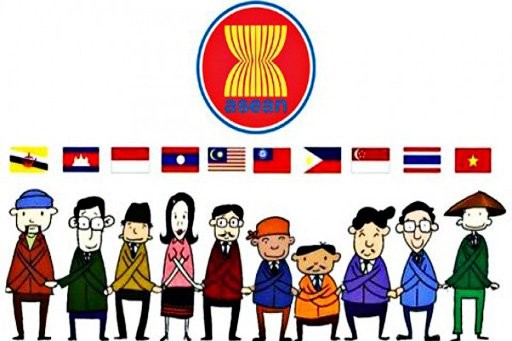
Over half of the students surveyed could demonstrate high familiarity with ASEAN, such as accurately naming and listing ASEAN member states, identifying the ASEAN flag and indicating ASEAN’s founding year. But familiarity with ASEAN does not necessarily equate to positive identification with ASEAN. For instance, less than half of the respondents said ASEAN countries were economically and politically similar, signifying the region’s diversity instead of its shared identity.
Students in the survey also agreed that ASEAN is valuable. More than 90 percent of them believed that ASEAN membership benefited their country. They also thought that ASEAN diversity is an asset and ASEAN’s future is essential.
But when asked whether ASEAN benefited them personally, only three-quarters agreed; therefore, it is critical for ASEAN to facilitate a more inclusive community-building process so that the impacts of regional integration can be more wide-reaching.
The survey also emphasized the need for more visible and impactful cooperation. Students responding to the survey believed that economic collaboration, tourism and development assistance are the three more essential domains for ASEAN future cooperation.
Interestingly, political and security cooperation were least favorable, although historically, ASEAN was established during the height of the Cold War as an institution to provide political stability and security in the region. The weak emphasis on political and security among the youth could be because the region has relatively enjoyed peace and stability over the past decades.
Overall, the study indicates that the ASEAN branding is still attractive among the youth. Generally, they demonstrated a high level of awareness and saw some regional integration values. But challenges to engage the youth to realize the lofty visions of ASEAN as a rule-based, people-oriented and people-centered region remain.
The COVID-19 pandemic has exposed young people to many uncertainties. In a recent survey conducted by TODAY, a digital news platform, young people in Singapore said they have become more fearful because of the pandemic.
The pandemic has also significantly impacted the mental health of young people in the country, with a significant number of respondents indicating they were consistently feeling “stressed out” and “anxious”.
Similarly, a survey conducted by the UN Population Fund (UNFPA) Indonesia’s Youth Advisory Panel also shows that young people in Indonesia felt anxious during the pandemic because of social distancing measures forcing schools and workplaces to close. Clearly, this situation is not favorable for full social and sustainable recovery, let alone for promoting a more cohesive regional integration.
Moreover, a series of incidents have pointed to the reality that young people in the region are frequently under assault and in danger of being harassed when expressing their freedom of speech. The military crackdown in Myanmar, for instance, has sent hundreds of youths to their death.
The young protesters in Myanmar are hardly alone. Since the youth-led protests to reform the monarchy in Thailand started in 2020, many have been charged with lese majeste. Young journalists across Indonesia and the Philippines have also experienced violent attacks and increased assaults that further deteriorate the countries’ press freedom and democracy.
With these unfortunate events, the youth in the region could be consumed with domestic instability and at risk of looking more inward. This is not conducive to building regional optimism.
But despite those challenges, ASEAN can explore new areas to engage the youth in shaping the regional vision. For instance, the youth in the region care about climate change and the destruction of nature.
They are also more likely than any other age group to actively engage in climate advocacy. ASEAN needs to increase capacity building and consolidate climate activism to create a more impactful regional climate movement.
Secondly, young people in the region do embrace technology. Not only are they the users or consumers of the technology, but they also leverage it for economic growth and future employment by venturing into start-ups.
The region minted 19 unicorns in 2021, and the number will only increase in the near future. ASEAN must provide an enabling environment for young, aspiring digital entrepreneurs.
Increasing investments in education to keep up with innovations and to bear talent, enhancing trade and connectivity to help start-ups scale their business, and upskilling the workforce to stay competitive are some practical policies that need to be explored.
***
The writer is the lead researcher in sociocultural affairs at the ASEAN Studies Centre, ISEAS-Yusof Ishak Institute.